
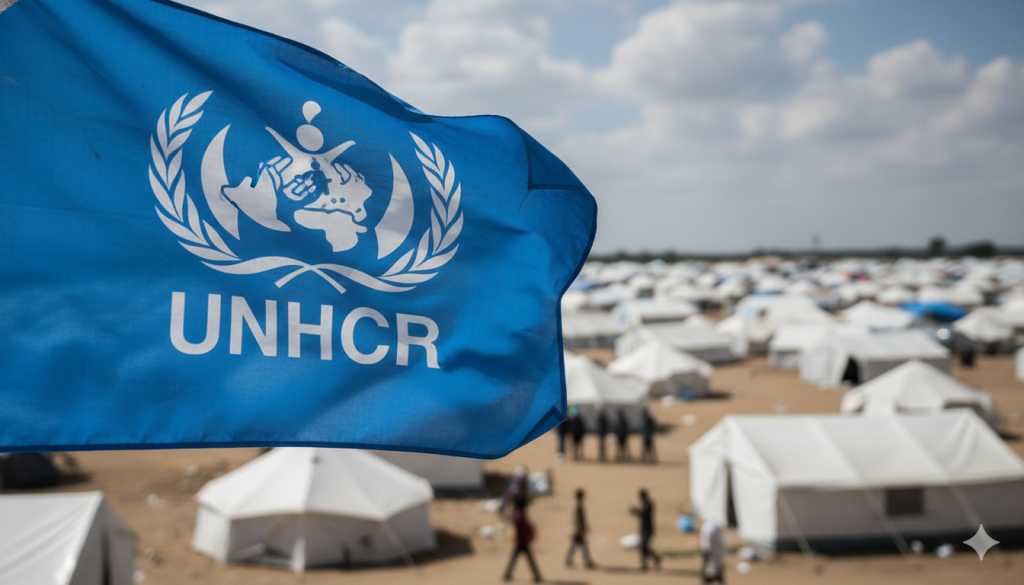
UAE Commits US$15 Million To UNHCR For Humanitarian Aid In Sudan And Neighbouring Countries. The announcement sets a clear, practical tone. It speaks to field tents, crowded clinics, dusty border gates, and long lines that move slowly but must move. That is the news, and it matters on the ground.
UAE’s US$15 Million Pledge to UNHCR: An Overview
The pledge totals US$15 million for UNHCR to support displaced families across Sudan and nearby states. It lands at a time of stretched stocks, thin staff rosters, and tired relief trucks that still keep going. The package covers protection, shelter items, and immediate services. Nothing fancy, just the basics needed fast. That is how teams get traction.
Why Sudan and Neighbouring Countries Need Urgent Humanitarian Support
The conflict pushed towns into silence and bus stations into live shelters. Heat presses down by noon, then cold winds beat at plastic sheeting by night. Families split at river crossings, meet again at waypoints, or not at all. Border clinics hear the same questions every hour. Is there water? Is there a vaccine? Is there a safe road? Staff answer with what they have. Sometimes it feels thin, but small wins count. That’s how we see it anyway.
How the UAE’s Funding Will Be Used by UNHCR
Field teams route money to units that work closest to people. Registration lines get shade structures. Protection desks stay open longer. Transport moves faster.
| Area of support | Example use on the ground |
| Protection | Case workers for unaccompanied children, safe spaces for women, legal guidance |
| Shelter | Family tents, plastic sheeting, tool kits for minor repairs |
| Core relief | Mattresses, blankets, cooking sets, solar lamps that actually last |
| Health and WASH | Vaccination cold boxes, rehydration salts, latrine maintenance, water trucking |
| Logistics | Fuel, spare tyres, warehouse handling, last-mile porters |
Simple, trackable, and frankly, not glamorous. It keeps operations honest.
Scale of Displacement and Humanitarian Needs in the Region
Numbers change week to week, yet the pattern stays. People move in waves, then hold, then move again after a local flare-up. Host towns shift schoolrooms into dorms. Markets smell of wood smoke at dawn and close early for lack of light. Aid plans mark three layers of need. Life-saving goods now, stabilising services next, then recovery tasks when the noise drops. The middle layer often gets squeezed. That part hurts long term.
UAE’s Broader History of Aid to Sudan and Conflict-Affected Areas
UAE teams have shipped food baskets, medical supplies, cold-chain kit, and mobile clinics over multiple seasons. In past peaks, airlifts ran at odd hours, engines whining over quiet runways, because cooler night air helps perishable cargo. Regional programmes also backed measles drives and cholera prevention. Not perfect, but steady. Consistency matters when donors cycle in and out.
Impact of the Contribution on Refugees and Host Communities
- Faster registration shortens waiting and reduces stress at crowded sites.
- More shelter and lighting improves safety on the edges of large camps.
- Health and water support cuts clinic queues, frees nurses for priority cases.
- Logistics funding keeps trucks moving, a small thing that changes everything.
People notice when a line moves ten minutes quicker. Children sleep easier under a lamp that does not flicker. It sounds small. It is not.
Regional and International Significance of the UAE’s Humanitarian Commitment
A mid-sized pledge that arrives at the right moment can pull other donors off the fence. Coordinators can plan rotations with less guesswork. Border authorities get a little comfort that supplies will keep coming. So momentum builds. Also, it signals a practical style of support. Light on ceremony. Heavy on delivery. Maybe that is why field managers sound slightly relieved on radio checks.
Official Statements from UAE Representatives and UNHCR
Officials framed the pledge as a direct push into life-saving lines of work. UNHCR welcomed predictable funds that can be disbursed quickly to front-line partners. The words were formal, the subtext simple. Keep teams paid, keep warehouses stocked, keep clinics lit after sunset. The goal reads plain on paper.
What This Means for 2026 Humanitarian Planning and Relief Efforts
Planning cycles for 2026 lean on clear cashflow and flexible line items. This pledge supports priority pipelines and lets country teams lock in fuel, warehouse slots, and transport corridors early. That reduces the usual last-minute scrambles. It also gives host districts a straight message. Services will not vanish next month. People breathe easier when plans survive the quarter.
Keep Reading
FAQs
How quickly can the US$15 million reach field operations across multiple countries in the region?
UNHCR pushes initial tranches through existing frameworks, so partners can place orders and deploy teams within current pipeline schedules.
Which populations stand to benefit first under this new funding for humanitarian aid in Sudan and neighbouring countries?
Front-line sites with the heaviest caseloads, including arrivals in border districts, unaccompanied children, and households flagged by protection teams.
How will accountability be maintained once procurement for shelter, health, and logistics begins at speed?
Standard UNHCR controls apply, with partner reporting, spot checks, warehouse counts, and post-distribution monitoring to track goods.
Will host communities receive any part of the support when pressure on water and clinics keeps increasing daily?
Yes, shared infrastructure and services such as water points, hygiene work, and clinic supplies include host settlements by design.
Does this contribution change planning for education, livelihoods, or longer recovery work in 2026 country response plans?
It helps stabilise immediate services first, which then allows agencies to phase in early recovery activities without constant stop-start cycles.
