
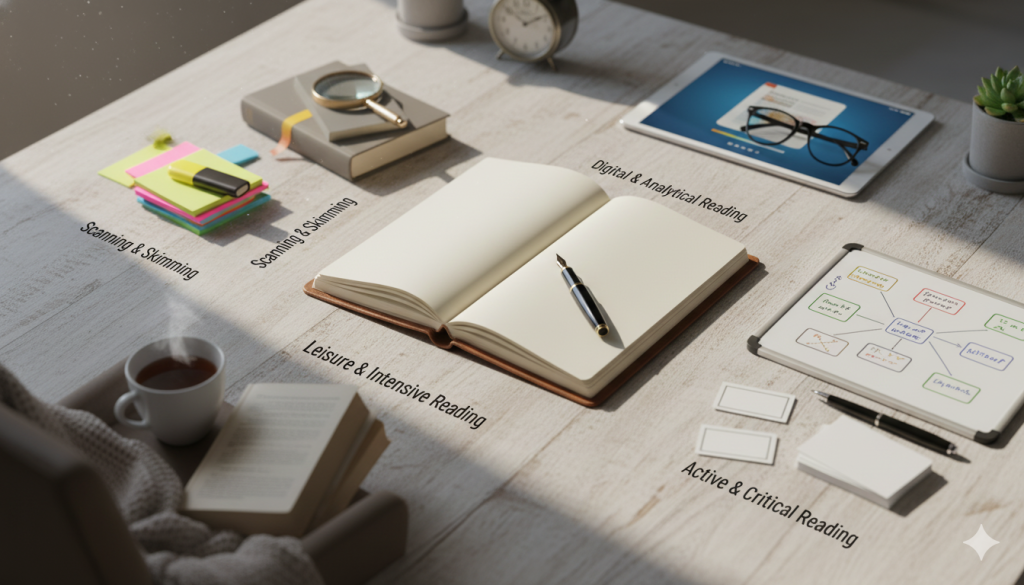
On a school morning in Lagos, a librarian rolled open the shutters and the room filled with dust, chatter, and curiosity. The topic on the noticeboard read: types of reading. Not theory for theory’s sake. Practical skills tied to classrooms, exam halls, markets, even bus stops. Africa’s education desks have been tracking this quietly, because daily reading habits shape results. Small routines, steady gains. That’s how it looks on the ground.
What Are the Different Types of Reading?
The term types of reading covers a set of approaches used for different goals. Students reach for one style to pass science, another to enjoy Shona poetry.
NGO trainers use quick methods during health workshops under a corrugated roof, heat rising. Each type sets pace, depth, and attention. The choice is rarely fancy. It’s situational, almost like picking the right pair of shoes.
Why Understanding Types of Reading Is Important
Clarity saves time. Learners in Accra, Nairobi, and Gaborone report fewer re-reads when a matching method fits the task. Teachers see better retention and calmer exam rooms. Report writers in county offices finish briefs faster. No drama, just less friction. Poor matches hurt: close reading for bus timetables wastes minutes; skimming legal clauses risks mistakes. Practical literacy grows when the method fits the moment. That’s the pattern seen repeatedly.
Purpose-Based Types of Reading
Extensive reading builds comfort and range. Novels in Kiswahili on weekend afternoons, sports pages under a mango tree, long features in Sunday papers. It grows fluency quietly. Intensive reading goes deeper. Short passages, marked-up margins, tough vocabulary handled in small groups. A history teacher in Mombasa uses it before term tests, then moves on. Both have their lanes. Forcing one into the other often causes fatigue.
Technique-Based Types of Reading
Many classrooms teach quick tactics first, since time slips away so easily in busy terms.
- Skimming: headlines, intros, topic sentences, quick sense of scope.
- Scanning: dates, figures, definitions located fast, then stop.
- Close reading: line-by-line attention to theme, tone, structure. Slow but worth it.
On a hot afternoon in Kano, students practised scanning rainfall tables for geography. Ceiling fans hummed. Two minutes later they had the answers. Sometimes it’s the small habits that matter.
Approach-Based Types of Reading
Active reading adds notes, underlines, and tiny questions in the margin. It helps during policy briefs and exam prep. Passive reading still has a place: roadside news, a quick short story on a crowded taxi. Critical reading checks sources and motives. Who wrote this, and why. Reflective reading links text to lived moments, like comparing a rural health article to last month’s clinic visit. Feels real when the link clicks. That’s how many describe it.
Cognitive-Processing Types of Reading
Literal reading captures what the text states. Good for instructions pinned near a lab sink. Inferential reading looks at hints, tone, what a writer suggests without saying. Analytical reading breaks arguments into claims and evidence. Evaluative reading judges strength and fairness. In a civic class in Kigali, learners used evaluative reading to test campaign flyers. Less noise, more signals. Not flashy, just disciplined.
Types of Reading Based on Medium
Print reading remains steady. Fewer notifications, deeper tracks in the mind. Digital reading is everywhere though: WhatsApp circulars, PDFs, policy portals, e-textbooks. Eyes jump across links, and attention flickers under bright screens. Oral reading helps pronunciation in early years and supports community storytelling nights. Silent reading carries most of the load in higher classes. The mix depends on access and power cuts, simple as that.
Types of Reading in Academic and Research Settings
Survey methods like SQ3R show up in teacher colleges and university study groups: survey, question, read, recite, review. Students say it reduces panic before finals. Technical reading applies to manuals, lab sheets, health advisories. Precision first. Interpretative reading meets poetry, law, and philosophy, where lines hold layers. A small NGO circle in Lusaka read a short poem one evening, windows open, street food smoke drifting. Slow pace, strong meaning. Maybe they’re right.
Comparison of All Types of Reading
| Type | Speed | Depth | Typical Use |
| Skimming | Fast | Low | News scan, topic check |
| Scanning | Fast | Low | Facts, figures, names |
| Intensive | Medium | High | Exam prep, tough texts |
| Extensive | Medium | Medium | Fluency, language growth |
| Critical | Medium | High | Opinion, policy, essays |
| Analytical | Medium | High | Arguments, structure |
| Literal | Medium | Medium | Instructions, summaries |
| Inferential | Medium | High | Stories, editorials |
That grid gets scribbled on classroom chalkboards across the continent. Not perfect, good enough.
How to Choose the Right Type of Reading
Match purpose first. A timetable needs scanning. A poem prefers close or interpretative reading. Short on time, choose skimming, then return later. Complex report, go analytical with notes. For groups, set rhythm: five minutes skim, ten minutes discuss, two minutes scan for evidence. Keep water nearby, rooms warm up quickly by noon. Build a tiny checklist in a notebook. Repeat until it feels natural. Routine beats talent most days.
Keep Reading
FAQs
What makes types of reading useful in crowded classrooms during exam weeks?
Clear methods reduce re-reading, keep groups in sync, and shorten revision cycles when time runs thin.
How can students in rural areas apply scanning without printed textbooks?
Scan from radio transcripts, community notices, clinic posters, even chalkboard schedules during morning assemblies.
Why do teachers mix extensive and intensive reading within one term?
Extensive builds fluency and comfort, while intensive secures accuracy and detail, so both paths reinforce each other.
Does digital reading reduce focus compared to print in senior classes?
Notifications and bright screens can fragment attention, so timed sessions and offline files usually improve depth.
Which quick routine helps before reading a long policy draft?
Skim headings and summaries, note key questions, then read sections in order, finishing with a short recap.
