
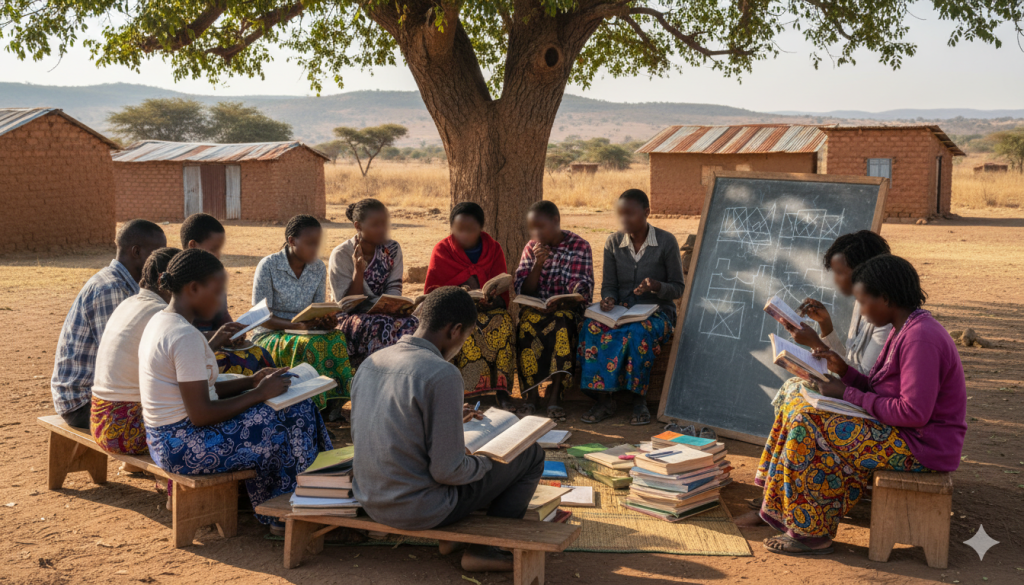
Literacy remains one of the most critical development challenges across the African continent. Despite progress in school enrollment over the past decades, millions of children, youth, and adults still lack basic reading and writing skills. Literacy challenges in Africa are deeply connected to poverty, inequality, violence, and inaccessibility of good education. There are long term social and economic impacts of rural communities, girls and marginalized groups being disproportionately affected. Solutions to the problems of literacy in Africa are not all about correcting the education systems but also empowering the communities, enhancing economic development and sustainable development. To create a more literate and inclusive future, it is important to understand the underlying causes and solutions to this problem.
The Current State of Literacy in Africa
Literacy issues in Africa are very diverse by region, although the rates of literacy are generally low as compared to the rest of the world. Sub-Saharan is one of the regions that contribute a large number of the illiterates in the world. Some nations have achieved significant progresses by reforming their policies and donor-funded initiatives, but there are still those that are still learning to cope with insufficient funding to the education sector and a high school dropout rate. In most places, despite the children in school, they do not obtain the basic literacy skills as the classes are overcrowded and there are no trained teachers.
Key Factors Behind Literacy Challenges
Literacy in Africa is a complex issue that is linked to a number of factors. The children are compelled to drop out of school by poverty in order to help their families. The situation is also aggravated by gender inequality whereby girls are in many cases denied an education since they are either married off or because of culture. War and displacement cause a total disruption in the schooling system that left millions of children without any stable learning system. Also, teaching a language that is not native may impede understanding and therefore learners may find it harder to acquire literacy.
Impact on Economic and Social Development
The effects of the literacy in Africa are severe in the long run. Literacy levels are low which prevents the possibility of getting employment, decreases productivity and slows down economic growth. Persons with low levels of literacy have challenges with access to healthcare, understanding of civic rights, and full involvement in the society. Poor literacy performance at the national level undermines the process of human capital development and lowers the competitiveness of a country in the global economy.
Keep Reading
Innovative Approaches and Solutions
The problem of literacy in Africa should be handled in a multi-dimensional manner. Governments are also spending more on the training of teachers, curriculum reform and early childhood education. Literacy programs and adult education programs based in communities are bridging learning disparities outside of school. Mobile technology and digital learning resources are also becoming increasingly relevant particularly in remote locations where access to learning material is widened. Governments, NGOs and international organizations need to work in partnership with each other in order to scale such solutions.
