
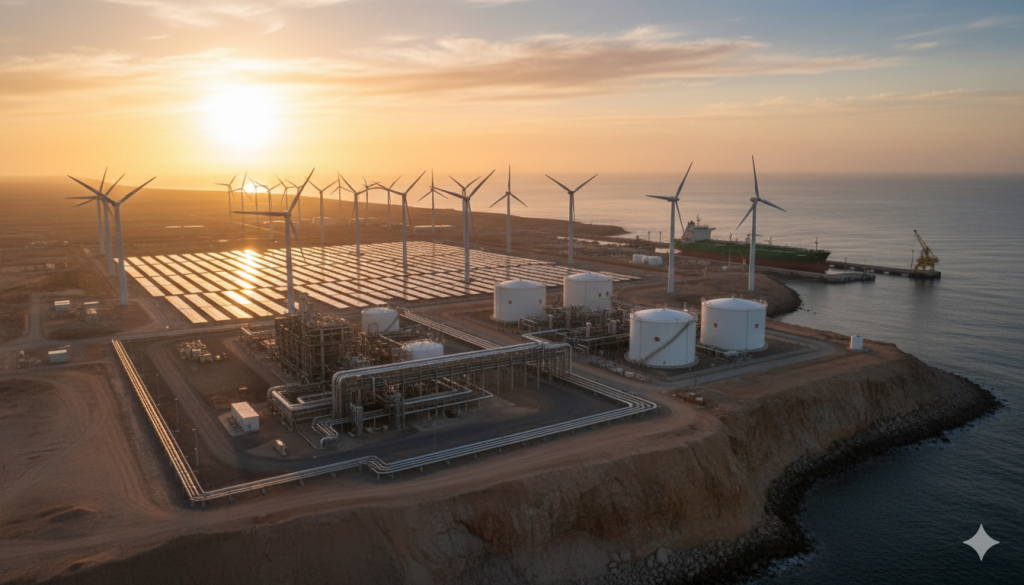
The deal centres on development-stage funding for an industrial-scale green ammonia plan linked to Namibia’s coastal corridor, with related momentum building in South Africa’s hydrogen pipeline. In plain terms, this is not “plant construction money” yet. It is money meant for the messy middle: feasibility checks, early engineering work, permits, grid and port studies, and commercial planning.
People working in project finance know this stage can stall for silly reasons. A missing water study. A delayed land process. A port slot is not confirmed. Development funding addresses those bottlenecks early, so the project does not keep circling in paperwork limbo.
Why Namibia and South Africa Are Emerging Green Ammonia Leaders
Namibia keeps showing up in green fuel discussions for a simple reason: strong renewable resources and a coastline built for exports. Walvis Bay already operates as a working logistics point, with roads, handling yards, and the usual port rhythm. That matters when ammonia is part of the plan, because shipping schedules do not wait for late paperwork.
South Africa sits in a different position. It has deeper industrial demand at home and established heavy-industry clusters that can consume green molecules once supply becomes steady. Local offtake can stabilize pricing and make early projects easier to finance. And yes, there is also the export angle, but domestic demand tends to keep the early phase grounded.
A small but real detail: both countries deal with real-world constraints. Heat, dust, grid pressure, water planning. Anyone selling a perfect picture has not dealt with permitting timelines in the region. That is the truth.
Funding Structure and Key Financial Commitments
The funding structure discussed around this kind of deal typically sits under “development capital”. It covers studies and early engineering that reduce uncertainty later. Investors like it because risk is lowered before large cheques are written.
In Namibia’s case, the deal links a specialist fund with a project developer working toward a large facility near Walvis Bay. Development funding is usually staged, released against deliverables. That keeps discipline. A site assessment completed. An environmental process advanced. A grid connection concept agreed. Step by step.
A simple view of the development path looks like this:
| Stage | What typically gets done |
| Early feasibility | Site checks, wind/solar profiling, initial cost modelling |
| Pre-engineering | Early design, technology selection, water and power planning |
| Permitting | Environmental approvals, land process, port interface planning |
| Commercial set-up | Offtake talks, shipping logic, financing structure outline |
It sounds neat on a table. On the ground, it is not neat. Deadlines slip. Stakeholders change. Still, this is how projects move.
Technical Scope and Planned Project Infrastructure
Green ammonia projects depend on a chain, and each link must hold. Renewable power generation feeds electrolysers that produce green hydrogen. Nitrogen is separated out of air. Then ammonia synthesis happens, followed by storage and export handling.
For a coastal Namibian project, water supply and processing becomes a central part of planning. Desalination often enters the conversation. That is not a minor add-on; it affects cost, permitting, intake and discharge design, and energy planning. And it needs local alignment, or it becomes a headache later.
Infrastructure also includes transmission lines, substations, and storage areas designed for ammonia handling. Port interface planning matters too: pipeline routing, loading systems, safety buffers, and scheduling integration with existing port activity. These are the unglamorous details, but they decide if operations run smoothly or keep stopping.
Economic, Social, and Environmental Impact
Project promoters usually speak about jobs, and fair enough, construction work can be sizable. Local contracting, transport, security, fabrication, and port services can see a lift during build-out. Later, operations create fewer roles than construction, but those roles tend to be skilled and steady.
There is also the supply chain effect. Even a “green” project still buys normal things: cables, steel, valves, pumps, maintenance tools, safety gear. Nearby businesses can benefit if procurement is planned properly and not rushed at the last minute. Too many projects forget this, then act surprised.
On emissions, green ammonia targets replacement of conventional ammonia made with fossil fuels. That is the core environmental logic. Still, environmental impact depends on full lifecycle choices: power sourcing, water management, shipping routes, and operational reliability. A project that trips offline repeatedly does not help anyone.
Strategic Importance for Global Energy and Export Markets
Green ammonia is being positioned as a tradable energy carrier, especially for markets trying to cut emissions in fertilisers, shipping, and heavy industry. Namibia’s coastal location makes export logistics realistic, not theoretical. South Africa’s industrial base makes local demand realistic too, which can be equally important.
A practical example shows the difference: a fertiliser buyer wants dependable delivery windows. Shipping operators want stable volumes and predictable handling. Banks want signed offtake and clear risk allocation. Everyone wants certainty, and that is why development funding matters. It helps projects move toward bankable, verifiable plans.
Challenges and Risk Considerations
The biggest risks do not sound exciting, but they can derail timelines.
Grid access and transmission planning can be slow. Port capacity planning can get political. Water permits can take time, and local concerns deserve proper responses, not rushed presentations. Currency risk and global price swings also sit in the background.
Then there is the human side. Projects involve many parties, and coordination can slip. One department signs off, another pushes back. A new official arrives and asks for the file again. Feels strange sometimes, but it is part of how large infrastructure moves.
Future Outlook for Southern Africa’s Green Ammonia Development
The deal signals growing confidence in Southern Africa’s green ammonia pipeline, but it also hints at a tougher expectation: projects must prove readiness, not just ambition. Development funding is a filter. It supports serious teams and quietly sidelines weak plans that cannot complete studies or secure permits.
If Namibia continues building export-ready project corridors and South Africa continues structuring domestic demand pathways, the region can attract more early-stage capital. The next big milestone is simple: more projects reaching the investment decision stage, then actually getting built. Paper projects do not export ammonia. Built projects do.
Keep Reading
FAQs
1) What does a green ammonia project funding deal usually pay for at the early stage?
It usually covers feasibility studies, early engineering, permitting work, grid and port planning, and initial commercial negotiations.
2) Why do Namibia and South Africa keep appearing in green ammonia discussions?
Namibia offers export-friendly coastal logistics and strong renewables, while South Africa offers industrial demand and established infrastructure.
3) What makes green ammonia harder to deliver than a normal renewable power project?
It needs multiple connected systems: renewable generation, electrolysers, nitrogen separation, ammonia synthesis, storage, and safe export handling.
4) Which risks tend to delay green ammonia projects in Southern Africa?
Transmission planning, water permits, port interface approvals, community processes, and shifting commercial terms can stretch timelines.
5) What is the next milestone after development funding gets signed?
The next milestone is completing studies and permits, securing offtake terms, then reaching a final investment decision for full construction.
