
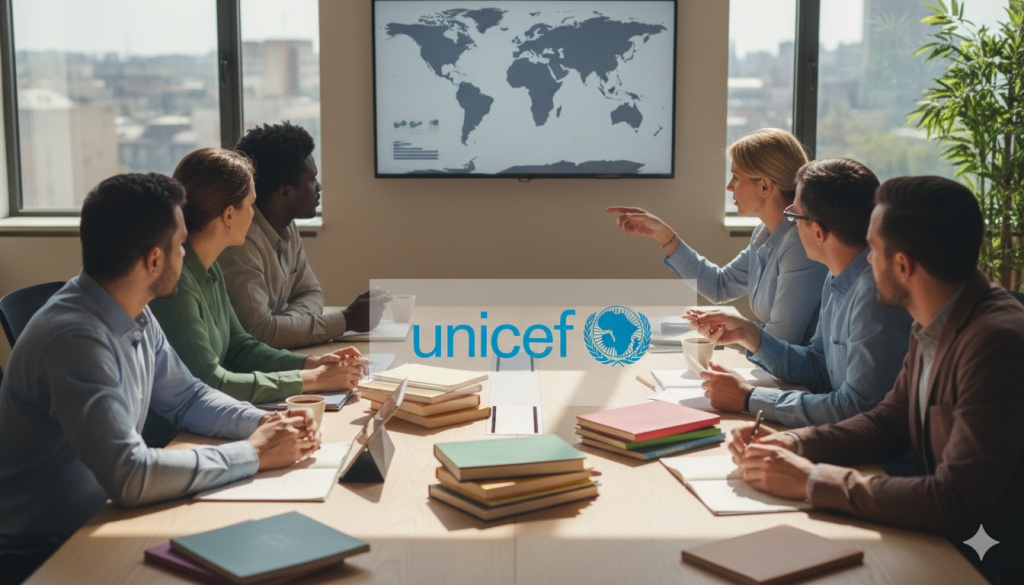
The African Union and UNICEF have aligned on a continent-wide push to lift early grade learning, with attention on literacy and numeracy in the first years of school. The partnership centres on scaling approaches that show results in real classrooms, not just good paperwork. And yes, the tone is urgent, because delays cost children time that never returns.
Why Foundational Learning Remains a Critical Priority Across Africa
In many communities, classrooms still run on crowded benches, thin chalk, and tired timetables. A child can attend school regularly and still struggle to read a short sentence or solve simple sums. Teachers notice it early, parents notice it later, and systems notice it only after exams. That lag frustrates everyone. Foundational skills decide the rest of schooling, and weak foundations make every later reform harder.
Key Objectives of the African Union and UNICEF Collaboration
The collaboration is built around a few practical aims that education ministries can actually act on. Better teaching routines in early grades. Clear targets for reading and numeracy. Stronger teacher support that does not vanish after one workshop. And tighter measurement, because polite assumptions do not improve reading levels. The work also aims to keep ministries aligned, so efforts do not scatter across too many small projects.
The End Learning Poverty for All in Africa (ELPAF) Campaign Overview
ELPAF has been positioned as a shared campaign umbrella, meant to rally member states around basic reading, writing, and counting in early grades. The idea is simple: stop treating foundational learning as a side topic. Put it at the centre of national plans and budgets. The campaign language is direct, and that is refreshing. Education often gets wrapped in fancy phrasing, then nothing changes.
Strengthening Policy, Financing, and Implementation Across the Continent
Policy and funding are the messy middle where good plans often collapse. The partnership’s practical value will depend on how clearly actions are costed, tracked, and supported through annual cycles. Implementation also needs steady coordination across ministries, districts, and schools. One more task list will not help. A smaller, sharper set of routines might.
| Area | What gets tightened | What it changes on the ground |
| Policy | Clear early-grade targets | Less confusion for schools and district teams |
| Financing | Predictable funding cycles | Fewer delays in materials and training |
| Delivery | Coaching and monitoring cadence | Teachers get feedback during real teaching weeks |
And a small gripe that many educators share: endless pilot projects create fatigue. Scaling fewer programs, done well, can feel calmer and more serious.
How Member States Are Engaging in Scaling Proven Learning Solutions
Member states are being encouraged to take what already works in similar contexts and expand it, instead of restarting each time leadership changes. That includes practical steps such as adapting early-grade lesson structures, tightening teacher coaching, and using structured materials that reduce guesswork. It also includes aligning ministries and local officials on routines, so schools do not receive mixed signals. Small alignment fixes, big impact. Sounds boring, but it is real work.
Evidence-Based Approaches Supporting Foundational Literacy and Numeracy
The approaches being discussed lean toward what teachers can repeat daily without extra drama. Short reading practice blocks. Regular assessment that is quick and light, not heavy exam pressure. Targeted support for children falling behind, before the gap becomes permanent.
Teacher coaching that happens near classrooms, not only at hotels and conference halls. And better learning materials at the right reading level, because mismatched textbooks waste time. Chalk dust, page turns, quiet repetition. That is where progress often starts.
Major Challenges Facing Foundational Learning Systems in Africa
The barriers are familiar, and that is part of the problem. Too few trained teachers in early grades. Large classes that make personal attention rare. Limited learning materials, or materials that do not match children’s reading level. Instruction time lost to interruptions and overcrowded schedules. Language of instruction shifts that confuse learners. And financing that arrives late, tied to complicated processes. There is also a blunt truth that policy cycles move faster than school improvement. That mismatch burns energy.
Expected Impact of the AU–UNICEF Partnership on Education Outcomes
If the partnership holds steady and countries follow through, the most visible change should appear in early-grade classrooms first. Better reading fluency, stronger number sense, and fewer children drifting silently at the back. Over time, stronger foundations should reduce repetition and dropout, because children cope better as content gets harder.
The longer-term effect is system-wide: more learners reaching secondary levels with actual skills, not just attendance history. And that matters for jobs, training, and stability.
FAQs
1) What makes the African Union UNICEF partnership different from earlier education drives in Africa?
It focuses on scaling classroom routines that already show results, instead of launching many new pilots each year.
2) What does learning about poverty in Africa mean in daily school terms?
It points to children spending years in school yet still struggling with basic reading and simple number work.
3) How does ELPAF connect with AU education strategy across member states?
ELPAF acts as a shared campaign frame so countries can align targets, budgets, and delivery steps around early learning.
4) What kind of UNICEF education initiatives are usually linked with foundational learning in Africa?
Common efforts include teacher coaching, structured early-grade materials, simple assessments, and targeted support for learners falling behind.
5) What are the biggest obstacles affecting education reforms Africa needs for early grades?
Teacher shortages, large classes, weak materials, uneven funding cycles, and inconsistent follow-through at district and school levels.
