
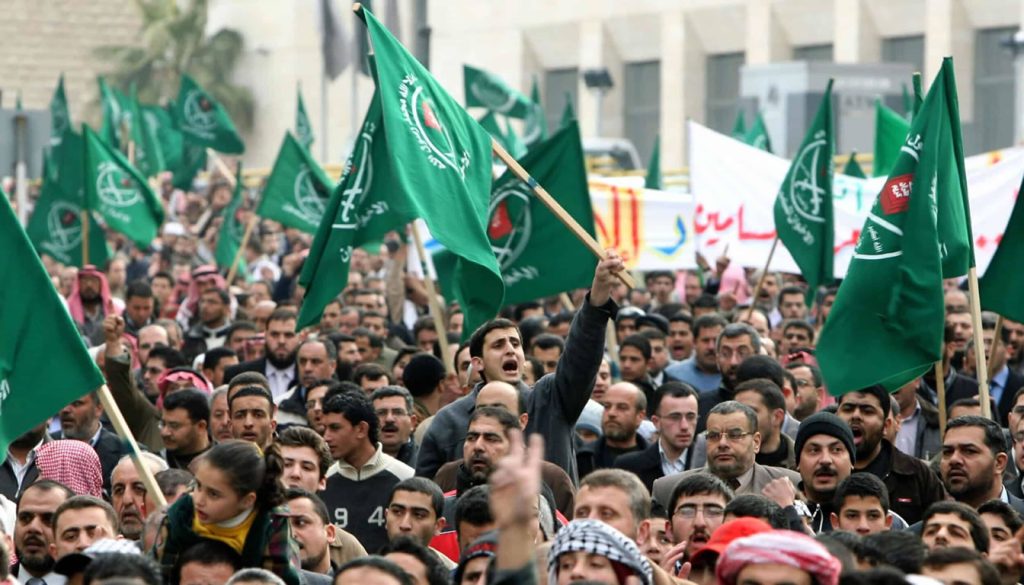
The United States has officially designated certain Muslim Brotherhood-affiliated groups in Lebanon, Egypt, and Jordan as terrorist organisations. This designation was made known by the U.S. State Department and Treasury in January 2026 and reflects a decision made by the U.S. government based on an analysis of potential threats to national security, as well as an assessment of the financial regulations that govern how the U.S. conducts foreign business operations and applies its executive authority.
The designation is both institutional and specific to particular organisations, meaning it does not apply to any religious communities or segments of society.
How U.S. Law Defines and Applies Terrorist Labels
Terrorist designations, according to the laws of the United States, apply to specific entities that have been identified by U.S. authorities as being involved in, or providing assistance to, terrorist activities. In this situation:
- The Muslim Brotherhood organisations located in both Egypt and Jordan were designated SDGTs.
- The organisation located in Lebanon, commonly referred to as al-Jamaa al-Islamiya, was designated both as an SDGT and as an FTO, which is a more restrictive category.
- An additional senior official affiliated with the group from Lebanon was also sanctioned.
The designations resulted from an interagency review that included security, diplomatic and financial agencies.
Legal Framework and Government Authority: Executive Powers Behind the Designation Process
The actions taken by the federal government were done through existing U.S. laws and regulations, not through the use of emergency or other extraordinary powers. The three sources of authority that enabled these actions are:
- The “Executive Order 13224” empowers the federal government to freeze the assets of individuals and entities affiliated with terrorist activities and to prohibit transactions with those individuals and entities.
- An Executive Order from the White House (issued in late 2025) directed all appropriate Federal Agencies to review whether certain organisations meet the statutory requirements for designation.
- The Statutory Authority of U.S. counter-terrorism and immigration law (including procedures for determining whether a foreign organisation is a foreign terrorist organisation).
Each of these statutory authorities is consistent with standard practices under U.S. Policy, including internal review processes and the criteria that must be satisfied before an organisation can be designated as a foreign terrorist organisation.
Read More | Designation of the Muslim Brotherhood and CAIR as Terrorist Organisations in the State of Florida, USA
Purpose of the Designation: Disrupting Terrorist Financing
According to U.S. officials, there are four specific goals for having an entity considered a terrorist organisation:
- To create an environment where the financial networks of terrorist groups cannot function, therefore stopping their funding and use of international financial systems.
- To enforce transaction bans and compliance requirements in order to prevent the flow of resources to these designated entities.
- To limit the operational capacity of these sanctioned entities through the restriction of the use of financial resources and coordination with others (both domestically and internationally) for the conduct of their operations.
- To enhance and support the larger efforts to provide for the stability of countries in the region or those countries that are impacted by terrorist activity.
The designation itself does not authorize military action; it does not constitute a value judgment regarding a person’s religious beliefs or political opinions.
Financial Implications: Asset Freezes, Transaction Bans, and Obligations for U.S. Institutions
After an entity becomes designated:
- All assets and interests subject to U.S. Territory are frozen.
- Individuals and Companies in the USA, as a general rule, cannot engage in a transaction with designated entities.
- Entities that are owned, directed by, or otherwise controlled by designated entities may also be under sanction(s).
- Financial institutions must ensure that all transactions comply with sanctions regulations.
The overall purpose of these intended actions is to encourage financial accountability & transparency, and not to provide collective punishment.
Media Context: Global Reactions, Government Responses, and the Policy Nature
There has been considerable coverage of the U.S. announcement by major global media organisations and subsequent reactions to it from a number of regional governments. Some states welcomed these announcements in the framework of international counter-terrorism co-operation, whilst some of the entities designated in this manner have rejected the allegations against them and condemned this action.
The variety of responses indicates that this designation represents a policy decision within U.S. jurisdiction with regard to the application of U.S. law; in addition, the majority of the consequences associated with designating an entity as such will be felt through the U.S. financial system.
What the Designation Does Not Do
To ensure clarity and precision:
- The designation does not target Islam or the Muslim faith as a whole;
- The designation will have no effect on the civilian population or on civilian organisations not related to the parties named in the designation.
- The designation will in no way affect an individual’s civil rights due to their beliefs or identity;
- The designation does not make an individual a criminal based on their lawful political speech or expression that falls outside the scope of U.S. sanctions law.
As such, when discussing the designation publicly, it is critical to draw the distinction noted above in order to correct any inaccuracies.
Why Official Sources and Legal Accuracy Matter in Sensitive Security Issues
As terrorism-related designations are so sensitive, it is essential for conversations about them to be guided by the following:
- Officially published U.S. Government documents
- Legally defined terms
- Credible, mainstream media reporting
By providing accuracy in how we frame these discussions, we can maintain focus on the issues of POLICY, LAW & SECURITY rather than partisan or ideological positions/identities.
Conclusion
The U.S. government’s legal classification of Muslim Brotherhood-affiliated groups located within Lebanon, Jordan, and Egypt as a result of its determination that they pose a threat to the nation’s security, and the government intends to take action against them through financial enforcement policies. Through the use of existing Federal laws & Executive authority, the United States seeks to minimise the ability of identified security risks to conduct business and raise money.
These actions on the part of the Government are specific in nature, follow proper procedures, and utilise existing governmental agencies and procedures to accomplish their intended goal. Defining the limitations of these actions is critical to fostering public awareness, dialogue, and constructive examination of the information being produced.
