
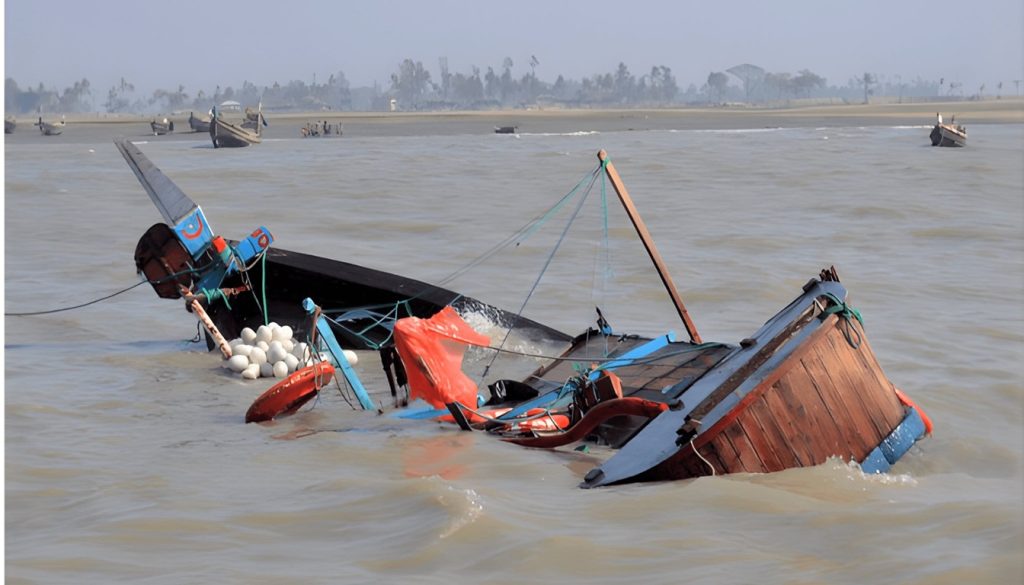
At least 25 people have died and 14 are missing after an overloaded boat capsized on a river in Yobe State, Nigeria, authorities confirmed. The incident occurred during an evening crossing when the vessel, reportedly carrying more passengers than its capacity, overturned in strong currents.
Local officials fear the death toll may rise further as rescue teams continue searching for the missing. The exact number of passengers on board has not been confirmed, but eyewitnesses say the boat was crowded and lacking basic safety equipment.
Overcrowding and Safety Lapses Blamed
Preliminary reports indicate that the vessel was overloaded, making it unstable on the river. Passengers reportedly did not have access to life jackets or other flotation devices, a chronic concern on many Nigerian waterways.
Witnesses described how the boat struggled against strong water currents before overturning, sending dozens into the river. Rescue efforts were immediately launched, but many victims were submerged before help could arrive.
Search and Rescue Underway
Emergency responders, local fishermen, and volunteers have been combing the river for survivors and remains. The search operation has faced challenges due to weather conditions, strong currents, and limited equipment.
Officials warn that the number of casualties could increase as teams work to locate those still missing. Families of passengers are anxiously awaiting news, and local authorities have urged calm as rescue efforts continue.
Recurring Issue of Inland Water Safety
Boat accidents remain a recurring problem in Nigeria, particularly in riverine and rural areas where waterways serve as vital transport routes. Analysts say overloading, lack of regulatory enforcement, and poor safety measures contribute to frequent tragedies. Ensuring compliance with safety standards, including life jackets and capacity limits, remains a key challenge.
Calls for Better Enforcement
Community leaders and safety advocates have called for stricter enforcement of river transport regulations and improved training for boat operators. Many argue that proactive measures are necessary to prevent similar disasters in the future.
Officials have pledged to investigate the incident and hold responsible parties accountable where negligence is found.
