
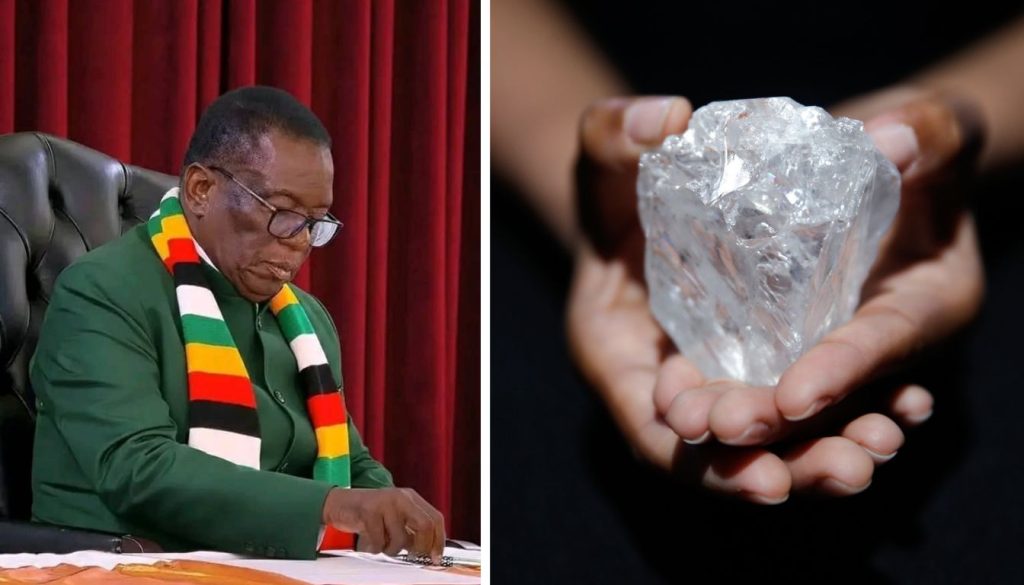
Governments across Africa are putting stricter policies on the exportation of raw minerals, and this is a major change in economic and resource policy. In Zimbabwe and in the Democratic Republic of Congo (DRC), the leaders are enacting bans, quotas, and restrictions on raw mineral exports to make sure that their countries gain more out of their natural resources.
Lithium Export Restrictions in Zimbabwe.
Zimbabwe has imposed constraints on the exportation of raw lithium ore to stimulate processing and investment in the local industries. Lithium is a major component in electric vehicle batteries and renewable energy technologies, and the government is hoping to gain more value out of the world demand instead of selling raw materials at a low price.
Control of Cobalt and Copper in Congo.
DRC, the largest cobalt producer in the world, has put up export controls and quotas to stabilise the prices and cut down on illegal mining. Some artisanal mineral processing operations have been suspended by the government, too, in an attempt to enhance traceability and curb corruption in the mining industry. These are aimed at enhancing controls to supply chains of minerals.
Local Processing and Jobs Push.
A number of African states are focusing on local mineral processing as a way of providing employment and manufacturing industries. Indicatively, Malawi declared that it will restrict the export of raw minerals to encourage local industrialisation and possibly keep away hundreds of millions of dollars every year on value addition. The fact that processing minerals can be done locally is a way for governments to increase their revenue and decrease their reliance on foreign companies.
International Competition of Minerals of Essence.
Electric vehicles, renewable energy, and electronics depend on such critical minerals as cobalt, lithium, and rare earth elements. With increasing global competition and geopolitical tensions regarding the supply chains, African countries are demanding more power over these resources.
Economic and Policy Implications.
Exportation regulations form part of wider economic policies that focus on national dominance of resources, greater government income and development of own industries at the downstream level. The policies also depict a drift towards economic nationalism and industrial growth in the continent.
Summary
African countries such as Zimbabwe and DRC are restricting exports of the raw minerals to retain the economic value, enhance governance and strengthen their position in the international mineral supply chains. These countries expect to earn more money and enhance industrial development by encouraging the local processing of the mineral and by introducing more rigid regulations, and achieving more leverage in the world market of the vital minerals.
