
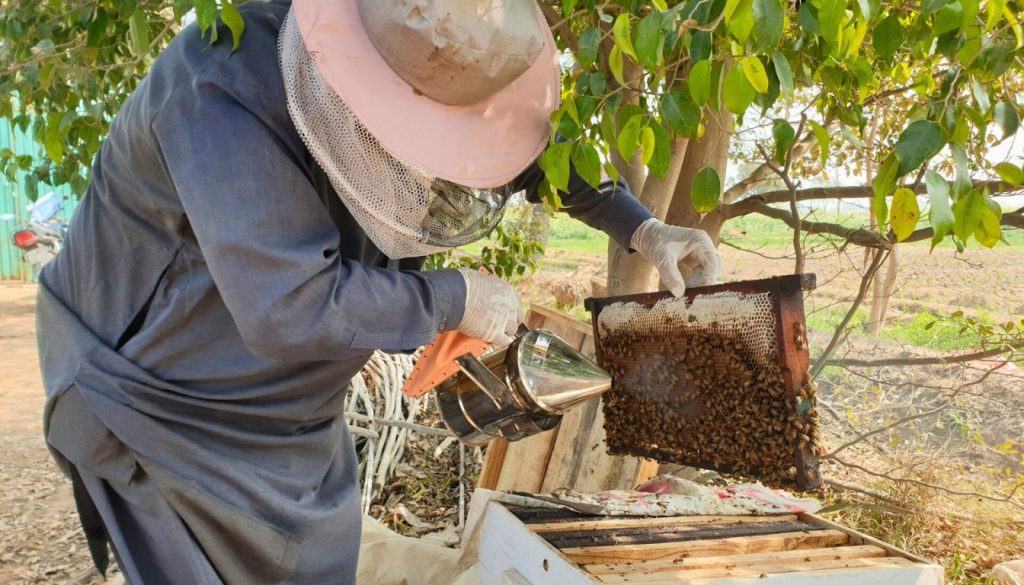
In an effort to fight off some of the effects of climate change and to replace harmful practices such as charcoal burning, Islamic Relief has started a beekeeping initiative in Dabel, Moyale, Kenya. Through this project, locals in the dry northern areas of Kenya will learn how to turn otherwise unusable and harsh areas into viable sources of income through sustainable honey production.
Origins of Moyale Kenya Beekeeping Project
Farmers from Moyale’s Dabel region have become frequent victims of drought, which has resulted in illegal activities like charcoal production to generate an inconsistent income for themselves while damaging the local environment. To address this issue, Islamic Relief has worked with the local government to train 44 farmers (some male and some female) in modern beekeeping and how to manage hives, harvest honey and process their product. This program was initiated as part of the climate crisis initiative, and because of the dry climate within the region that is conducive to beekeeping, along with minimal land use, the whole community in the Dabel area can participate in the program.
Impact on Livelihoods and Empowerment in Moyale
Farmers have good and consistent harvests of honey, with the average being 200kg from 2 harvests and worth around £6/kg which helps to pay for food and school fees. Women like Ifrah who is 24 are able to manage their hives and as a result, help to relieve the pressure on their families by giving them a degree of financial independence. By forming groups to sell their products collectively, they are able to market their organic honey, which is in high demand, therefore encouraging more people in the area to take up beekeeping rather than cutting down forests. Molu Godana, the livestock officer, has seen improved resilience and the ability for people to make a living.
Environmental Benefits of Beekeeping in Moyale, Kenya
Beekeeping supports the viability of nests, providing crucial food for plants by providing the habitat bees need for pollinators to thrive and survive, and will help to reduce the impact of climate-related stresses through reductions in tree removal and habitat loss and positively influence efforts to conserve and protect this specific ecosystem. In addition, beekeeping is a component of an overall program to help a network of over ten thousand farmers become more self-sufficient in response to extreme weather events.
FAQs
- What is the beekeeping project in Moyale, Kenya?
Islamic Relief’s initiative in Dabel trains 44 farmers on beekeeping to create sustainable income amid droughts.
- How has it impacted locals in Moyale?
Farmers harvest 200kg of honey sold profitably, funding education; women gain independence.
- What environmental benefits does Moyale beekeeping offer?
It preserves habitats, aids pollination, and cuts deforestation for climate resilience.
