
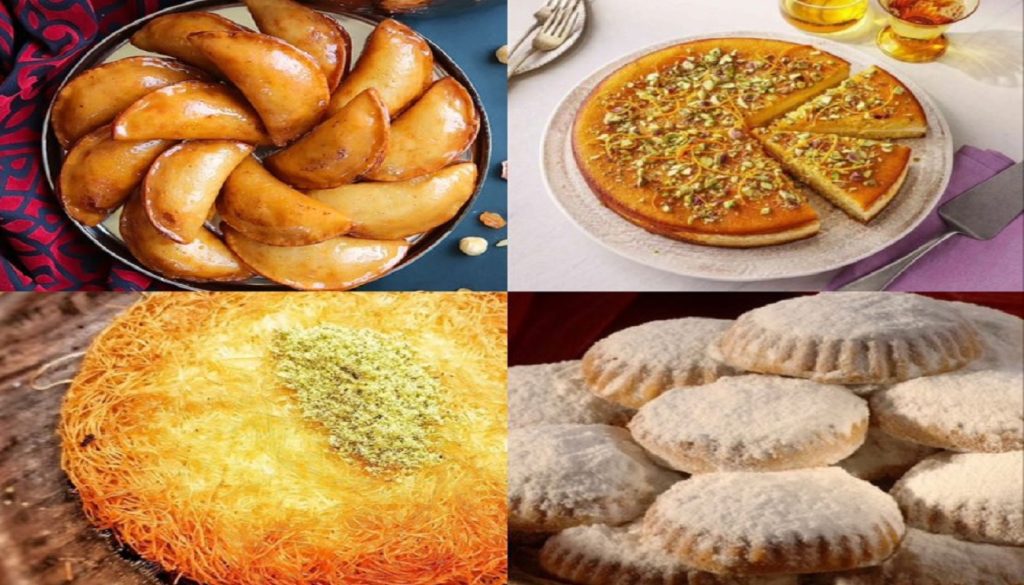
The feast of sweets during Ramadan in Egypt is made up of scrumptious candy, cookies, pastries, and other desserts. These delightful confections are created using a variety of different textures, flavours, and aromas. Families enjoy Ramadan dessert treats together after breaking their fast and are often sold by street vendors throughout the city of Cairo. Many of these desserts are derived from the Ottoman Empire and utilise pantry staples to create decadent and delicious desserts.
What Makes Qatayef Egypt’s Ramadan Star?
Qatayef are small, round pancakes made from yeast dough, fried on the bottom side only to preserve their moisture. They can be stuffed with either walnuts, pistachios, or sweet yoghurt cream. After the qatayef are folded in half, they are deep-fried until golden brown and coated in syrup made with sugar and rosewater. The result is a crunchy outer shell with a soft, gooey inside. Those observing Ramadan can find large crowds around the various stalls in Cairo where these pancakes are sold, usually just after sunset. These are considered festive foods that can be made at home by mixing yeast, flour, and warm water for the batter.
Kunafa: Cheesy, Syrupy Ramadan Indulgence
Kunafa is a traditional dish eaten during Ramadan made of kataifi (shredded phyllo dough) layered with either melted cheese or cream, baked until brown and out of the oven, and then bathed in syrup. In Egypt, the “Ottoman Style” consists of butter-fried strands of shredded dough mixed with syrup and nuts served with clotted cream. Due to its stringy pull and topped with pistachios, it has become very popular for Iftar (breaking fast). Also, unlike sweeter versions of kunafa found in other countries, the Egyptian version focuses more on the crunchy nature than on sweetness.
Balah El Sham: Crunchy Fried Delight
Balah el sham, or “dates of the Levant,” are churros-like pastries piped from choux dough, fried crisp, and dunked in syrup. Their ridged exterior traps sweetness, balanced by yoghurt or coffee. A top Ramadan seller, they’re messier but addictive, often topped with pistachios. Vendors pipe them fresh over oil for that perfect chew.
These desserts foster community, with streets buzzing during Ramadan. Try making them at home for authentic flavour – your iftar will shine!
Summary:
Savour Egypt’s Ramadan traditions with qatayef, kunafa, and balah el sham. These syrupy delights bring families together during iftar. Easy recipes and cultural insights for food lovers everywhere. #RamadanDesserts #EgyptianFood
Frequently Asked Questions
1. How do you make traditional Egyptian qatayef at home?
To prepare Traditional Egyptian Qatayef, mix flour, yeast, and milk as batter, cook one side, fill with nuts or cream, then fold and fry them, to fry & then place them in syrup before serving.
2. What’s the difference between Egyptian kunafa and other versions?
Egyptian Kunafa differs from others, using Butter to fry the thin strands, but a lot less focus on Cheese than Syrian Styles.
3. Are basbousa and qatayef only for Ramadan?
Basbousa is a dessert available all year; however, Qatayef is typically only eaten during Ramadan.
