
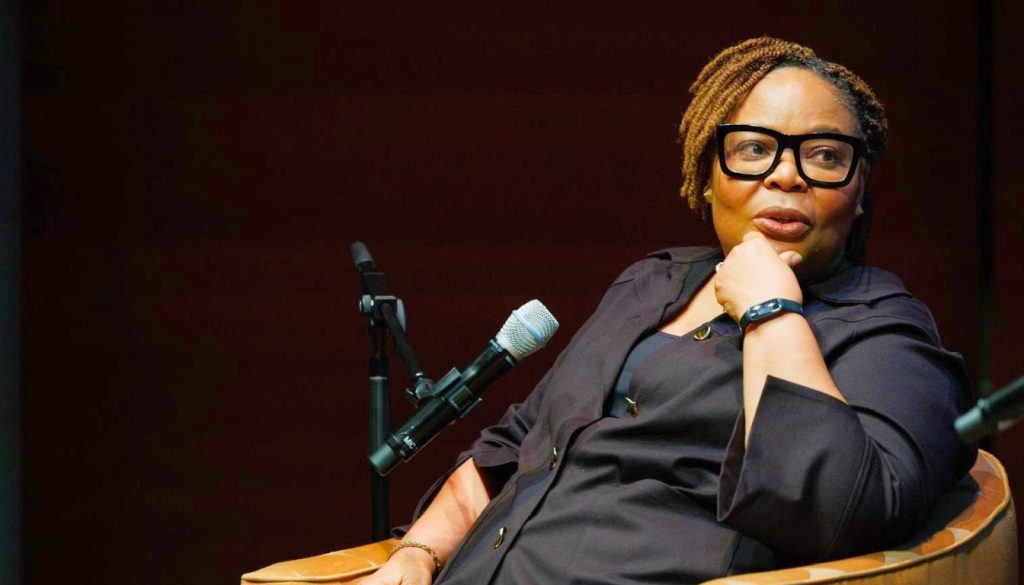
The world knows Leymah Gbowee as the leader of a women’s peace movement that was instrumental in ending Liberia’s brutal civil war. Instead of relying on political authority or military might, she relied on ordinary women from diverse backgrounds who unified to call for an end to the war. The strength of Gbowee’s strategy is its basic premise: The enduring qualities of unity, persistence, and nonviolence.
To unite the different religious factions among the women involved in her peace movement, the first thing Gbowee did was to encourage Christian and Muslim women to work together. While segregation could have turned an already hostile conflict into a war of bloody vengeance against both sides, Gbowee advocated for dialogue, prayer, and group actions as a united front. The religious unity that resulted from this group was able to reconcile the previously conflicting factions and transform them from religions that had been sources of conflict into two spirits working in harmony to unite all people. By presenting this unified front to leaders, they could not ignore it.
Public Pressure Without Violence
Gbowee thought that peaceful resistance was strong. She set up protests, sit-ins, and marches that were hard to miss. In 2003, women made a human barricade during peace talks in Accra, stopping delegates from leaving until progress was made. This was a turning point. This brave, nonviolent pressure made leaders take negotiations seriously and moved the peace process forward.
Participation that is open to everyone and centred on the community
Another important part of her plan was to include everyone. Gbowee made sure that the movement stood for real people, especially women, young people, and people from underrepresented groups. She didn’t rely on elites or outside groups; instead, she focused on local ownership. This made the movement more real and made sure that peace efforts dealt with the daily lives of the people who were most affected by the war.
Women as Leaders and Deal-Makers
Gbowee was a fierce proponent of women’s role not just as victims of war but as active participants negotiating and making decisions. Through her work, she increased the number of women engaged in politics in Liberia and ultimately led to the election of the first female president in Africa, Ellen Johnson Sirleaf. She believed that women have to be in positions of authority for long-term peace and good governance.
Gbowee was diligent in working to maintain peace after the war ended. She assisted in creating systems to enable communities to provide early warning signs of violence to law enforcement through grassroots efforts, particularly with a focus on including women living in rural areas. By linking community groups with law enforcement agencies, she was able to ensure that the peacebuilding process continued even after formal peace agreements had been signed.
Read more: Top 10 Influential African Women in 2026 Leaders List Today
FAQs
1. Who is Leymah Gbowee?
Leymah Gbowee is a peace activist from Liberia who won the Nobel Peace Prize. She is known for leading a nonviolent women’s movement that helped end Liberia’s civil war.
2. What is her most well-known plan?
The 2003 human barricade at peace talks, which forced leaders to come to an agreement, is one of her most famous strategies.
3. Why was it important for her movement to bring people of different faiths together?
Christian and Muslim women came together to support the movement through interfaith unity. This showed that peace could be found even when people had different beliefs.
