
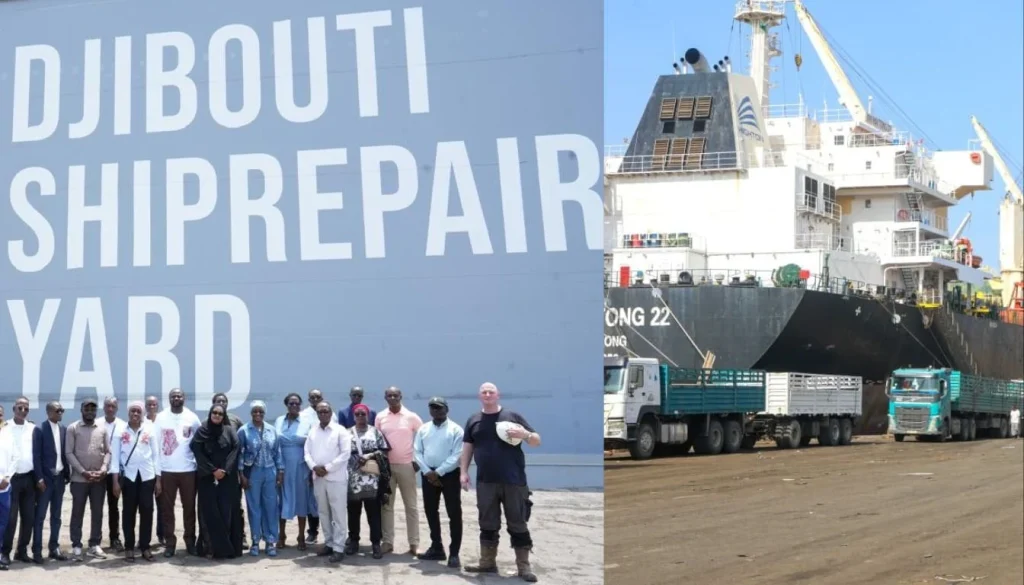
Amid the global escalation, the shipping routes are under strain. The emergence of the Djibouti Ship Repair Yard is gaining major attention. It is positioned around the crossroads of the Red Sea and the Gulf of Aden.
The shipyard facility is more than just an industrial project that represents a strategic asset. It is one of the world’s most critical maritime corridors. Since the maritime ecosystem is getting intensified under the war. Djibouti’s growing role in the shipping industry is becoming central to both regional stability and global trade efficiency.
What Is the Djibouti Ship Repair Yard?
The Djibouti ship repair yard is a modern maritime facility. It is designed to provide maintenance, repair, and servicing for commercial and naval vessels operating in that region
It is developed as a part of Djibouti’s broader ambition to become a logistics and maritime hub. The yard is strategically located near one of the busiest shipping lanes in the world. Moreover, it allows vessels to access repair services without diverting far from major trade routes.
The facility complements Djibouti’s existing port infrastructure. Hence, strengthening its position as a key node in international shipping networks.
Capacity and Technical Capabilities
The Djibouti ship repair yard has the capability to repair various types of ships which include large cargo vessels and oil tankers and naval ships. The facility has three types of docking facilities which include dry docks and floating docks and advanced maintenance systems that enable staff to perform difficult repair work.
The yard provides services which include hull maintenance and engine repairs and structural modifications and emergency servicing. The region requires this level of capacity because ships need quick repairs after enduring extended trips through tough environmental conditions.
The facility provides local services which decrease the demand for ships to go to faraway ports, resulting in reduced time requirements and lower operational expenses.
H.E. Amb. Legesse Tulu (PhD) observed operations at #Djibouti’s Old Port, where critical products for #Ethiopia—incl. fertilizer, essential goods, & government machinery—are handled. He underscored the need to intensify services for priority imports to ensure timely delivery. pic.twitter.com/jOcGMh4cA6
— Ethiopian Embassy Djibouti (@ETEmbassyJIB) April 1, 2026
Strategic Location: Gateway to the Red Sea
The importance of the Djibouti ship repair yard is closely tied to its location. Djibouti sits near the Bab el-Mandeb Strait, a chokepoint connecting the Red Sea to the Indian Ocean.
The route is vital for global trade, with a significant percentage of the world’s shipping traffic passing through it. Any disruption in this corridor can have far-reaching consequences for supply chains and energy markets.
In this context, the presence of a fully equipped repair yard enhances the resilience of maritime operations. Ships encountering technical issues can be serviced quickly, minimizing delays and maintaining the flow of goods.
Impact on Regional Trade and Economy
The Djibouti ship repair yard project will provide significant economic benefits to the surrounding area. The facility generates revenue through its operations which attract vessels that require maintenance and repair services while creating new job opportunities.
The facility boosts Djibouti’s logistics capabilities by supporting its existing network of ports free zones and transportation systems. The country uses its integrated system to improve trade connections between Africa and the Middle East and Asia. The yard enables nearby countries to access maritime services which helps them avoid using remote facilities while improving their regional transportation links.
Global Geopolitical Significance
The rise of the Djibouti ship repair yard reflects broader geopolitical trends. As major powers increase their presence in the region, infrastructure projects like this gain strategic importance.
Djibouti already hosts multiple international military bases, underscoring its significance in global security dynamics. The addition of advanced maritime infrastructure further enhances its strategic value.
In an era of shifting alliances and increasing competition over trade routes. The facilities like this become critical assets in maintaining influence and ensuring operational readiness.
Epilogue: Maritime Asset Djibouti Shipyard
The Djibouti ship repair yard is more than just the logistical development. But it is a strategic investment in global maritime infrastructure growth. The perfect blend of capacity, location, and strategic relevance. The Djibouti’s role in international trade and security widens. It plays a crucial role in ensuring efficiency, stability, and resilience in the maritime sector across the world.
Explore More Must-Reads
What are Nipah virus warning signs?
Explore the symptoms, spread patterns, and why officials are raising urgent alerts to stay safe.
Which AI tools will dominate 2026?
Discover the most powerful emerging AI tools you must know to stay ahead in the tech world.
Why is AI adoption slow in farming?
Check the key challenges limiting AI use in African agriculture and what it means for farmers.
How is Nvidia building Africa AI factory?
Explore how Nvidia and Cassava are launching Africa’s first AI factory to boost innovation.
Can AI improve Africa weather forecasting?
Discover how AI-driven weather forecasting is saving lives across the Horn of Africa.
