
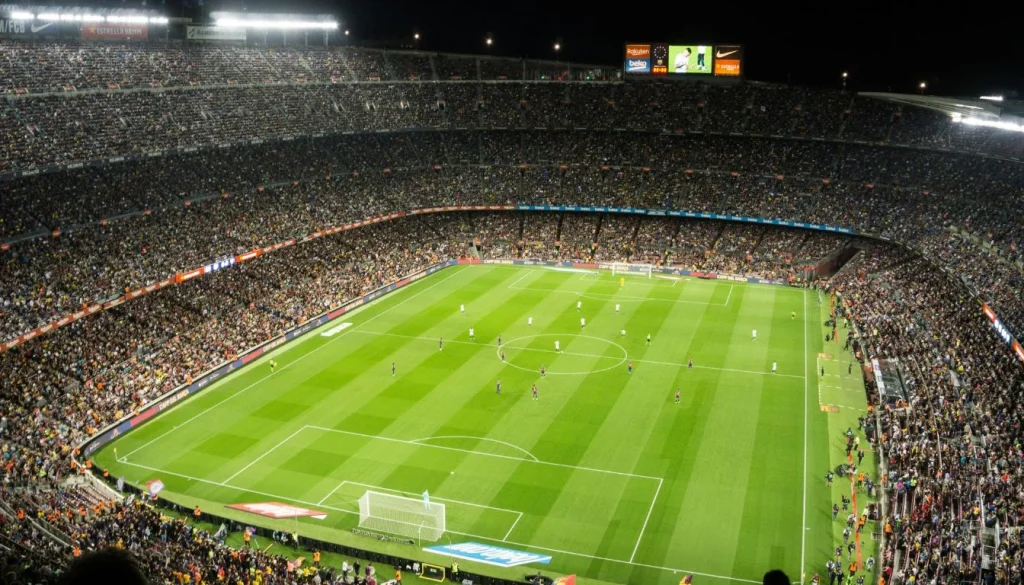
Libya has officially stepped onto this big, grand stage of African football governance, or well, something like that. In a rather monumental move for the nation, the Libyan Football Federation (LFF) announced its official candidacy to host AFCON 2028, 2032, or 2036, depending on what CAF prefers. Libya AFCON 2028 stadium requirements, It’s been 44 years since Libya last hosted the prestigious tournament back in 1982. Now, while the country tries to push a massive infrastructural comeback, fans and critics are all basically asking the same thing: Can Libyan infrastructure really meet the strict CAF requirements? Here’s everything you need to know about the North African nation’s ambitious bid, and the way it plans to modernize its stadiums.
The Motivation Behind Libya’s AFCON Bid
Success in Regional Tournaments
Libya’s choice to enter the race to host AFCON 2028, 2032, or 2036 wasn’t really a spontaneous decision. As LFF President Abdelmoula Al-Maghribi said, the bold bid was heavily encouraged by the successful organization of the UNAF U-20 Championship in Benghazi in early 2026, as reported by Morocco World News. That tournament was a kind of proof to the Confederation of African Football (CAF), showing that the country has the security mechanisms, the real enthusiasm, and the developing infrastructure needed to manage international sporting events in a secure and effective manner.
Still, though, Libya is not just walking into an open lane. There is stiff competition. Around 17 national associations have said they are interested in hosting upcoming editions. They will be competing against very organized joint bids, including a huge Southern African grouping (Botswana, South Africa, Namibia and Zimbabwe). On top of that, Egypt and Ethiopia also show heavy interest, and of course all of it makes the timeline feel tight.
Upgrading Infrastructure to Meet CAF Requirements
For the nation to have a realistic chance at winning the bid, it really needs to modernize its sports venues in a big way. A successful bid dossier depends on showing total readiness across transportation, accommodation, and top-tier football pitches, like truly world-class surfaces and access.
The Rebirth of the Tripoli International Stadium
At the core of the bid is the iconic Tripoli International Stadium. It was recently reopened after a long cycle of renovations, and the 45,000-seat arena sits there like a signal of Libya’s sporting comeback, you know. This historic reopening matters because it quietly proves the government is paying, and not just talking, to lift facilities to modern standards. Alongside the capital’s main venue, there’s the Benghazi International Stadium, and it’s also moving fast with modernization efforts, so it can anchor the eastern side of the country in case of a potential tournament.
Understanding Strict CAF Stadium Requirements
If Libya is going to actually host AFCON 2028, 2032, or 2036, the venues have to meet a tight checklist, one that CAF and FIFA will enforce without much delay.
Key CAF requirements include, kind of like these items:
- Pitch Quality: Fields must use natural grass or FIFA-certified artificial turf, plus strong subsurface drainage systems, so the matchday conditions stay stable.
- Medical Facilities: Stadiums need dedicated emergency medical rooms, fully equipped. These spaces should include automatic ventilators, defibrillators, and direct ambulance access, with no awkward detours.
- Security and Crowd Control: Venues must include at least two external security perimeters, electronic access controls, and emergency egress routes that are clearly signposted, not just assumed.
- Player and Official Amenities: The sites must offer highly modernized dressing rooms, with tactical boards, air conditioning, and separate, designated referee suites.
For a detailed understanding of these mandates, refer to the official CAF Bidding Framework established in collaboration with international experts.
The push to host AFCON 2028, 2032, or 2036 has already fully started, and Libya says it is ready to prove itself. With serious funding going into historic sites like the Tripoli International Stadium and with the country sticking very tightly to the CAF conditions, the nation is trying to craft a strong narrative for its return to the middle of African football. Sure, the competition from other African football heavyweights is intense, but Libya’s ambitious plan still looks like a major, unshakable step for the sports landscape at home.
FAQs – Libya AFCON 2028 stadium requirements
Q1: Has Libya ever hosted the Africa Cup of Nations before?
A: Yes. Libya hosted the tournament one time before, in 1982, and they actually made it to the final
Q2: Which stadiums are central to Libya’s bid?
A: Yes. Libya hosted the tournament one time before, in 1982, and they actually made it to the final
Q3: Who is Libya competing against to host AFCON?
A: About 17 national associations have shown interest. Key ones include a joint proposal from Southern Africa (Botswana, Namibia, South Africa, Zimbabwe), plus other possible entries from Egypt, Morocco, and Ethiopia
Q4: What are the main CAF requirements for hosting?
A: Hosts in waiting must commit to top-tier stadium facilities, strong security zones, high-quality medical centers, and dependable national transportation systems
Don’t Miss These Stories
Could Africa Lift the FIFA World Cup 2026 Trophy?
Discover which African nation has the strongest chance to make history at the FIFA World Cup 2026.
Looking for FIFA World Cup 2026 Streaming Prices?
Check the latest FIFA World Cup 2026 streaming options and subscription costs across Africa.
Curious About FIFA’s Smart Ball?
Explore how FIFA’s AI-powered smart ball technology tracks every movement during World Cup 2026.
Which African Stars Will Dominate FIFA World Cup 2026?
Discover five African footballers who could become the biggest World Cup 2026 breakout stars.
Why Was Omar Artan Excluded FIFA World Cup 2026?
Check the story behind referee Omar Artan’s exclusion from the FIFA World Cup 2026.
