
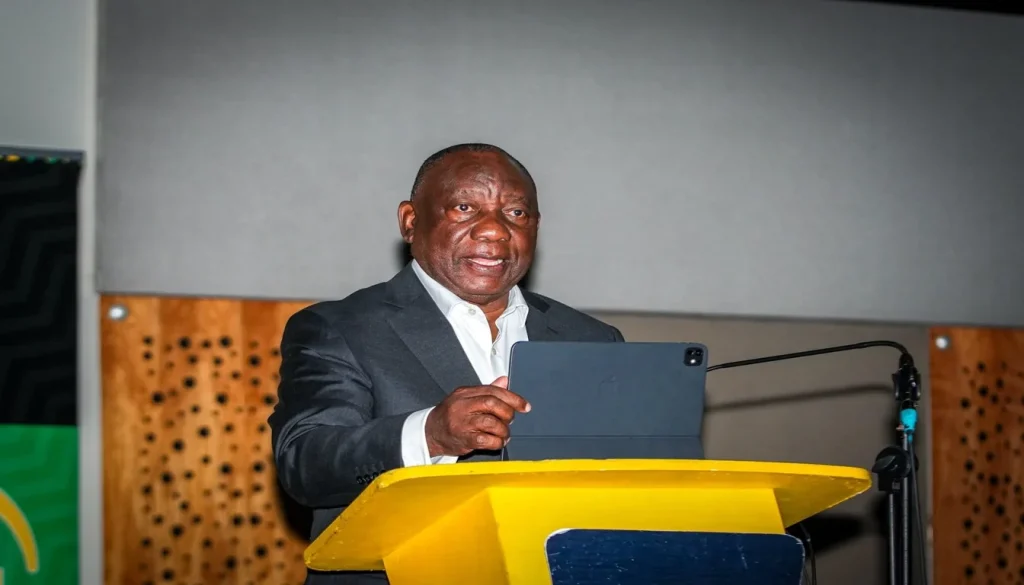
President Cyril Ramaphosa has pledged that those involved in violent xenophobic attacks against immigrants will be arrested as pressure increases on the government concerning the violence.
The president was speaking at Parliament, where he pledged that those responsible for the attacks will be arrested and face prosecution.
He added that the government will not allow private individuals or groups to engage in xenophobic activities or carry out the task of enforcing immigration policies.
What did Ramaphosa say regarding Xenophobic Attacks?
According to Ramaphosa, the security agencies in the country are gathering evidence regarding the violent protests against foreign nationals in South Africa.
The president added that investigations will focus on incidents where severe injuries or death have been reported.
The comments were made in reaction to the inquiries made to the government by the EFF leader, Julius Malema, about the rising xenophobia and xenophobic attacks within the country.
Ramaphosa’s comments come amidst increasing calls on the government to ensure that those involved in perpetuating the violence will face justice.
Ramaphosa Opposes Vigilantism in Dealing with Illegal Immigrants
One of the key aspects of the president’s remarks is his criticism of vigilantism and immigration enforcement by unapproved groups.
The president stated that only the South African state has the power to deal with illegal immigrants. Ordinary citizens do not have the power to arrest people or check their identity to determine if foreign nationals have the right to stay in the country.
This is especially critical in view of the fact that some anti-immigration groups have taken it upon themselves to conduct ID checks and inspections in different areas in Johannesburg, Pretoria, and Durban.
Why Are Foreign Nationals Being Targeted?
South Africa has been experiencing recurrent issues with xenophobia, with foreigners being accused of unemployment, criminal activity, illegal immigration, and putting strain on public services.
Foreigners from other African nations, among which there were citizens of Zimbabwe, Mozambique, Malawi and Nigeria, often become the focus of such tensions.
However, it was always stressed by the government that such social and economic issues could never be an excuse for violence and retaliation against foreign nationals.
The recent tension arose due to the sensitive topic of migration, with opposition parties and civil society organizations urging tougher action against illegal immigrants and human rights organizations cautioning against xenophobia.
Will Arrests Influence the Debate on Xenophobia in South Africa?
The promise of arrests from Ramaphosa can put additional pressure on the police to transform investigations into prosecution.
The government will need to show that its law enforcement agencies can differentiate between justified worries about illegal migration and criminal attacks on foreigners.
This will be quite hard in cases where protests involve large crowds and accusations of misconduct from various groups.
From the perspective of the government, the situation is also political in nature.
Failure to punish offenders may result in charges of government tolerance of xenophobic violence, whereas strong measures against the protesters may lead to more political unrest.
Implications for South Africa’s Relations in the Region
There are implications of the problem outside the territory of South Africa.
Millions of African immigrants are working in South Africa, and xenophobic violence might soon turn into a diplomatic issue between Pretoria and neighboring states.
Ramaphosa tried to assure other African nations that South Africa does not condone xenophobia and will continue developing its ties with other African nations.
Consequently, the reaction of the South African government will be carefully observed by the citizens of those countries whose nationals are subjected to violence in South Africa.
Explore the key stories shaping Africa, migration, xenophobia, and regional developments.
Why Did a Nigerian Man Leave?
Find the story behind a family torn apart by xenophobia in South Africa.
Can Africa Unite on Migration?
Uncover Ramaphosa’s proposal and what closer migration cooperation could mean for Africa.
Why Was Lagos Removed From Tyla?
Check out Nigeria’s reaction and what fans should know about Tyla’s tour changes.
What Happens If ICC Case Proceeds?
Dive into the ICC investigation and what could happen if the case moves forward.
Which African Countries Warned Travelers?
Browse the latest travel and safety advisories issued over South Africa concerns.
