
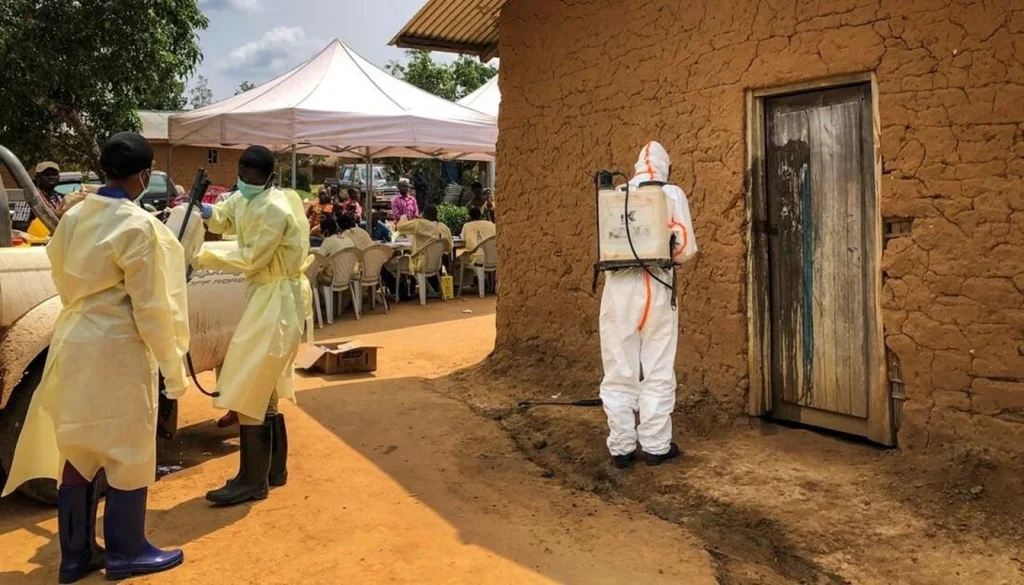
The Ebola epidemic in the Democratic Republic of Congo (DRC) has attained a terrible new peak with 6,250 cases and 3,039 deaths reported. This is based on the latest figures reported by CIDRAP. The epidemic caused by the Bundibugyo virus has become the biggest Ebola epidemic ever registered in the country and is spreading throughout the provinces of the country.
Factors that have contributed to the spread of the epidemic include delayed detection, population movement, conflicts, and insufficient financing of healthcare.
Why Is the Ebola Epidemic Spreading So Fast in the DRC?
The ongoing Ebola epidemic has spread very fast compared to past Ebola outbreaks in the DRC. According to WHO, the epidemic had spread to 60 health zones across six provinces by August, with a crude case fatality ratio of 48%.
The problem here is that there are now infections being found outside established chains of transmission. It becomes difficult for the health workers to establish contact tracing and control the infection before more infections happen.
Symptoms may even mirror other diseases like malaria, thus causing delays in diagnosing and isolating the patient.
Bundibugyo Virus Presents a Big Challenge
The disease outbreak entails the Bundibugyo virus, which is a type of Ebola virus discovered in Uganda. Different from the Zaire ebolavirus involved in the previous outbreaks, there is no licensed vaccine for the Bundibugyo virus.
In view of the very high mortality rate recorded in the present outbreak, great emphasis has been placed on detection, supportive care and infection control. The case fatality ratio as reported by WHO on 26th August was 48.1%.
Population Movement Posing a Challenge to Containment
This particular outbreak is not localized in a single population group. Mining, trade and displacement are some of the factors that have contributed to a large population movement in eastern and northeastern DRC.
WHO has started using anonymized mobile phone data in order to gain better insights into the population movements and predict the location of possible future outbreak clusters. “Population movements have taken on particular importance in the current outbreak,” officials state.
The challenges of fighting against the Ebola virus are further exacerbated by conflict and insecurity, which make some communities inaccessible for health workers.
Challenges in Terms of Funding and Healthcare Add to the List of Problems
The efforts of the Ebola response team are additionally complicated by resource constraints. Budget cuts, lack of funding, and low-quality disease surveillance capabilities have already contributed to the difficulties with maintaining contact tracing and testing processes.
Another problem is attacks on healthcare facilities, which make it difficult for health workers to access affected communities.
What Will Come Next?
Containment efforts will largely rely on early detection, better contact tracing, and the continuation of treatment and testing. Winning people’s trust is also critical, especially where disinformation and fear as well as unsafe burial practices contribute to higher spread.
Collection of population movement information may be helpful for prediction, but it should not be seen as a replacement for robust local surveillance and health care facilities.
Given that the number of fatalities has already reached thousands and the outbreak continues to spread geographically, the country faces a great challenge in the public health sector. It is crucial to stop the spread before it reaches new regions.
More Ebola Updates You Shouldn’t Miss
How Is Uganda Treating Ebola Patients?
Check out how Uganda is using an experimental antibody treatment amid the DRC outbreak.
Should African Travellers Still Be Concerned?
Find out what rising DRC cases could mean for travellers despite Uganda’s recovery.
Why Did Uganda Close Its DRC Border?
Uncover how Ebola fears are affecting travel, trade, and border health measures.
How Close Is DRC To Epidemic?
Track down the latest developments surrounding delays and the growing Ebola threat.
What Comes After 3,000 Ebola Cases?
Dive into what could happen next as Ebola cases continue rising in DR Congo.
