
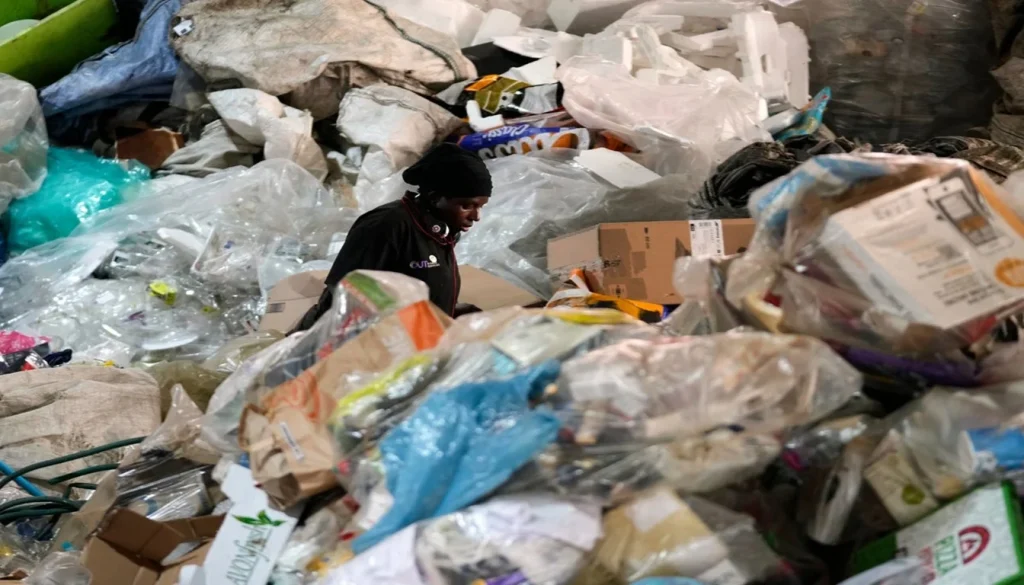
Drive past any suburb in Johannesburg on a Friday morning and you’ll see bins spilling over onto the pavement. It’s become normal. But behind that everyday mess is a much bigger problem: the city’s landfill sites are almost completely full, and nobody has a quick fix ready.
How Bad Has the Landfill Situation Become?
Let’s start with the numbers, because they’re hard to ignore. Robinson Deep, one of the biggest dumping grounds in Johannesburg, is sitting at 99% capacity. Goudkoppies isn’t far behind at 96%. Ennerdale has stopped taking normal household rubbish altogether and now only accepts builders’ rubble and soil. And Marie Louise, which used to handle over 150,000 tonnes of waste every few months, took in exactly zero tonnes of general waste between January and March 2026. According to the last landfill survey, it’s already overfull by more than 770,000 cubic metres.
Because of this, Pikitup now has to send about 17% of Johannesburg’s waste to two privately owned landfills outside the city. That costs more, takes longer, and simply isn’t sustainable long term.
What’s Actually Causing This?
A few things have piled up together to get the city into this position:
- Old, unreliable trucks that break down constantly, which slows down collection and adds huge overtime costs
- Very low household recycling rates, meaning most rubbish still goes straight to a landfill instead of being sorted first
- Illegal dumping of builders’ rubble and general waste in open spaces, which fills up space that shouldn’t even be used for that
- Landfill expansion projects that have stalled, sometimes simply because contractors haven’t been paid on time
Is Anyone Actually Doing Something About It?
To be fair, the city isn’t ignoring it. During the 2026/27 budget speech, officials openly called this “a structural risk” rather than something far off in the future. The plan on paper includes fixing up the truck fleet, closing old landfills in stages, and eventually building proper waste treatment facilities instead of relying only on dumping.
There’s also a group that rarely gets enough credit: waste reclaimers. These are the men and women who sort through rubbish daily to pull out recyclables and sell them. Organisations representing reclaimers have been asking the city to formally include them in waste planning, since their work already keeps a lot of material out of landfills, often without any real support from the municipality.
What Can You Do as a Resident?
You don’t need to wait around for the city to sort this out. A few simple habits make more difference than people think:
- Separate paper, glass, plastic and metal from your general waste before collection day
- Leave recyclables somewhere reclaimers can easily reach them instead of bagging everything together
- Don’t dump builders’ rubble on open land; ask your local municipal office where it can legally go
- Start composting kitchen scraps at home if you have even a small garden
- Report illegal dumping spots to Pikitup or your ward councillor rather than just walking past them
Where Does This Leave Johannesburg?
Nobody is pretending recycling alone will fix Johannesburg’s waste crisis. The city genuinely needs new trucks, working landfill expansion projects, and a proper long-term waste strategy. But every household that separates its rubbish, every builder who dumps rubble the right way, and every reclaimer who gets support instead of being brushed aside, buys the city a bit more breathing room. The clock is ticking on Robinson Deep and Goudkoppies, and the choices made today will decide how much worse this gets before it gets better.
Africa in Focus: Climate, Currencies & Growth
Could South Africa’s Water Crisis Worsen?
Check out how drought and aging infrastructure are deepening water challenges.
Why Are West Africa’s Floods Increasing?
Uncover the countries at risk and the factors behind extreme rainfall.
Could Uganda’s Shilling Hit 4,000?
Find out how the Iran war is putting pressure on East African currencies.
Which African Countries Buy Nigerian Products?
Browse Nigeria’s ₦10.72 trillion exports and its biggest African buyers.
How Will WIOCC Transform Africa’s Digital Infrastructure?
Explore how WIOCC plans to invest US$155 million in data centers and fiber optics.
