
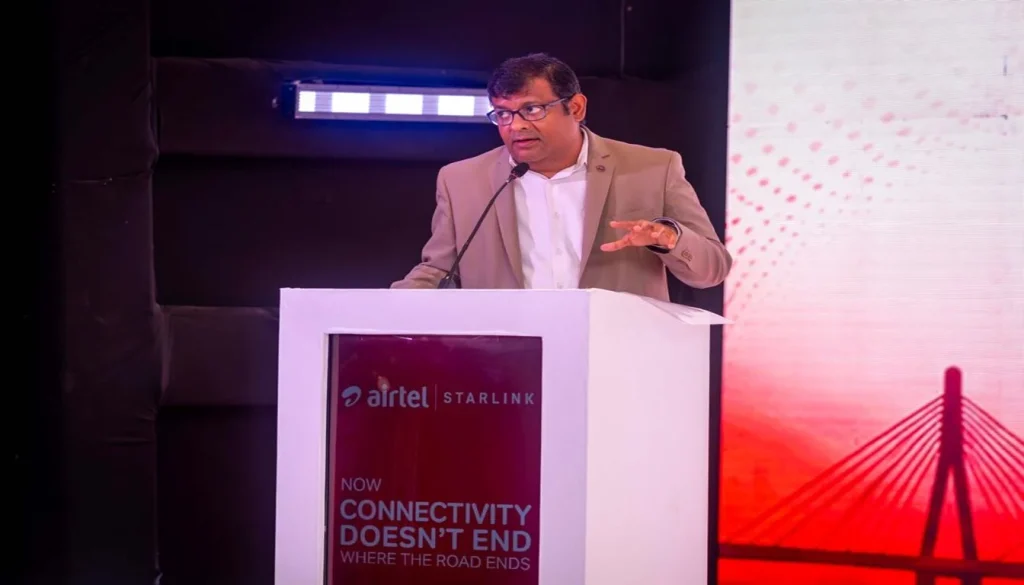
KAMPALA: Someone standing in a village with no mast in sight can now make a call from an ordinary phone. The Airtel Uganda Starlink direct-to-cell service went live on September 24, connecting compatible smartphones straight to satellites overhead.
How Starlink Mobile Works
The service, branded Starlink Mobile, runs on a constellation of about 650 satellites built for the purpose. They work like cell towers in orbit. Customers need no dish, no extra gadget and no separate Starlink account, because Airtel handles distribution and billing. Phones do need a clear view of the sky. After an initial trial period, customers can use the service through eligible Airtel Uganda data bundles.
Airtel Uganda’s managing director, Soumendra Sahu, said the technology links phones to satellites automatically and supports calls, text messages and selected data services. Airtel also says the service will keep people reachable during emergencies, natural disasters and temporary breakdowns of the ground network.
The Road to Launch
The launch follows a December 2025 agreement between Airtel Africa and SpaceX to bring direct-to-cell service to all 14 of Airtel’s markets, which together cover more than 174 million customers. Uganda is reported to be SpaceX’s second launch of this kind on the continent, after the Democratic Republic of Congo.
Testing began in May, after the Uganda Communications Commission gave Starlink a provisional licence. The licence carries conditions. Starlink must build a national gateway with a physical presence in Uganda and register every device activated in the country. It must also keep a local office staffed with technical and legal personnel. UCC Executive Director Nyombi Thembo congratulated both companies and said the technology can help close coverage gaps.
Why Coverage Gaps Matter
The need is plain. DataReportal counted 11.4 million internet users in Uganda at the start of 2026, a penetration rate of about 22 per cent. The regulator’s figures show 18.5 million people used mobile internet at the end of 2025, out of 47.1 million mobile subscriptions. Building towers across rough or thinly populated terrain is slow and costly, and satellites skip that step.
Rivals are chasing the same idea. In Kenya, Safaricom has chosen a different partner, AST SpaceMobile, for its direct-to-cell tests.
Plenty is still unsettled. The service needs a compatible handset, and launch coverage said little about what the data bundles will cost. Those details will decide how many people in remote districts end up using it. Still, the first step is taken. For farmers, fishing communities and travellers beyond the last tower, a dropped signal may no longer mean silence.
Related Uganda Stories: Power, Economy & Change
Who Will Become Tooro’s New King?
Discover the Ugandan journalist set to enter the traditional monarchy.
How Is AI Transforming Farmer Savings?
Explore how Sandi AI connects farmer groups with solar irrigation.
Why Did Uganda Suspend Türkiye Ties?
Uncover the defence controversy behind Uganda’s sudden decision.
Could Uganda’s Shilling Hit 4,000?
Find out what Iran War pressures could mean for Uganda’s currency.
How Is Uganda Responding to Ebola?
Check out the experimental antibody treatment amid the DRC outbreak.
