
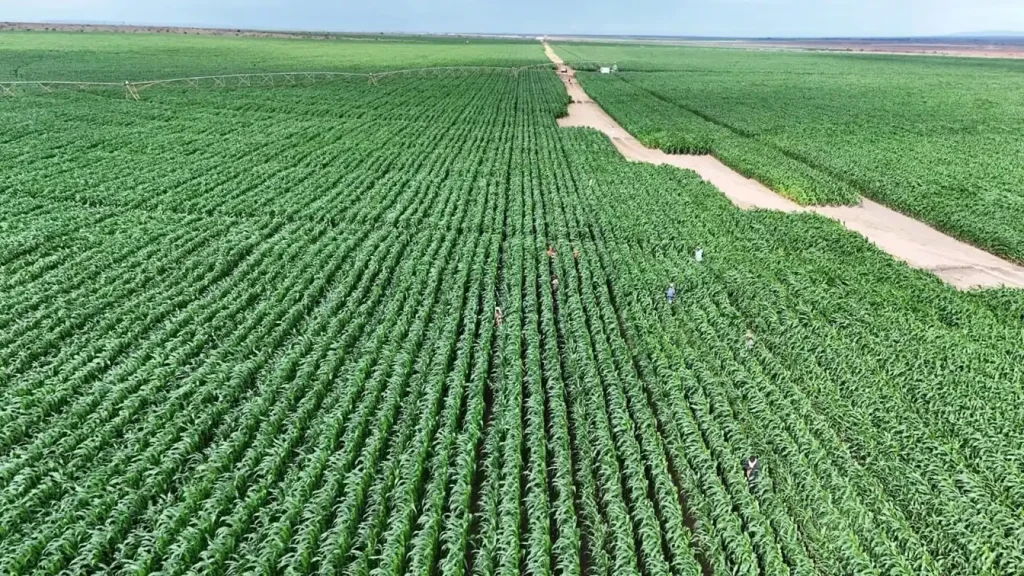
For millions of African families, the weather now decides whether there will be a next meal. The Africa climate crisis is no longer a forecast about some distant future. It is already changing what farmers harvest, what traders charge and whether a household can afford to eat at all.
Hunger Is Becoming an African Story
The world made real progress against hunger after 2000. The UN Food and Agriculture Organization counted nearly 800 million undernourished people that year and around 500 million by 2015. Then the trend turned. By 2023 the number had climbed back to an estimated 733 million, more than 9% of humanity.
Africa now carries a heavier share of that burden. At the start of this century, sub-Saharan Africa accounted for roughly one in five of the world’s hungry people. Today it is well over one in three. War, the economic fallout from Ukraine and hunger gains in other regions such as South Asia all play a part, but climate keeps moving closer to the centre of the explanation.
A Continent That Farms on Rain
Most African farming runs on rainfall, not irrigation, so it is exposed whenever the skies misbehave. Researchers estimate that 500 to 600 million Africans live mainly off smallholder or subsistence farming, growing staples like maize, millet and sorghum. The continent is also warming faster than the global average. In 2020, about 620 million people lived in drylands, over 45% of the population.
The problem is erratic weather, not just dry weather. Dry spells now cut into the middle of the rainy season, and then heavy downpours arrive and wash away what is left. In 2024, Southern Africa faced its worst drought in a century. About 27 million people were affected and five countries declared national disasters. That same year, floods in eastern Senegal swamped more than 16,000 hectares of farmland. Onions, okra and rice were destroyed, and over 200,000 people felt the loss.
The Sahel is a sharper case still. Temperatures there are rising about one and a half times faster than the global average, and fertile land keeps turning to desert.
The Shock at the Market Stall
Bad harvests do not stay in the field. A farmer who loses a crop loses income, and a household that loses income cannot buy food, even when it is on sale down the road. Lower yields also push prices up. Nigeria, Kenya and Senegal import food on a large scale, so their poorer families feel every swing in world markets. In Nigeria, the price of rice reportedly rose by about 30% in a single year.
In Somalia, drought has stretched across five consecutive seasons, and more than 1.8 million children have suffered acute malnutrition. The IMF has found that climate change is deepening food insecurity across sub-Saharan Africa. The number of people facing high malnutrition and unable to meet basic food needs rose by at least 30% to 123 million in 2022.
Does Hunger Send Africans Abroad?
Headlines in Europe often picture a huge wave of African “climate refugees” heading north. Researchers Ishmael Adjei and Benjamin Schraven say the evidence points elsewhere. Movement linked to environmental change happens mostly inside countries or between neighbouring ones.
Migration can also be a survival strategy rather than a collapse. Seasonal and circular migration has long been common in West Africa. A family member travels for work in the dry months, sends money home and eases the pressure on the household’s food supply while away. The cities that receive new arrivals bring their own risks, though. Many already struggle with flooding and water shortages, so some newcomers move from the frying pan into the fire.
The poorest households often cannot move at all. They lack the money to travel, so they stay put and carry the heaviest burden of climate shocks and hunger.
The Money Gap
The scale of need is far larger than the response. At COP27 in 2022, wealthy nations pledged about USD 230 million to the Adaptation Fund. Africa needs roughly USD 50 billion a year to cope with climate impacts. Mohamed Adow of Power Shift Africa called the pledges welcome but not enough, and said the continent also needs technology transfer and capacity building.
Governments at home are falling short as well. Under the African Union’s agriculture programme, countries agreed to put 10% of their national budgets into farming. Only nine have met that target.
Time is not on Africa’s side. The continent’s population is expected to double to 2.5 billion by 2050, and the FAO warns that climate change could cut average yields of 11 major crops in sub-Saharan Africa by 15% over the same period.
Solutions Already Taking Root
The picture is not all bleak, because communities are already adapting. Around Ouagadougou in Burkina Faso, a 2,000-hectare green belt is holding back the desert while giving residents land to grow cabbage, onions, lettuce and papaya. Ethiopian farmers are planting drought-resistant seed to protect their teff harvest. In Malawi, solar-powered irrigation keeps crops alive through dry spells. In Kenya, the iCow app gives farmers weather forecasts and practical advice on their phones.
Insurance is helping too. The African Risk Capacity Group pays out quickly when rainfall drops below agreed levels, and it has paid more than USD 170 million in claims over the past decade. Malawi is among the countries that have used the money to support households after severe droughts.
Dr. Agnes Kalibata of AGRA makes the point that matters most. Smallholder farmers produce about 80% of Africa’s food, so any technology has to be affordable and within their reach.
What Comes Next
Africa did little to cause this crisis, yet its farmers are paying the heaviest price. The tools to respond already exist: drought-tolerant seed, solar irrigation, weather information and insurance that pays out in time. What is missing is money, and the political will to put it where it matters. That means farmers’ hands, not conference communiqués. If that does not change, climate shocks will keep turning into empty plates, and the families hit first will be the ones with the least to fall back on.
Read More
Southern Africa’s 2026 Floods Linked to Climate Change: What Happened and Why It Matters
Where Does Baobab Fruit Grow? Native Regions, Ideal Climates & Buying Guide
Climate Change and Rainfall Variability in the Sahel: Impacts on Agriculture
Gliricidia Sepium Intercropping: A Climate Smart Farming Solution for Semi-Arid Tanzania
East Africa Battles Worsening Drought Crisis as Climate Shocks Hit Food Security
