
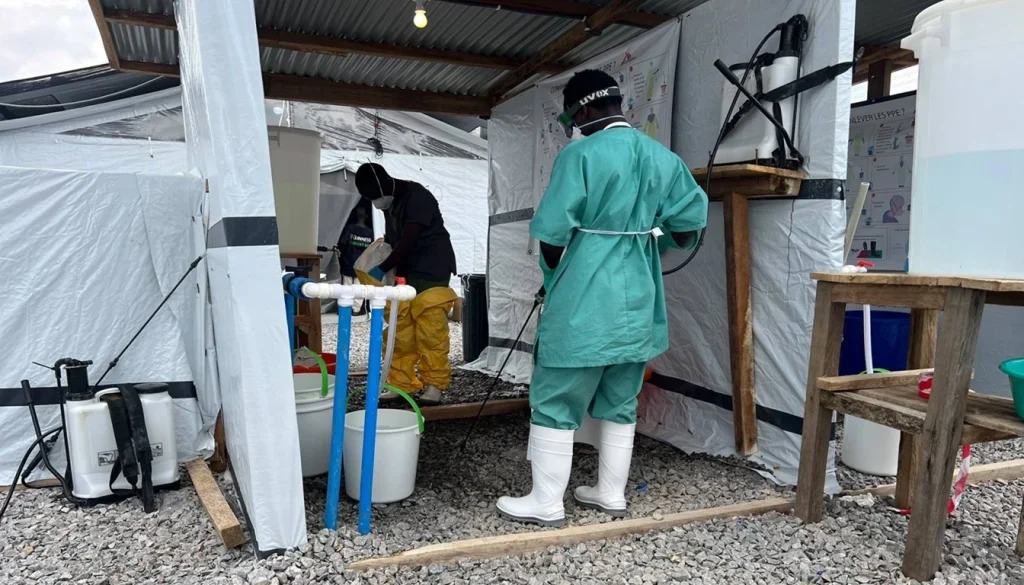
The disease that many feared would cross a border has now done so. The Ebola outbreak in eastern DRC and Kenya became a regional concern when the World Health Organization confirmed Kenya’s first imported case of Bundibugyo virus disease on October 6. Al Jazeera’s reporting from Beni shows an outbreak that is still spreading at home while testing neighbours’ defences.
A journey that ended in Nairobi
The patient was a Kenyan citizen living in the DRC who fell ill there and received care at several facilities. He then travelled by road to Kampala in Uganda and flew to Nairobi, arriving on October 3. He was isolated in hospital and tested positive, but died on October 5. Kenyan authorities have identified 28 contacts, including relatives and health workers, and are tracing passengers and crew from the flight. A suspected case in Wajir County tested negative on October 8.
An outbreak with no vaccine
In the DRC the numbers are sobering. As of October 6, the WHO had recorded 8,728 confirmed cases and 4,205 deaths, a fatality ratio of 48.2 percent. Cases have been reported in 64 health zones across seven provinces, and Alimbongo in North Kivu reported its first cases this month. Unlike the 2018 to 2020 outbreak, which killed nearly 2,300 people, this one is caused by the Bundibugyo species, and the WHO says there is no approved vaccine or specific treatment. Care depends on early detection, supportive treatment and infection prevention.
Beds, rumours and trust
Doctors Without Borders (MSF) says treatment capacity is stretched to its limit. As of September 28, about a third of confirmed patients were treated in non-specialised facilities, which raises the risk of spread to other patients and health workers. Insecurity and misinformation add to the problem. Community leaders in Beni and Butembo say mistrust makes some residents reluctant to report symptoms or work with response teams. Teams were following 80.4 percent of identified contacts, below the 85 percent target.
Africa CDC is calling for a community-centred response built on tracing and daily follow-up. Its director-general, Jean Kaseya, says the outbreak will end only when the last chain of transmission is broken. For neighbours like Kenya and Uganda, this is a reminder that no border is far from the outbreak. Vigilance at airports and clinics, and trust between health workers and communities, now matter as much as any laboratory.
Read More
Kenya’s First Ebola Case: Ten in Quarantine, 57 Contacts Traced, and Hard Questions at the Border
Ebola Reaches Kenya: What Nairobi’s First Death Means for East Africa
Africa CDC keeps Kenya on Ebola high-risk list as DRC outbreak nears 8,000 cases
UAE Commits $10 Million to Fight Ebola as Uganda Travel Restrictions Lax
