
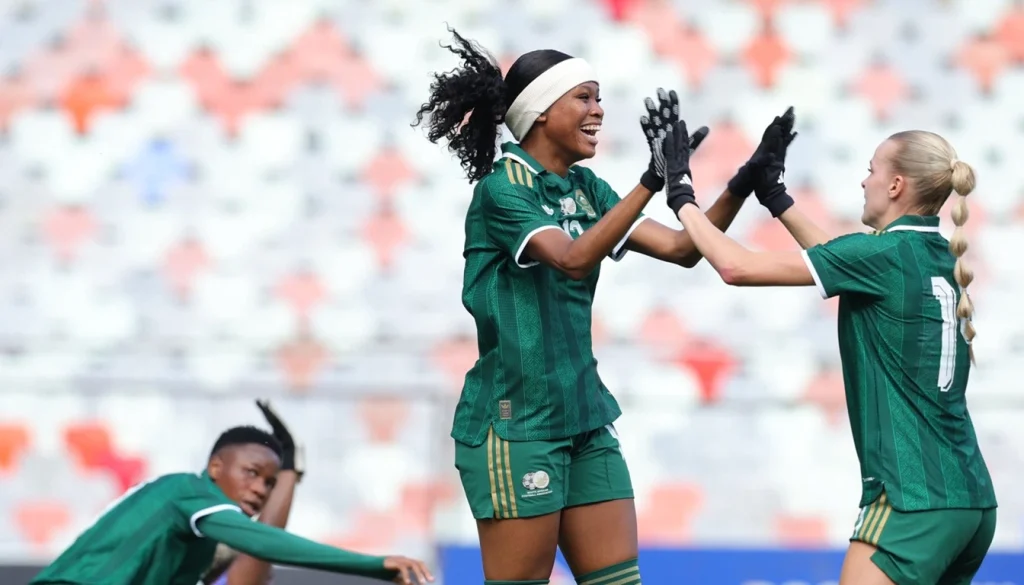
Something shifted in Morocco this August. Women’s Football in Africa stopped being a side story and became the main event, as Cameroon won a first-ever continental title in a tournament nobody could have predicted. The final in Rabat ended an era in which a handful of famous names kept all the silverware to themselves.
A Tournament That Tore Up the Script
Nigeria had won ten of the thirteen earlier editions of the Women’s Africa Cup of Nations and arrived in 2026 as defending champions. They were gone by the quarter-finals. South Africa, the 2022 winners, went out in the same round, beaten 2-1 by hosts Morocco.
What followed was the most open tournament the competition has seen. Cameroon, Malawi, Algeria and Morocco all booked direct tickets to the 2027 FIFA Women’s World Cup. Malawi were playing in their first finals and still reached the last four. Algeria made their first semi-final. Cameroon, who had actually been knocked out in qualifying and only got back in because the field grew from 12 teams to 16, went on to take the trophy.
Expansion alone doesn’t explain it. Better preparation, smarter coaching and more players earning proper minutes at club level all played a part. The old pecking order is no longer safe, and that is good news for everyone who wants a competitive game.
The Warning Signs Were There Before
None of this came from nowhere. At the 2023 Women’s World Cup, three African teams reached the round of 16 for the first time, a milestone the former South Africa captain Janine Van Wyk called historic. She spoke to CAF around that time, just after retiring, and her message was optimistic but blunt: baby steps are better than no steps, yet there is far more to do.
She also pointed to something many African fans already know. Young girls now have idols to look up to, which was not the case when she started out. Visibility matters, and every packed stadium and viral highlight adds to it.
Where the Money Is Still Missing
Passion is not the problem. Funding is. Van Wyk’s own wish list was clear: federations in every African country should take the women’s game seriously, and players should be able to train full time. Too many of them still juggle a day job with football, which is hard to square with elite performance.
Facilities are the next gap. Decent pitches, medical support, analysts and reliable travel arrangements are standard at the top of the global game. Across much of the continent, they are still a bonus. She also raised a point that stings a little: it would be good to see foreign players come to Africa to play, rather than African talent only moving abroad to find a proper career.
CAF has made moves. The Women’s Champions League, now in its third year when she spoke, gives clubs a continental stage, and Van Wyk hoped it would grow to 16 teams. Prize money at WAFCON has also climbed in recent years, a sign that the confederation is putting more behind the women’s game. But a bigger purse at the top does not fix a league that cannot pay its players on time.
What Investment Should Actually Look Like
Closing the gap needs more than headline cheques. A few things would make the biggest difference.
Pay and contracts. A player who signs a real contract can train twice a day and recover properly. A player who gets a small allowance cannot. Professional leagues, even small ones, are the foundation.
Grassroots pathways. Cameroon’s run is a good reminder that talent is spread widely across the continent. Girls’ academies, school competitions and youth tournaments in places like Lilongwe, Accra and Nairobi can turn raw ability into polished players before they hit twenty.
Coaching and support staff. Many national teams do well despite thin back-room teams. Training more women as coaches, physios and analysts would raise standards and give players role models who look like them.
Media and sponsors. Broadcast deals and brand partnerships bring in money and, just as important, attention. A tournament that grew in popularity during its run, as the Cameroon Tribune noted, shows that audiences will turn up when the product is good.
The Road to Brazil 2027
The next test comes quickly. The 2027 World Cup in Brazil runs from 24 June to 25 July, and Africa will arrive with four automatic qualifiers and more still fighting through play-offs. Ghana and South Africa have been placed in the intercontinental route, while Nigeria faces the real prospect of missing a World Cup for the first time since the tournament began in 1991.
That is a sobering thought for a country that has done so much to build the continental game. It is also a reminder that reputation does not win matches. Systems do, and the nations that invested in them are now reaping the rewards.
So, Can Investment Close the Gap?
Yes, but only if it is steady and aimed at the right places. A single big sponsorship won’t do it, and neither will one good tournament. What works is consistent funding for leagues, coaches, facilities and young players, backed by federations that treat women’s teams as a core part of the national game rather than an afterthought.
The talent is already here. Morocco’s hosting, Malawi’s debut run and Cameroon’s triumph all say so. The question for administrators, sponsors and governments is whether they will back it with the resources it deserves. If they do, the gap Van Wyk described will keep shrinking, and the next surprise champion will feel a lot less surprising.
Read More
WAFCON 2026: Who are the Teams that are Still Contending for the African Women’s Football Trophy?
10 African Football Moments That Went Viral in 2026 and Spilled Into Pop Culture
