
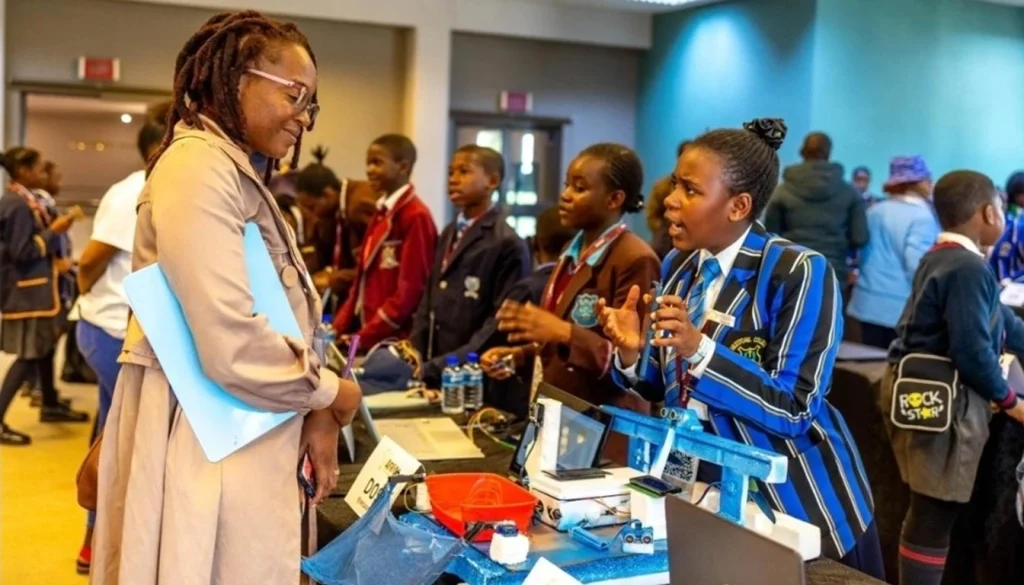
Ask a young graduate in Lagos, Nairobi or Lusaka what stands between them and a good job, and many will give the same answer: skills. The Africa digital skills gap is now one of the biggest brakes on the continent’s growth, even as demand for digital talent rises faster than schools and training centres can supply it. The good news is that the problem is well understood, and the fixes are already being tested in classrooms, community hubs and phone screens across the continent.
Why the Numbers Should Worry and Excite Us
Africa’s working-age population is expected to grow by roughly 620 million people by 2050, according to the World Bank’s Africa’s Pulse. Few regions will have so many young people entering the job market. The IFC estimates that Sub-Saharan Africa could see around 230 million digital jobs by 2030. That is a huge opening, but only for people who can actually do the work.
Right now, the supply is thin. MOHAC Africa notes that only about 5% of African youth are trained in advanced skills such as software development, data analytics or cybersecurity. Most programmes stop at basic computer use. The digital skills gap in Africa is therefore not only about who has a laptop. It is about who can build, analyse and secure the systems that employers need.
Access Comes Before Ability
You cannot learn to code on a connection you cannot afford. In Eastern and Southern Africa, the World Bank reports that only 24% of people were using the internet as of 2023, even though 64% lived within reach of high-speed coverage. That difference between coverage and usage tells you that price, devices and confidence matter as much as towers.
MOHAC Africa points out that one gigabyte of data can cost about 5.7% of a month’s average income in many Sub-Saharan countries. Add the cost of a smartphone, and learning online becomes a luxury for millions. Digital literacy in Africa cannot grow while data stays this expensive. Governments and telecom operators need to treat affordable data for learners as an investment, not a favour.
Teach It Where Young People Already Are
Most young Africans reach the internet through a phone, so training has to fit the phone. Low-data and offline-friendly platforms make sense. Eneza Education, for example, has delivered lessons by SMS and simple mobile apps to millions of learners who would never see a fancy learning portal.
Where the power grid is unreliable, solar-powered community hubs can close the distance. They give rural learners free or cheap access to devices and internet, and they stop good training from being limited to Lagos, Nairobi and Cape Town.
Peer teaching is another smart move. Rwanda’s “Digital Ambassador” approach trains young people who then go back to their own communities and teach others, often in local languages. That builds trust faster than any outside trainer, and it multiplies the reach of every graduate.
Fix the Classroom and the Training Centre
Digital education in Africa starts with what schools teach. MOHAC Africa says only about half of African countries treat computer studies as a compulsory subject. Coding, computational thinking and digital safety should be part of the curriculum from primary school, with updates that include artificial intelligence and green technology as they become relevant.
Technical and vocational colleges deserve more attention too. They already exist in most countries, they already train people for work, and they can be upgraded faster than new universities can be built. Modern equipment and certifications that employers recognise would turn them into a direct pipeline to jobs.
Some projects show what is possible. In Malawi, the Digital Foundations Project has connected hundreds of public institutions, brought internet to schools reaching 84,000 students, and funded tech hubs that had trained 19,000 young people by 2024. In Tanzania, a regional ICT centre at the Dar es Salaam Institute of Technology is being set up with labs for cybersecurity, software development, blockchain and more. Youth digital training works best when it sits inside real institutions and not only in short-lived pilot projects.

Do Not Leave Women Behind
The gender gap is one of the most stubborn parts of the problem. GSMA data cited by MOHAC Africa puts the mobile internet gender gap in Sub-Saharan Africa at 29%, with some 205 million women still offline. The World Bank adds that cost, low literacy, online abuse and a shortage of content aimed at women all keep girls and women away from digital tools.
Fixing this takes deliberate design: female mentors, safe learning spaces, flexible class times for women who also carry care duties, and content that speaks to their lives. When women gain technology skills, families and local economies feel the benefit.
Teach Young People to Create Work, Not Only Seek It
A job in a big company is not the only goal. Africa’s digital economy has room for freelancers, online sellers, app builders and small service providers. Training in digital marketing, e-commerce and freelance platforms lets a young person in Kumasi or Kisumu earn from clients anywhere, sometimes in stronger currencies.
Older entrepreneurs need help as well. Many small business owners still struggle with online payments and e-commerce, and pairing them with digitally confident youth can help both sides. The African digital economy will grow faster when shop owners, farmers and traders can use the same tools as the startups.
Aim at the Skills Employers Want
Basic literacy is the floor, not the ceiling. Technology skills that are in demand include data analysis, cybersecurity, software development, AI-related work and digital marketing. As more businesses and government services move online, cybersecurity professionals become essential for keeping people’s money and data safe.
Programmes also need to be judged by outcomes. A certificate means little if it does not lead to income. The better question is how many graduates are working or earning within six months. Tracking that honestly keeps training providers focused on what the market truly needs.
No One Can Do This Alone
Governments set the policy and build the infrastructure. Telecom companies can lower the cost of data and devices. Big tech firms can contribute curriculum and platforms. NGOs and local communities are best placed to reach the last mile. The World Bank’s new Inclusive Digitalization in Eastern and Southern Africa programme, which aims to benefit more than 180 million people by 2032, shows what coordinated effort could look like at regional scale.
The Future of Work in Africa Is Being Decided Now
The future of work in Africa will belong to those who can use technology, not just consume it. The continent has the numbers, the energy and the ideas. What it needs is cheaper access, better teaching, inclusive design and strong partnerships. If governments, businesses and communities act together, the Africa digital skills gap can become the starting point of a stronger, more productive generation rather than a lasting barrier.
Read More
Top African Countries Making Large Investments in Digital Skills and AI Training in 2026
Nigerian Youths Lack Digital Skills, Are Unemployable – Minister Of Sports
Africa’s Digital Boom Has a Price Tag Nobody Is Talking About
Skills in Highest Demand in Africa’s Employment Market in the Second Half of 2026
