

In most parts of the continent, rains come abruptly and leave abruptly. To millions of households, rainwater harvesting in Africa is what determines whether drought spells bring with them suffering or just a change of pace in life. It is not something that has been brought from another place. It is something that has been around longer than most contemporary water management methods.
When the Sky Gives and the Ground Must Keep
The rainfall in many parts of Africa occurs seasonally, irregularly, and often violently. It rains for an entire month’s supply in one shower, but most of it is washed away by the dry ground to the rivers and oceans. Anyone who has seen a dry riverbed change color and make noise within minutes can confirm this.
So the real challenge was never only catching the rain. It was holding on to it. Communities from the Sahel, the Horn of Africa, East Africa, and Southern Africa have grappled with this issue over many years utilizing available resources from the land and immediate environment. It is an active collection of traditional rainwater harvesting practices.
Sand Dams: Hiding Water Where the Sun Cannot Find It
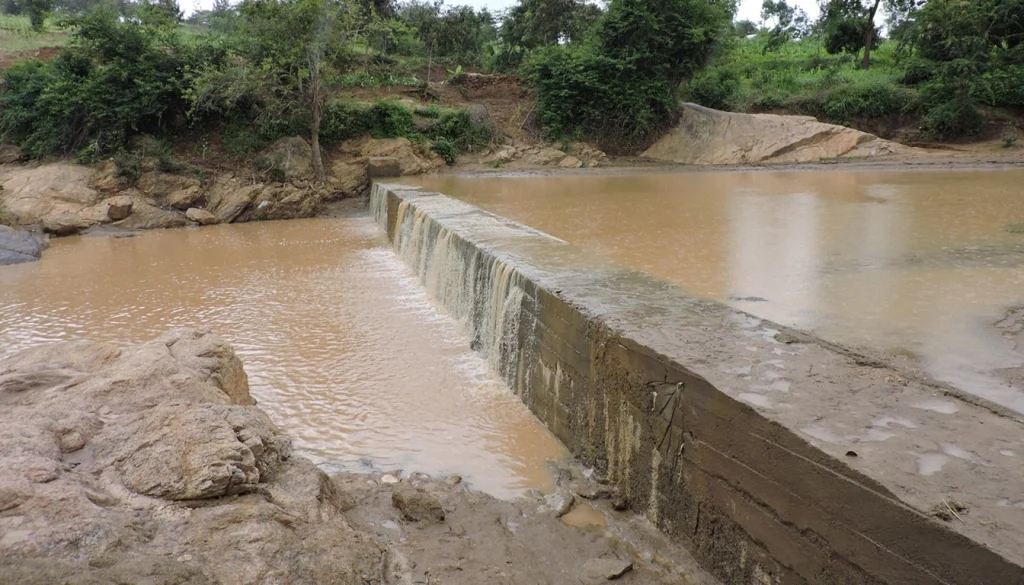
In the arid lowlands of eastern Kenya, for example in the areas of Kitui, Machakos, and Makueni, farmers have been known to construct sand dams along the beds of seasonal rivers. This is a very good strategy. A wall is constructed along the bed of the river using either concrete or stones, and during the time of floods, sand gets deposited at that point.
The sand deposits fill up the area, and water remains trapped in the gaps between the sand particles. Since the water is held under the ground, very little evaporation takes place. Water can be accessed through scoop holes or simple pipes. Many such dams have been built through community effort.
Earthen Ponds, Hafirs and Dugouts
To the north, in Sudan, there are many hafirs – large excavations that collect runoff for domestic and animal consumption during the dry period. There are also many dugout ponds in northern Ghana and some parts of the highlands of Ethiopia, and the communities living near such ponds coordinate and decide who will use water and at what time.
In pastoral communities in the Horn of Africa, underground storage facilities called birkads or berkads are used for collecting runoff in Somali areas. These covered tanks are constructed to reduce evaporation; this is extremely important under intense solar radiation. They are good examples of rainwater storage methods shaped by climate rather than copied from a manual.
The Farmer’s Trick: Pits, Half-Moons and Stone Lines
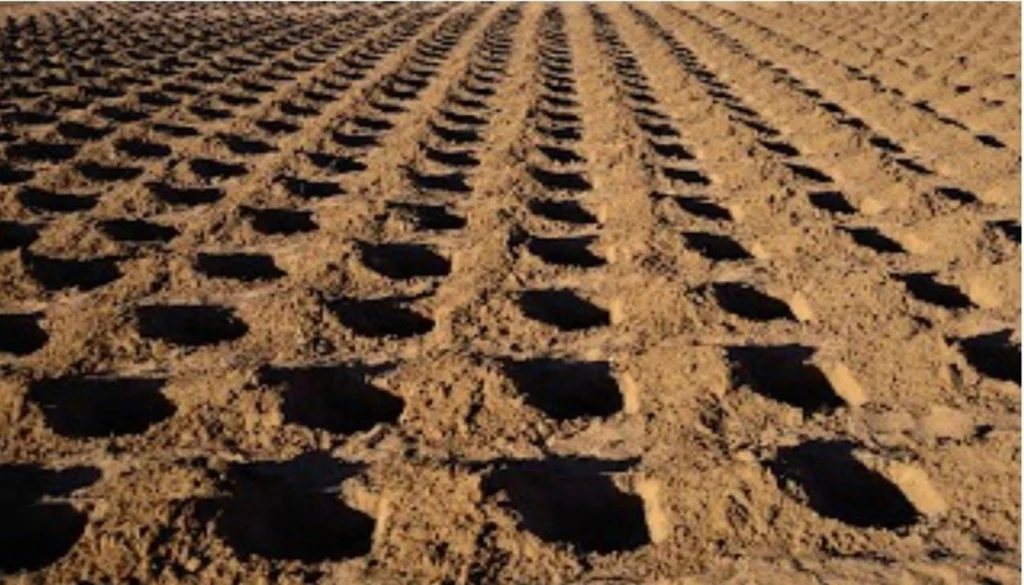
Not all harvesting ends in a tank. Burkina Faso and Niger both have zaï pits. Zaï pits are small plots with compost filled planting holes that capture any rainfall directly into the place that the roots of the plants need. Half moon shaped furrows are constructed together with stone walls that are built on contour to capture water.
Such indigenous water conservation practices are considered to restore degraded land. Many people got famous for bringing life to dead land such as Yacouba Sawadogo from Burkina Faso, who used the traditional zaï practices and planted trees on the land that other farmers abandoned. This indigenous water conservation considers the soil as the storage of water.
This practice was also applied in southern Tunisia. In southern Tunisia, hill farmers constructed a traditional practice called jessour. The jessour is earth and stone terraces made in the valleys where floodwater and silts were caught.
Roofs, Jars and Everyday Storage
Closer to home, it’s the roof that does the job. In Kenya, Uganda, Tanzania, and Rwanda, the corrugated iron sheets collect rain water through the gutters into tanks or drums or jars. In the olden days, people had a combination of grass, mud, and calabash to do a scaled-down version of that work. The systems today range from plastic drum under the eaves to large ferrocement tanks in institutions.
How water is kept matters as much as where. Covered clay pots stay cooler and slow evaporation, and the Sahel’s familiar earthenware jars keep drinking water pleasantly fresh. There are areas in the Ovamboland region of Namibia where oshanas, which are wetland channels, become filled with water during the dry periods that exist without rain.
Safety is another element of this issue. People who store rainwater for use over many months learn how to cover the vessels, prepare the roofs and gutters before the rains start, allow the initial runoff to pass since it contains dust and feces, and boil the water before consumption. This may seem a simple procedure but it is very safe indeed.
Who Does the Work, and Who Carries the Water
We cannot discuss water without mentioning women and girls. In Africa, it is they who fetch water, and saving time because of a tank or pond nearby means more time that can be spent on education, farming, or running a business. Local storage of water goes much beyond the mere access to water.
This is the reason why local ownership is so important as well. The systems that people build, maintain, and fix by themselves last longer than projects that were introduced from outside, lacking local efforts.
Old Wisdom Meets New Pressure
Rainfall has become unpredictable due to climate change. In certain places, there is now a trend towards drier periods interspersed with intense rainfalls, which only emphasizes the need for effective storage of water, not the opposite. Governments, NGO’s and councils are beginning to recognize what people have known all along.
Here lies the significance of sustainable water management in Africa. The best initiatives do not undermine local practices. They enhance them, using better materials, stronger walls, secure covers and proper education. While a sand dam constructed with cement will last much longer than the one constructed with mud, the concept remains the same.
There are real limits, though. The roof tanks require finances that the families do not have. The ponds may breed mosquitoes and get contaminated if they are not covered. The poorly constructed dams may be destroyed by silting or floods. The planning process acknowledges this and involves the community.
What Can Be Learned and Shared
Cities have something to learn here too. With growth in African towns, the runoff from rooftops and roads tends to be considered a problem that should be drained away. Tanks installed on rooftops, community cisterns, and small recharge basins could make that problem a solution, relieving stress on strained municipal supplies.
A school is a good place to begin. A tank attached to a classroom block provides the students with clean water and teaches them each day that rain is an asset to be harvested.
The Takeaway
No doubt existed about the capacity of African communities to be able to manage their water supply through the drought period. For hundreds of years, this has been done by them through sand, stones, clay, pits, roofs, and cooperation. All they require now is recognition and fair access for growth.
Water that falls in a few wet weeks has to last the whole year. Communities that understand this have always planned for it, and the rest of us would do well to listen.
Read More
Beyond Safaris: 7 African Coastal Towns Worth Discovering
Africa’s Hidden Heritage Sites: The Ancient Wonders the World Keeps Overlooking
Piracy in the Gulf of Guinea: Is Maritime Security in the Gulf of Guinea Being Improved in 2026?
Top African Destinations Trending Among International Tourists This Summer
