
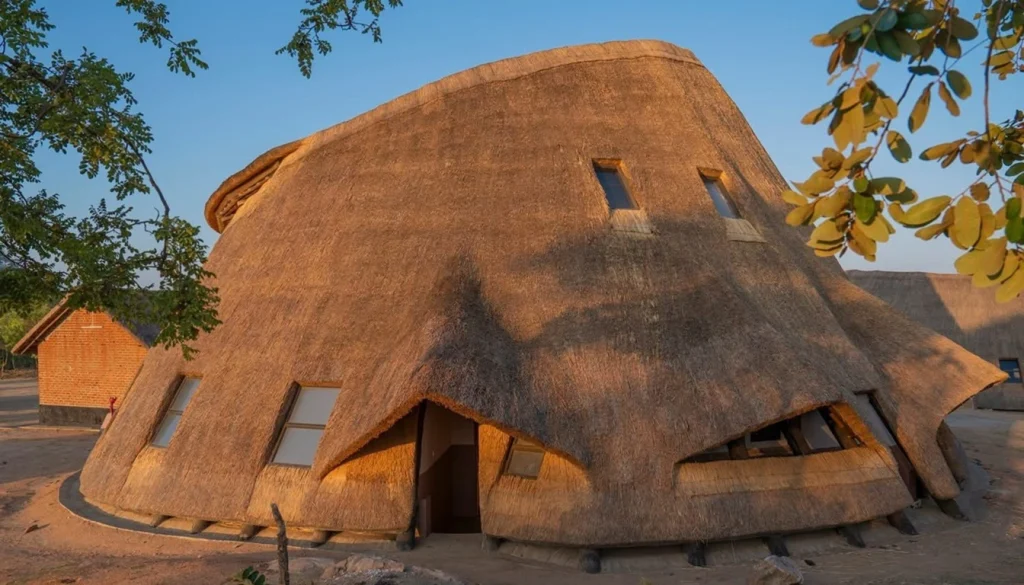
Step into a mud-walled house in the middle of a scorching afternoon and you will feel it at once: the air is cooler than outside, and nobody had to flip a switch. For centuries, African homes without air conditioning have kept families comfortable through some of the hottest weather on earth. The secret is not luck. It is design, passed down through generations of builders who understood their climate better than any machine could.
Today, as electricity bills climb and power cuts remain a daily reality in many cities, those old lessons look smarter than ever.
Built by the Climate, for the Climate
Traditional African architecture was never a matter of style alone. Every choice, from wall thickness to roof shape, answered a practical question: how do we stay cool when the sun is relentless?
Builders worked with what the land offered. In the Sahel, families shaped earth into thick walls. In the humid forests of West and Central Africa, they used timber, bamboo and thatch. In the highlands of Ethiopia, stone and wood did the job. Each region developed its own answer, and this is what experts now call climate-responsive housing: buildings shaped by local weather rather than imported blueprints.
Why Thick Mud Walls Work So Well
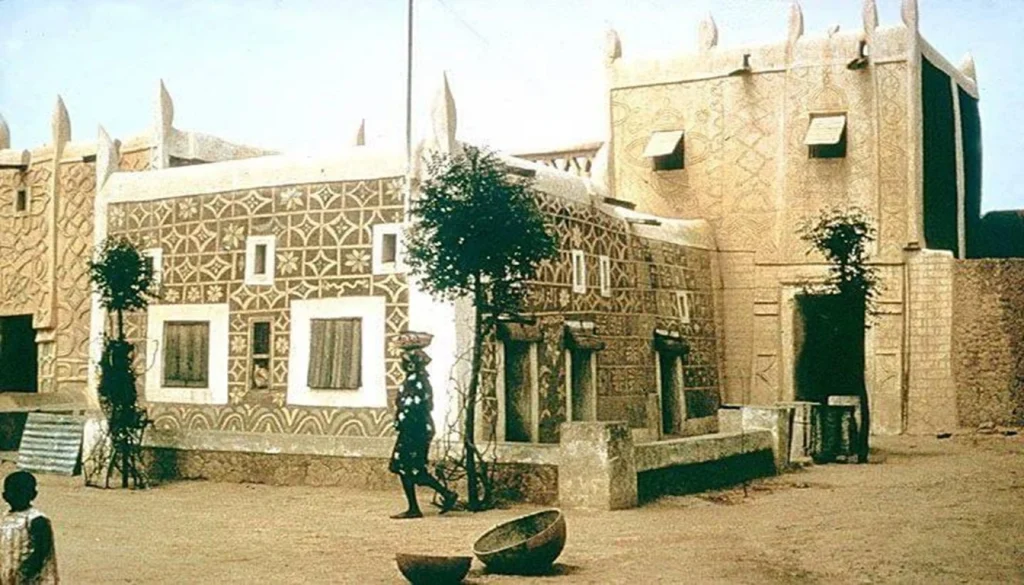
Walk through a Hausa village in northern Nigeria or a Dogon settlement in Mali and you will notice how heavy the walls are. That weight is the point.
Mud and clay absorb heat slowly. During the day, the sun beats down on the outer surface, but it takes hours for that warmth to travel through a wall that may be forty centimetres thick. By the time it reaches the inside, the evening has arrived and temperatures outside are dropping. The wall then releases its stored heat outward, and the interior stays steady and comfortable.
Engineers call this thermal mass. Grandmothers simply call it a good house. It is one of the most effective forms of passive cooling in Africa, and it costs almost nothing to run.
Let the Breeze Do the Work
Heat is not only about walls. It is also about air that has nowhere to go.
Many traditional homes are built with natural ventilation in mind. Windows and doors sit on opposite sides so a breeze can pass straight through. Small openings low on the wall draw in cooler air, while gaps near the roof let hot air escape. Because warm air rises, this simple setup creates a steady current without a single fan.
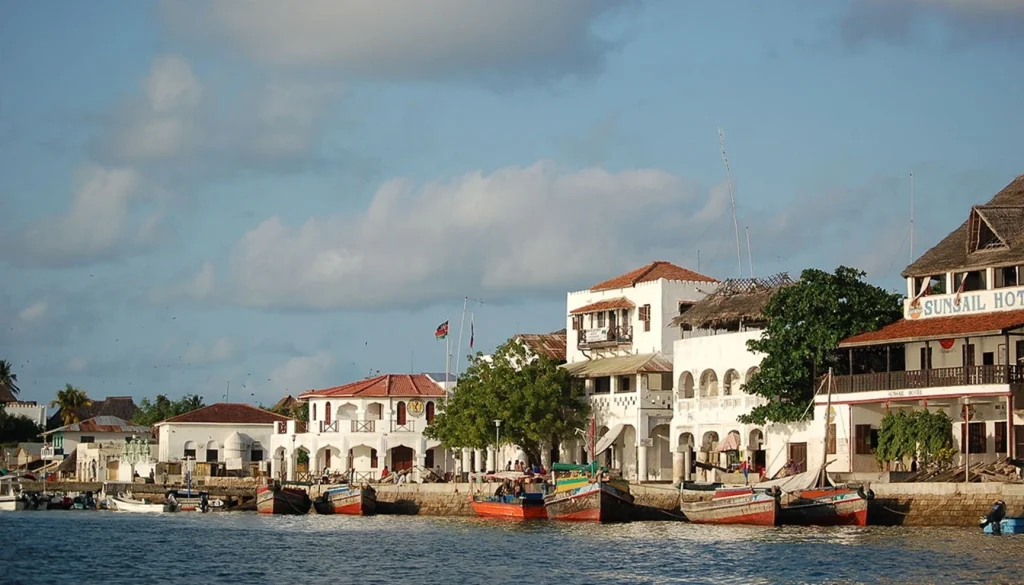
Along the Swahili coast, in towns like Lamu and Zanzibar, houses were arranged so that sea breezes travel through narrow streets and into tall rooms. Carved wooden doors and latticed screens let air flow while keeping out harsh light. It is beautiful, and it works.
The Courtyard: A Cool Heart for the Home
In North Africa and parts of the Sahel, the courtyard is the home’s natural air conditioner. Moroccan riads and Hausa compounds both use open central spaces that pull cool night air downward and hold it there.
Add a small fountain, a water jar or a shady tree, and the effect grows. Water evaporates and takes heat with it. Families often spend the hottest hours in the shaded edges of the courtyard, then move to the roof or the open yard once the sun goes down. The house breathes with the day.
Roofs That Shed Heat
The roof takes the worst of the sun, so African builders gave it plenty of thought.
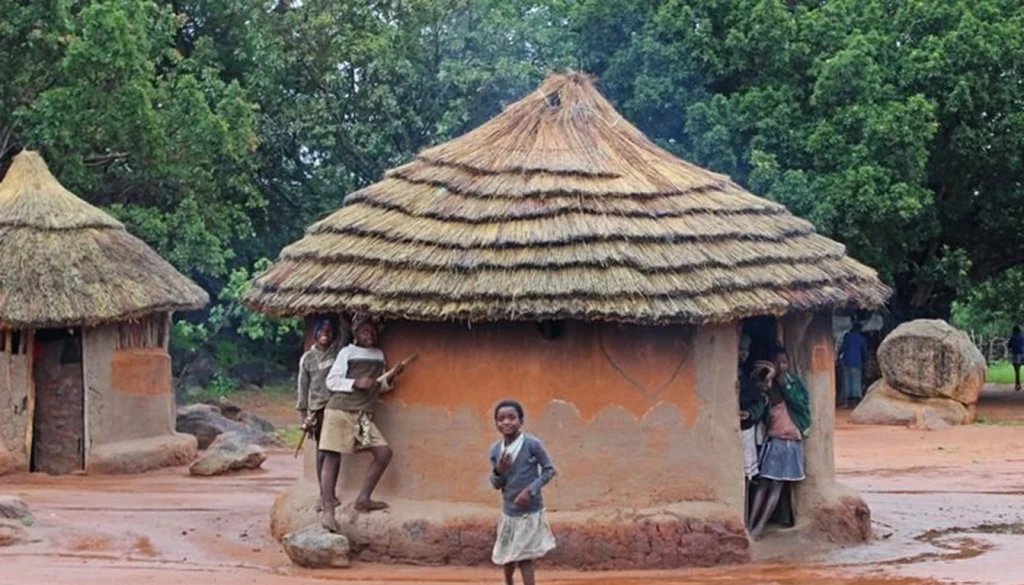
Thatch is a quiet hero. Made from grass or palm leaves, it traps a layer of air that blocks heat from entering the room below. The steep slope of many thatched roofs also sends rain off quickly and lets hot air gather high above the living space, well away from people. Compare that to a bare corrugated iron sheet, which turns a room into an oven by noon.
Wide overhanging eaves add another layer of defence. They throw shade over the walls, keeping direct sunlight from baking the surface. Some homes also use raised roofs with open gaps beneath, allowing warm air to drift out freely.
Colour, Shade and Smart Placement
Even small details matter. Many communities paint or plaster their walls in light colours, which reflect sunlight rather than soak it up. Some, like the Ndebele of southern Africa, turned the walls into art while still keeping surfaces bright.
Verandas and covered porches are common across East and West Africa. They act as a buffer zone, shading the main walls and giving families a cool place to sit, cook, trade and talk. Trees are planted on purpose, too. A single mango or neem tree on the western side of a house can lower indoor temperatures noticeably in the afternoon.
Then there is orientation. Builders often placed the narrow side of the house toward the harshest sun and kept big openings away from it. Nobody needed a diagram. They simply watched how the sun moved and built accordingly.
What Modern Builders Can Learn
Across Africa, the rush to build quickly has produced many concrete boxes with tin roofs and large glass windows. They look modern, yet they trap heat and push families toward expensive fans and air conditioners that strain the power grid.
This is where sustainable building design can borrow from the past. Architects in Burkina Faso, Rwanda, Kenya and South Africa are already blending old wisdom with new materials. Compressed earth blocks, ventilated roofs, shaded walkways and cross-ventilated floor plans are appearing in schools, clinics and family homes. Francis Kéré, the Burkina Faso-born architect who won the Pritzker Prize, built his reputation on exactly this approach: local materials, clever airflow and shade.
The benefits are practical. Lower energy bills. Fewer blackouts to worry about. Healthier indoor air. And a smaller carbon footprint for a continent that contributes little to global emissions but feels the heat acutely.
Simple Ways to Start Cooling Homes Without AC
You do not need to rebuild your house to feel the difference. A few small changes can help with cooling homes without AC:
- Open windows on opposite sides at night to flush out stored heat.
- Paint the roof and outer walls a light colour.
- Plant shade trees on the sunniest side of the property.
- Add a veranda, awning or overhanging eave to shade walls and windows.
- Place a ceiling or insulating layer beneath a metal roof.
- Use water, such as a damp cloth over a window or a basin in a breezy corner, to cool incoming air.
Old Knowledge, New Future
Africa does not need to choose between tradition and progress. The continent’s builders have already solved the problem of heat. The task now is to respect that knowledge, teach it in design schools and bring it into the homes going up today.
As temperatures rise and energy stays costly, the quiet genius of the mud wall, the shaded courtyard and the open breezeway deserves a fresh look. The best cooling system may have been standing in our villages all along.
Read More
Beyond Safaris: 7 African Coastal Towns Worth Discovering
Africa’s Hidden Heritage Sites: The Ancient Wonders the World Keeps Overlooking
Piracy in the Gulf of Guinea: Is Maritime Security in the Gulf of Guinea Being Improved in 2026?
Top African Destinations Trending Among International Tourists This Summer
