
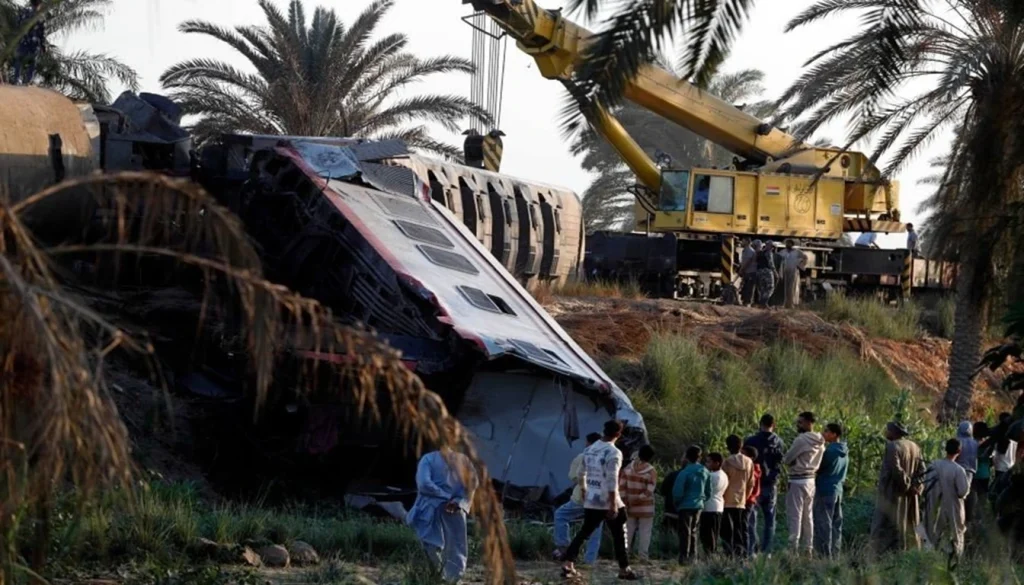
Sunday began as an ordinary day on Egypt’s railways and ended in twisted metal. The Egypt train collision in Al-Ayyat, Giza, south of Cairo, killed seven people and injured more than 110, according to the health ministry. Authorities say a train travelling from Giza to Fayoum slammed into the back of another service heading from Cairo towards Aswan, derailing several carriages.
Rescue and Reaction
Crews brought in cranes to clear the wreckage while ambulances carried the wounded to hospitals around Giza. The injury count shifted through the day, from 88 to 120 and then 112, with the prosecutor’s office citing at least 125. That is a reminder of how quickly numbers change after a disaster.
President Abdel Fattah al-Sisi said he was following events with great concern and ordered an urgent investigation, promising that anyone found negligent would be held to account. Prosecutors have ordered a railway traffic operator held for four days, and some Egyptians have called for the transport minister to resign.
A Place With a Painful Memory
Al-Ayyat is no stranger to grief. In 2002, a fire on a train carrying holiday travellers in the same area killed hundreds, making it Egypt’s worst rail disaster. In 2009, further crashes nearby claimed dozens more lives. For many families in Giza, Sunday’s news reopened old wounds.
The Bigger Picture
Egypt’s 110 million people lean heavily on trains, and the network is one of the largest in Africa. Over the past decade the government has poured billions into highways and high-speed rail, yet much of the ageing network has not been overhauled.
For a commuter who cannot afford a car, that gap is not abstract. It is the difference between a routine journey and a tragedy.
Whether the cause turns out to be human error, faulty signalling or something else, families deserve a public investigation and, just as importantly, action on what it finds. Promises to hold people accountable have been heard before. This time, Egyptians will be watching to see whether the tracks, the systems and the people running them actually change.
Read More
Africa Corporate Debt Markets Are Too Small to Fund the Continent’s Dreams, Says OECD
South Africa ANC Vote Slumps to 32%: What the Municipal Results Mean for Mzansi
Congo Ebola Outbreak Worsens as ADF Militants Raid a Village and Patients Flee
Tanzania Opposition Leader Tundu Lissu Jailed for Four Years: A Dark Day for Democracy?
Kenyan Doomsday Cult Leader Gets 200 Years: Shakahola Finally Gets Its Day of Justice
