
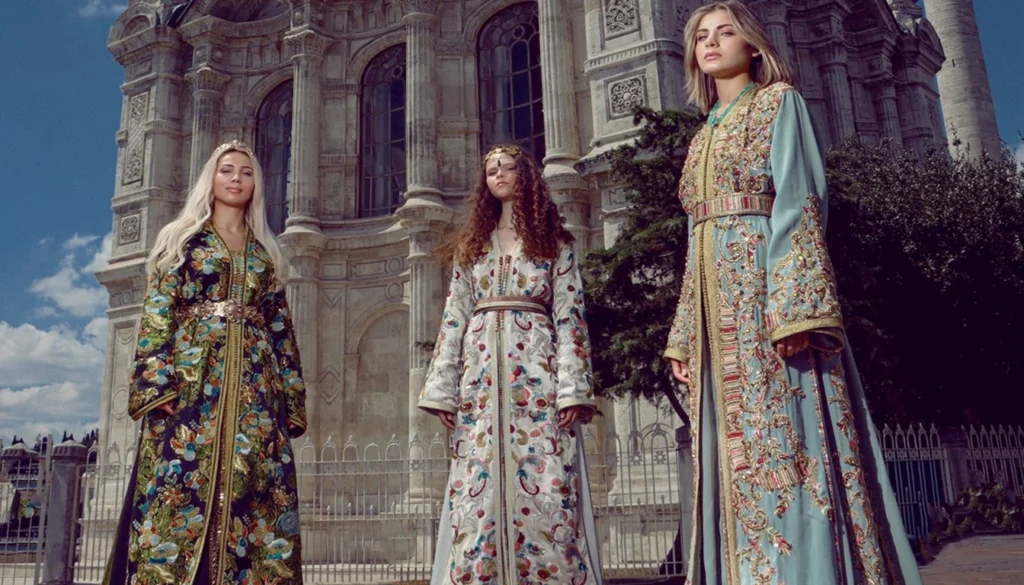
Walk into a wedding hall in Fez, Casablanca or Marrakech and the room glows with silk, velvet and gold thread. The Moroccan Caftan is the reason, a garment that has travelled from royal courts and city workshops to international runways without losing its soul. It is the most visible piece of Moroccan traditional clothing, and today the world is finally paying attention.
A Garment With Deep Roots
The caftan did not begin as the bridal gown many people picture today. It was first worn by men, among them scholars, sharifs and cavalrymen in cities across the kingdom, long before it became women’s ceremonial attire. Over the centuries it moved into family life, and today it is a standard in traditional Moroccan dress.
The caftan is worn by people of all genders and ages at weddings, baptisms, coming-of-age rituals and festivals. For many Moroccan families, a caftan is not just something you wear to a party. It is something your mother wore, and your daughter may wear again.
The Hands Behind the Gown: Moroccan Caftan Craftsmanship
No single person makes a caftan. Weavers produce the brocade, velvet and silk, tailors shape the garment, and other artisans make the buttons, braids and embroidery. Each of these trades has its own masters, and each depends on the others.
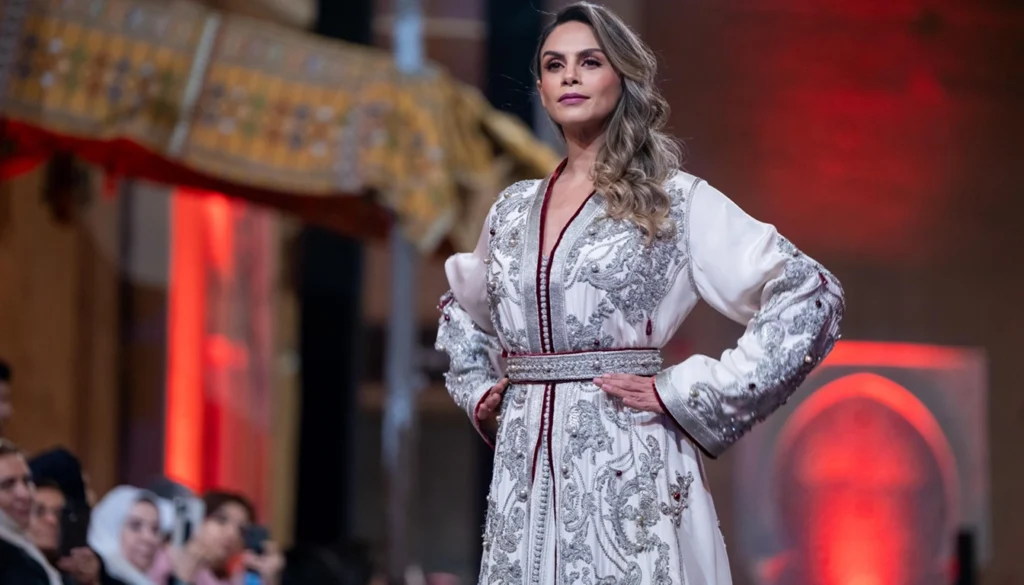
Two details tell you a caftan is authentic. The first is the sfifa, a narrow handwoven braid that edges the front opening. The second is the aakad, the knotted silk buttons. Craftspeople call the pairing “the eye and the knot.” A machine can imitate the look, but it cannot match the patience of a hand that twists silk thread to the width of a hair.
Much of this knowledge never sits in a textbook. It passes down informally within families and through workshop apprenticeships, and increasingly through training centres and fashion schools. That mix of old and new is a big reason Moroccan caftan craftsmanship has survived.
Six Cities, Six Signatures
Ask a Moroccan which caftan is the most beautiful and you will start an argument. Six distinct traditions sit behind the single UNESCO listing, rooted in Fez, Tetouan, Rabat, Salé, Marrakech and Oujda.
Tetouan’s version is traditionally worn open, with a dense panel across the chest. Rabat favours silk velvet with gold braid tracing the collar and sleeves. Salé goes finer still, with denser needlework. Many brides still wear the ntaâ, a velvet caftan born in Fez that spread across the country. This regional variety is a core part of Moroccan fashion heritage, and it is why one garment can tell you where a family comes from.
The UNESCO Cultural Heritage Moment
In December 2025, the garment got the recognition many Moroccans had long hoped for. UNESCO’s Intergovernmental Committee, meeting in New Delhi, inscribed the “Moroccan Caftan: art, traditions and skills” on the Representative List of the Intangible Cultural Heritage of Humanity.
The committee’s reasoning is worth noting. It found that the nomination came from the communities themselves, with artisans, researchers and government involved, and that bearers voiced enthusiastic support through about thirty testimonials. UNESCO cultural heritage status does not freeze a tradition in a museum. It protects the living practice and the people whose income depends on it. UNESCO notes the caftan is also a source of income for the many people involved in producing and selling it.
From Fez to the Runway: Global Fashion Trends
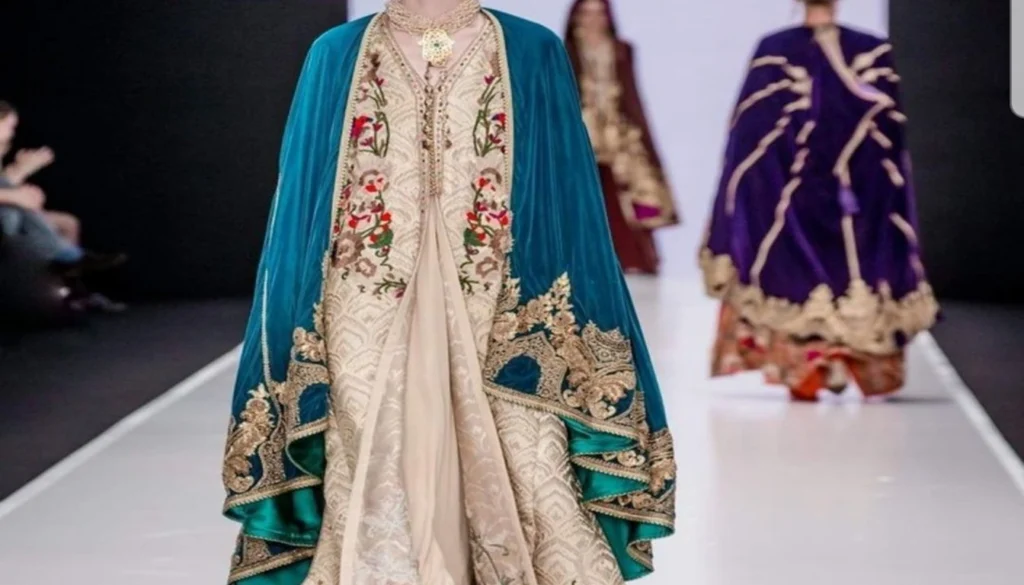
Fashion has never been shy about borrowing from North Africa, but the caftan is increasingly being celebrated on its own terms. Its long, flowing line suits the current appetite for modest, comfortable and richly decorated clothes. Designers in Paris, Dubai and London now reference the silhouette in their collections, while Moroccan houses showcase full caftan collections to international buyers.
These global fashion trends help artisans, but they also bring a risk. Cheap imitations flood online marketplaces, and a machine-printed gown sold as “Moroccan” takes sales from the weavers and embroiderers who spend weeks on one piece. The UNESCO listing gives Moroccan makers a stronger basis to say, politely but firmly, that provenance matters.
The caftan has also been caught up in a regional dispute. Morocco’s culture ministry has objected in the past to a Fez caftan photograph appearing in a neighbouring country’s heritage file. Without taking sides in that argument, it shows how much the garment now matters as a symbol of identity.
What the Caftan Means for the Rest of Africa
Across the continent, communities are asking how to turn heritage into income without selling out the culture. Think of Ghana’s kente, Nigeria’s aso oke or Ethiopia’s habesha kemis. The caftan’s story offers a few practical lessons:
- Document the craft: Morocco’s caftan was formally inventoried in 2014, years before its UNESCO listing.
- Involve the makers: The nomination worked because artisans spoke for it.
- Train the next generation: Workshops and fashion schools keep skills alive.
None of this is easy, and it takes money and patience. But the Moroccan example shows that a garment can be both a family heirloom and a growing industry.
Why the Moroccan Caftan Still Matters
The reason the caftan travels so well is that it is more than decoration. It carries a city’s style, a family’s history and an artisan’s skill in every seam. Whether it appears at a henna night in Oujda, a gallery opening in London or a bride’s first photograph, the message is the same. Heritage, when it is respected and paid for properly, can look spectacular.
For African readers, the lesson is encouraging. The Moroccan Caftan did not become a global name overnight. It got there because generations of makers kept the craft alive until the world caught up.
Read More
Gambia Presidential Election: Five Candidates, One Big Test for Barrow
Mauritius and Seychelles Lead Africa in New Capitalism Index
Mohamed Salah Egypt Scoring Record: The Pharaohs’ King Takes the Crown
How K-Dramas Use Africa to Shape South Korea’s Global Image
Fake Seeds, Real Losses: How Africa Is Fighting Counterfeit Seeds With Technology
