
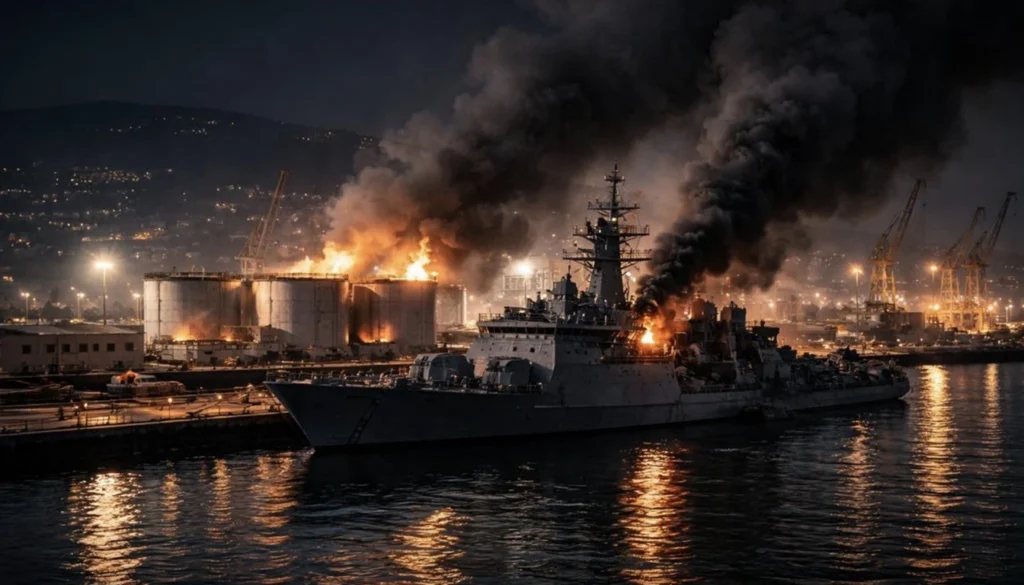
A Russian warship lying wrecked in Benghazi has reminded the world that Libya never really found peace. The Libya frozen conflict has been quiet enough since 2020 for many people to forget it, but Ukraine’s strike on a Russian vessel at the eastern naval base on Sunday shows how fast foreign wars can wash up on Libyan shores. For Africans from Lagos to Nairobi, this is not a distant story. It is a warning about what happens when a state splits and outsiders move in.
How a Revolution Became a Stalemate
Libyans toppled Muammar Gaddafi in 2011 after 42 years in power, with NATO backing. What followed was a scramble, not a handover. Armed groups built local power bases around rival politicians and seized economic assets. By 2014 there were two administrations, one in Tripoli and one in the east, where most lawmakers recognised Khalifa Haftar as military chief. His forces attacked Tripoli in 2019 and were pushed back by western factions backed by Turkey. A truce came in 2020. Elections planned for 2021 were cancelled over disputes about the rules and who could stand. Little has moved since.
Whose Country Is It Anyway?
Libya has become a crowded stage. Russia backed Haftar early and now uses airbases and naval docks in areas his forces control. Turkey keeps troops, an airbase at al-Watiya and a naval base in Misrata, with Tripoli’s approval. The UAE has long stood behind Haftar while also building ties with Prime Minister Abdul Hamid Dbeibah. Libyan security officials say Ukrainians operate in the west, training forces and targeting Russian interests. Tripoli says it will not let its soil become a launchpad for attacks.
Oil, Migrants and the Deal on the Table
The real prize is oil. Libya produces up to 1.3 million barrels a day, and most fields sit in the east, yet revenue must pass through the central bank in Tripoli. Factions have repeatedly shut terminals to squeeze their rivals. Libya is also a major departure point for Mediterranean crossings, which is why Europe watches so closely and why so many African migrants end up stranded there.
US envoy Massad Boulos is pushing a plan to unify state institutions and pave the way for elections. Analysts expect it to rest on the Haftar and Dbeibah families sharing power, possibly with Dbeibah staying as prime minister and Saddam Haftar leading a presidential council. Many Libyans fear that would simply lock in the same powerful men.
Until ordinary Libyans get a genuine vote, this frozen conflict will keep thawing at the worst possible moments.
Read More
Zambia Opposition Leader Brian Mundubile Faces Treason Trial After August Vote
Burundi Presidential Poll: Rwasa Challenges the Rules to Run as an Independent
Angola De Beers Deal: $180 Million for 10% of a Diamond Giant
2031 FIFA Women’s World Cup Lands in North America, and Africa Has Plenty to Watch
COP31 Climate Talks Collapse: Africa Pays the Price for a Fossil Fuel Fight
