
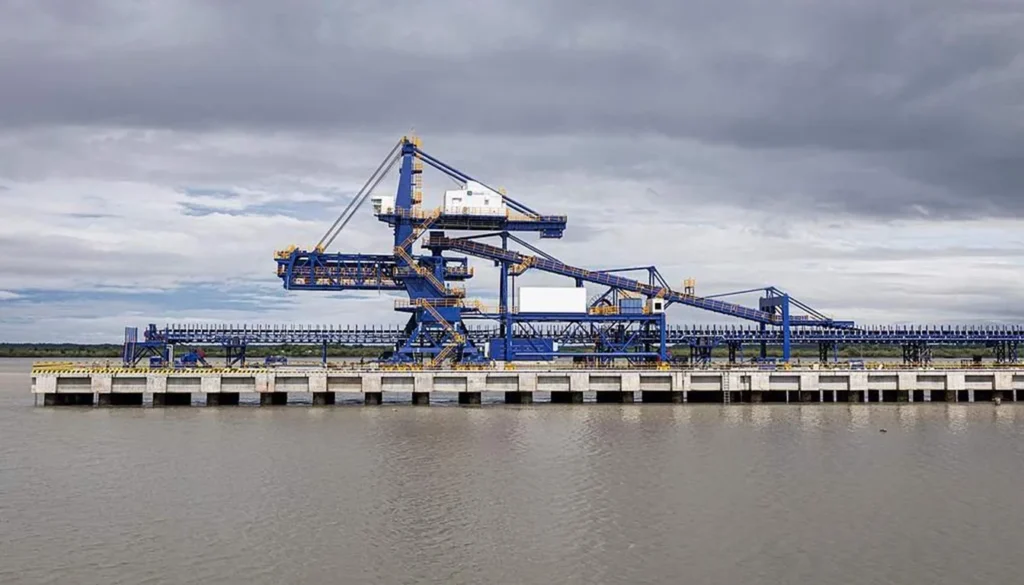
For decades, Simandou was the project everyone talked about and nobody delivered. Now the Simandou iron ore story has finally moved from promise to production, as Guinea has begun mining the world’s largest untapped high-grade iron-ore deposit. The harder question is who will really benefit.
From False Starts to First Shipments
Simandou’s history is a catalogue of setbacks, from legal fights over rights to years of stalled talks. One dispute only ended when BSGR agreed in a 2019 settlement to give up its claims. Today the project joins mines, a railway of about 600 kilometres and a deep-water port, backed by huge Chinese and international investment. Estimates of the cost run to around $20 billion, a figure close to the size of Guinea’s entire economy.
Under the deal, the state owns 15 per cent of the mining blocks, the railway and the port, and holds veto rights over strategic decisions. These stakes sit within a 35-year concession. Guinean officials have said openly that they want to prove the resource curse is not inevitable.
Jobs, Skills and the Cliff After Construction
The biggest immediate risk is what happens when construction ends. Employment is expected to fall sharply once the building phase is over. Rio Tinto’s Simandou team has named this “demobilisation” as its main concern.
To soften the blow, the project has launched training. At one centre, 69 apprentices, 16 of them women, are learning welding, carpentry, electrical work and heavy-equipment operation. A Simandou Academy is also being set up to build longer-term industrial skills. These are encouraging first steps, but they must reach far more young Guineans than a few dozen.
The Test Ahead
Guinea must now turn ore into broad prosperity. Experts warn that exporting raw ore alone leaves most of the value abroad, and some analysts say falling prices from global oversupply could squeeze revenue. Communities near the mine and the forests that shelter West African chimpanzees will also need protection.
Breaking a decades-long curse of delay was the easy part. Using Simandou to build local industry, fair jobs and a diverse economy is the real test, and Africa will be watching.
Read More
New Nigeria Innovation Hub in Borno Puts Digital Skills Within Young People’s Reach
Cameroon Separatist Leader Lucas Cho Ayaba Denies War Crimes in Oslo Court
Libya Frozen Conflict: Why Africa’s Oil Giant Still Cannot Move On
Senegal AFCON Title Restored: The Lions of Teranga Are Champions Again
Pete Edochie, Nollywood’s Unforgettable Voice of Authority, Dies at 79
