
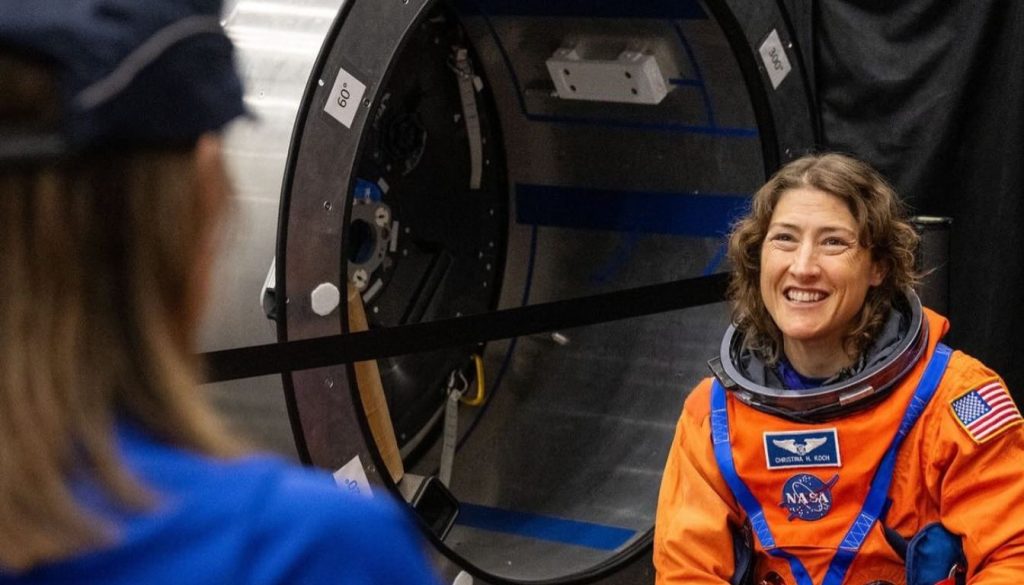
It’s been a long time coming, but we are finally back in the deep-space game. The Artemis II mission update is currently moving through its most significant stretch yet, marking the first time a human crew has actually headed for the Moon since the Apollo era wrapped up decades ago. Everything started with a smooth liftoff on April 1, 2026, and so far, the mission is looking solid.
Getting Out There
The crew, Reid Wiseman, Victor Glover, Christina Koch, and Jeremy Hansen, left Earth behind on the back of NASA’s SLS rocket. Since that launch, the mission has been a series of perfectly executed manoeuvres. By April 2, they had already completed the “translunar injection,” the big engine burn that essentially slingshots the Orion capsule out of Earth’s orbit and sets it on a lunar course.
The flight has been so incredibly accurate that by the third day, mission control actually scrapped a planned course correction. The ship was already so dialled in that they didn’t even need to nudge it.
Life at the Halfway Point
As of April 4, the team is roughly three days into their ten-day trip. They’ve reached a pretty cool milestone: they are now officially closer to the Moon than they are to Earth. Right now, Orion is coasting on what’s called a “free-return trajectory.” It’s basically a cosmic safety net; even if their engines stopped working this second, the Moon’s gravity would naturally swing them around and point them back toward home.
The crew is also about to beat the distance record set by Apollo 13, meaning these four are about to be the farthest any humans have ever been from our home planet.
What’s the Vibe on Board?
Up in the cabin, the crew is staying busy but steady. They are running checks on life-support systems, handling science experiments, and trying to keep a normal sleep schedule. NASA says the spacecraft is in great shape, and the photos coming back show a crew that’s focused and ready for what’s next.
Looking Ahead
The real highlight is the lunar flyby coming up on April 6. That’s when the astronauts will get their first up-close look at the lunar surface before starting the long trek back. If the timeline holds, we’re looking at a splashdown around April 10. For now, everyone is just watching the telemetry as the gap between the crew and the Moon continues to shrink.
Summary
The Artemis II mission is cruising through deep space after its April 1, 2026, launch. The crew: Wiseman, Glover, Koch, and Hansen is now closer to the Moon than Earth. They’ll loop around the lunar far side on April 6 before a splashdown on April 10.
FAQs
1. What is the Artemis II mission?
Artemis II is NASA’s first crewed mission in its new lunar exploration program, designed to test systems for future Moon landings. It carries astronauts around the Moon without landing.
2. How far is Artemis II from Earth right now?
As of April 4, the spacecraft is farther from Earth than halfway to the Moon. It is now closer to the Moon than Earth, following a deep-space trajectory.
3. Who are the astronauts on Artemis II?
The crew includes Reid Wiseman, Victor Glover, Christina Koch, and Jeremy Hansen. They represent both NASA and international collaboration.
4. What is a free-return trajectory?
A free-return trajectory is a flight path that naturally loops around the Moon and brings the spacecraft back to Earth. This ensures safety even if engines fail during the mission.
5. When will Artemis II return to Earth?
The mission is expected to conclude around April 10, 2026. After completing the lunar flyby, the spacecraft will reenter Earth’s atmosphere and land safely.
Explore More Must-Reads
What are Nipah virus warning signs?
Explore the symptoms, spread patterns, and why officials are raising urgent alerts to stay safe.
Which AI tools will dominate 2026?
Discover the most powerful emerging AI tools you must know to stay ahead in the tech world.
Why is AI adoption slow in farming?
Check the key challenges limiting AI use in African agriculture and what it means for farmers.
How is Nvidia building Africa AI factory?
Explore how Nvidia and Cassava are launching Africa’s first AI factory to boost innovation.
Can AI improve Africa weather forecasting?
Discover how AI-driven weather forecasting is saving lives across the Horn of Africa.
