
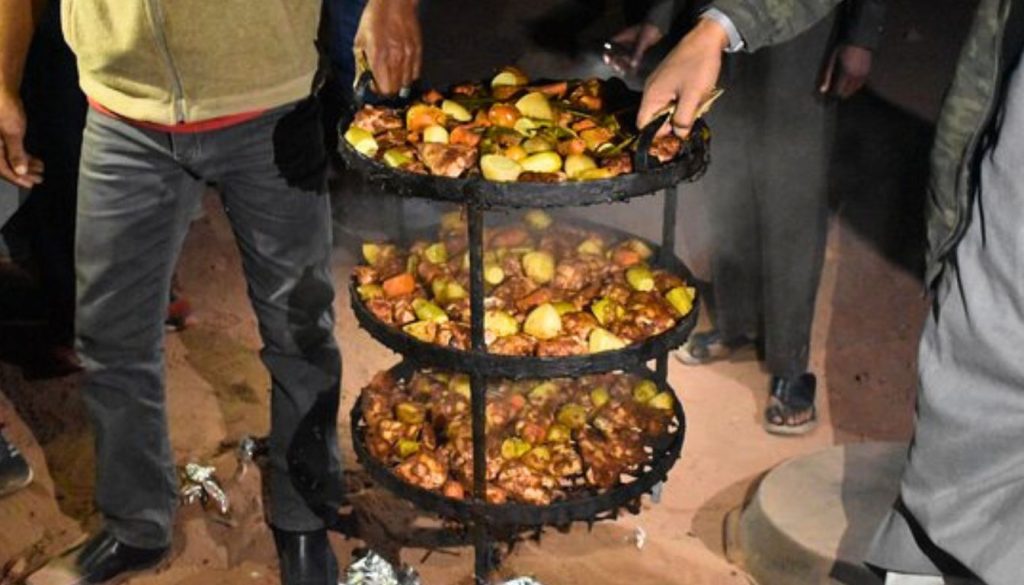
Community traditions among the Bedouin nomadic tribes of the Sinai Peninsula illustrate their desert lifestyle and kindness towards one another, especially during the month of Ramadan, when families and friends come together to share large meals consisting of simple, yet nutritious foods after an exhausting day of fasting.
Iftar meals among Bedouin tribes differ from urban Ramadan dinners in that they are served as large platters containing slow-cooked meats, grains and traditional bread. The purpose of the food is to help re-warm the body after periods of fasting and to regenerate energy levels after a long day without food.
Families typically enjoy their iftar (meal breaking the fast) together while seated on large mats or carpets located within a larger tent or courtyard. They share food from the same large trays once the call for the evening prayer has concluded, marking the end of the day’s fast; everyone is welcome to share in the meal.
Bedouins’ Traditional Iftar Foods
At iftar in the Sinai, one example of a traditional food item is El Gareesha, a popular comforting dish served during the month of Ramadan. In addition to being thick and hearty in texture, El Gareesha contains crushed wheat, lentils, cumin, desert herbs and goat ghee (melted goat’s milk fat), making it healthy and filling.
Another popular dish during iftar is zalabiya, a sweet dessert made from deep-fried dough balls. They are fried and then dipped in sugar or syrup, which makes the outside crunchy and the inside soft. This dessert is a nice change from the savoury foods that came before it.
These foods are easy to make and taste good. They show how the Bedouins used grains, herbs, and goat products that were easy to find.
Shared platters and meals for everyone
Bedouin Ramadan customs are based on the community. A lot of families in villages on the Sinai Peninsula have big iftars where they eat with a lot of other people.
A big tray of rice with soft goat meat is the main dish at these events. Putting the dish in the middle so that everyone can eat together makes the idea of being together and giving stronger.
Ten days before Ramadan, families usually start getting ready for the holy month. They get the ingredients, make the spices, and plan events for the community. People really value hospitality, and guests are always welcome to join the meal.
Hospitality with bread, meat that has been cooked slowly, and dessert Bedouin Iftar Dishes in Sinai
Bedouin bread is another important part of iftar meals. Arbood is a flatbread that is cooked over hot stones or fire. People usually eat it with grilled meats or stews.
There may be special meals during Ramadan, such as Zarb, which is meat and vegetables cooked in a sand oven underground, or Fattah, which is a layered dish made with rice, bread, and lamb.
Many Bedouin families spend the rest of the evening after dinner drinking Arabic coffee and talking about things that make them happy. In desert communities, hospitality is still very important. The iftar meal is about more than just food; it’s also about giving, community, and cultural heritage.
FAQs
1. What types of food do people typically consume during Bedouin iftar in Sinai?
El Gareesha, which is rice with goat meat, flatbread like Arbood, and sweet desserts like Zalabiya, are all traditional foods.
2. Where do Bedouin families eat their meals at iftar?
A lot of families get together outside or in tents, where they sit on carpets and eat from big trays.
3. What makes Bedouin meals during Ramadan different?
Bedouin food is made with basic ingredients like grains, goat meat, herbs, and traditional cooking methods that work well in the desert.
4. What does “zarb” mean in Bedouin food?
Zarb is a traditional dish that gets its smoky flavour from being cooked slowly underground in a sand oven with meat and vegetables.
5. Why do Bedouins need to eat together during Ramadan?
Bedouin culture puts a lot of value on family ties and hospitality during Ramadan. Eating together is a way to make these values stronger.
