
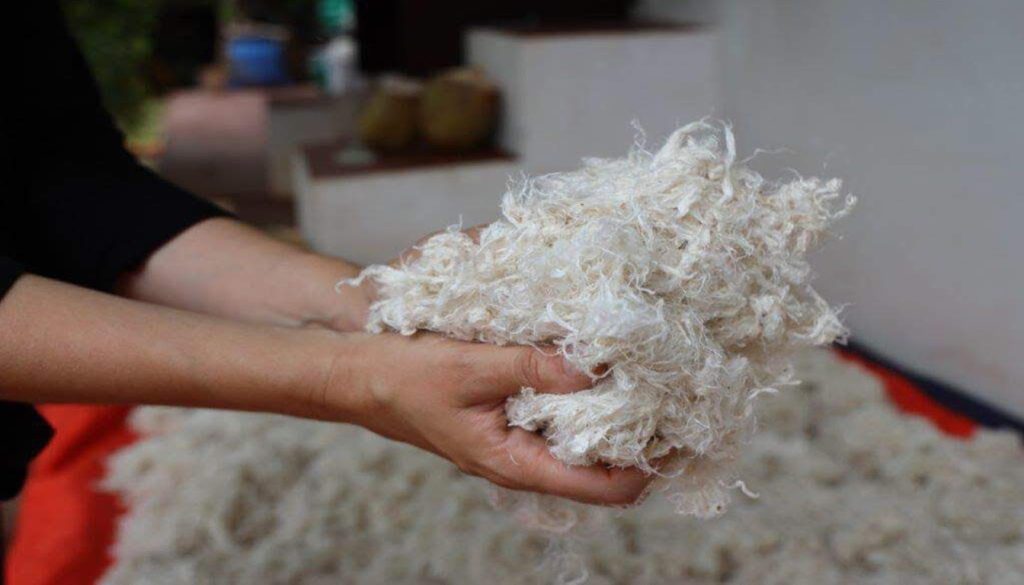
Using agricultural by-products (such as pineapple leaves and corn husks), bio-fabricated textiles convert agricultural waste into elegant, eco-friendly fabrics that alleviate major environmental impact caused by traditional textiles. Traditional materials (like cotton) require excessive water, and synthetics cannot be recycled. The recycled agricultural waste creates clothing for you to wear every day, while supporting the environment.
Transforming Waste into Fibres
Agricultural waste such as banana stems, hemp stalks, rice husks, and corn husks can be turned into cellulose—the main component of plant cell walls—through bio-manufacturing. Many companies, including Le Marché, have processes that break tough plant biomass into soft and spinable fibres marketed under the name AGRATEX™ from both hemp and pineapple. Products made from “plant milk” by companies like Véloise in Quebec can also be dried into pellet form and then spun into a finished product, thereby providing traceability from field to fabric or yarn. In addition, unlike wood pulp or cotton, using agricultural waste to produce yarn does not cause deforestation or require additional land for crop planting. Therefore, items manufactured with these types of yarns will have a “natural feel,” and when dyed, will have a beautiful dyeing characteristic.
Environmental Wins and Efficiency
This exceptional sustainability record of these fabrics makes maize husks a great 1% of the total cotton water-use model. Maize husks have also been shown to generate 80% lower carbon output than cotton. These fabrics are also biodegradable and,, therefore, can cut down on landfill accumulation from non-decomposing synthetic materials. They are produced using several renewable plant sources (hemp and bananas), which provide durability and antimicrobial properties in addition to moisture-wicking capabilities for activewear. By combining hemp and banana fabrics, manufacturers such as Grandetex can produce comfortable materials. Mycelium-grown materials use farm-based nutrients and take only a few days to grow vs several years; these products have the potential for large-scale mass production (thousands of tons monthly), creating less pressure on forests and other water-hungry crops. Essentially, agricultural waste from farmers becomes a source of income while reducing the carbon footprint of the fashion industry production.
Pioneering the Fashion Shift
Fashion for Good and Adidas have collaborated on their Untapped Agricultural Waste Project to evaluate fibres from straw and rice. Research conducted by Chalmers University confirms the feasibility of processing straw into pulp, demonstrating its potential for developing large-scale production processes. Despite the technical challenges associated with processing coarse-textured and inconsistent quality raw materials, blending the new fibre with cotton provides an opportunity for the industry to produce higher quality textiles than currently available using cotton alone. Already, many luxury brands are showcasing textiles made with these new textiles, including Piñatex (created from pineapple fibres) and BioFibre™ (created from straw). As these new technologies mature and gain acceptance in the mainstream marketplace, expect to see millions of tons of waste being turned into ethical fashion products every year. This is not a passing trend; it is the future of the fashion industry.
FAQs
1. What Is Bio-Fabricated Fabric?
Simply Put, Bio-Fabricated Fabrics Are Textiles Created Through The Extraction And Processing Of Cellulose Fibers From Agricultural By-Product, Such As Crop Residues, To Produce A Sustainable Replacement For Cotton And/Or Polyester Textile Products.
2. Which Types Of Waste Are Most Commonly Used To Create Bio-Fabricated Fabrics?
The Most Commonly Used Fibres Come From Items Such As: Pineapple Leaves (Piñatex), Corn Husks, Banana Stalks, Hemp Stalks, Rice Husk, And Wheat Straw. All Of These Are Plentiful Global By-Products.
3. What Environmental Benefits Are Associated With Bio-Fabricated Fabrics
The Environmental Benefits Include: Up To A 99% Decrease In Water Usage; An 80% Decrease In CO2 Emissions; Reduced Deforestation; Complete Biodegradability; And Creating Economic Opportunities For Farmers.
