
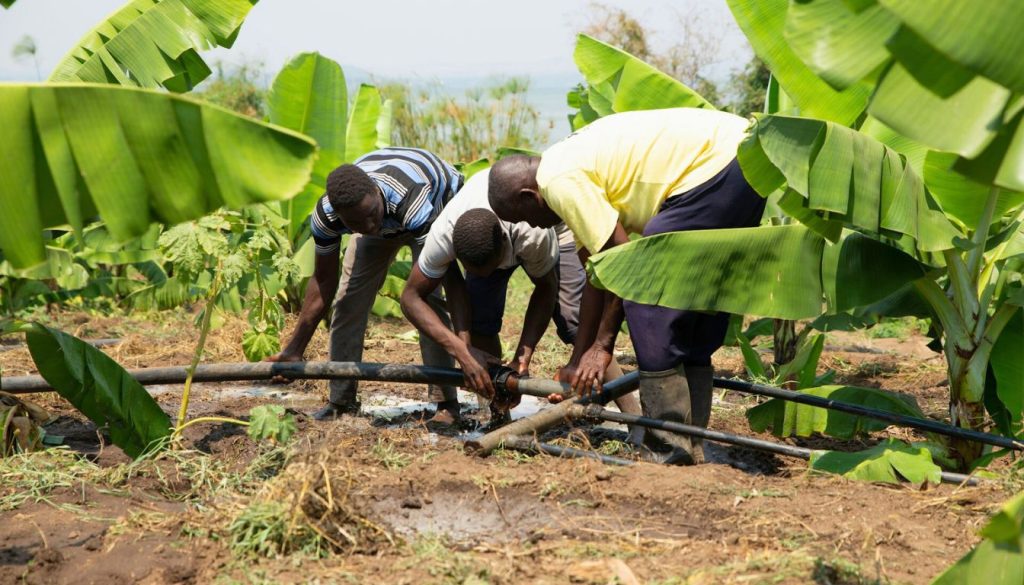
African smallholder farmers can enhance soil health, boost yields, and develop climate resilience through conservation agriculture (CA). Farmers can cut expenses while preserving their property by emphasising crop diversity, permanent soil cover, and minimal soil disturbance.
Use minimum tillage
Reducing soil disturbance is the first conservation agriculture tenet. Farmers can use shallow planting techniques or zero-till techniques in place of thorough ploughing every season. This lessens erosion, maintains moisture, and safeguards soil structure.
Smallholder farmers can plant seeds without reclaiming the entire field by using basic equipment like animal-drawn rippers or jab planters. This lowers labour expenses and increases soil fertility over time.
Continue to Cover the Soil Permanently
It is crucial to keep the soil covered with cover crops or crop residues. Instead of burning stalks and other organic materials after harvest, farmers should leave them on the field. Mulch shields soil from the damaging effects of wind, rain, and sun.
Legumes are examples of cover crops that enrich the soil with nutrients. They provide important advantages in drought-prone African regions by suppressing weeds, lowering evaporation, and enhancing water retention.
Use Rotation to Diversify Crops
Crop rotation lowers insect outbreaks and improves soil health. Nitrogen levels are naturally raised when legumes like beans or groundnuts are substituted for cereals like maize.
Additionally, diversification disperses economic risk. Farmers can depend on another crop for revenue and food security in the event that one fails because of weather or pests.
Community Education and Assistance
Farmer education is necessary for successful implementation. Cooperatives, NGOs, and extension organisations can offer reasonably priced equipment and training in CA techniques. Before making a complete switch, farmers can see long-term benefits using demonstration plots.
The initial cost of tools and seeds can also be decreased by having access to microfinance and group purchase programs.
FAQs
Q1: What are conservation agriculture’s three guiding principles?
rotational crop diversity, minimal soil disturbance, and permanent soil cover.
Q2: Is it costly for smallholder farmers to practice conservation agriculture?
Tools and training may be needed for initial modifications, but decreased labour and input utilisation over time result in cheaper long-term costs.
Q3: How does climate change benefit from conservation agriculture?
It promotes resistance to drought and harsh weather, decreases erosion, and improves soil moisture retention.
