
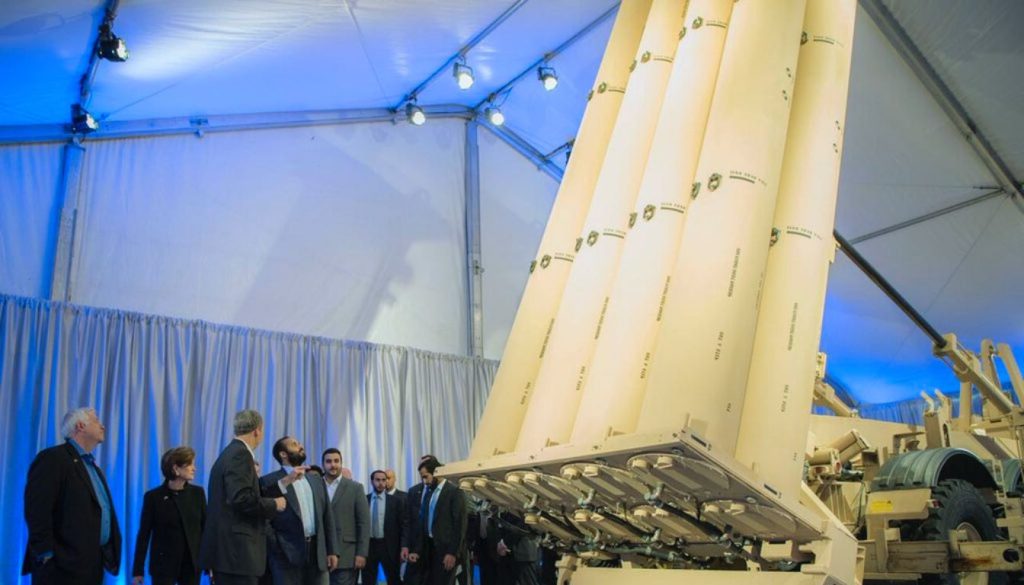
The THAAD missile defence system is a highly effective missile defence platform that was manufactured by the United States and is used for the defence against short-, medium- and intermediate-range ballistic missiles during the final phase of flight. It utilises “hit-to-kill” kinetic technology, which is designed to intercept and destroy ballistic missiles without the use of explosives, and it also utilises an AN/TPY-2 radar (which is an advanced tracking radar that enables the THAAD system to track and destroy ballistic missiles at high altitudes).
United States
The THAAD (Terminal High Altitude Area Defence) system was developed by the US and is primarily operated by the US Army, with four operational THAAD batteries currently installed in the US. An additional battery is being manufactured at this time. Currently, THAAD batteries are deployed at key locations, such as Guam and South Korea, to mitigate regional missile threats.
THAAD systems are also deployed in the US ballistic missile defence strategy for the Middle East region. THAAD units are deployed at key military installations in order to provide protection for US and coalition airspace against missile attacks.
South Korea
A THAAD battery has been permanently deployed at a military base in Seongju, South Korea, since 2017 as a result of a bilateral security partnership between South Korea and the United States. The goal is to protect South Korea and its allies from any ballistic missile attacks that may come from North Korea.
United Arab Emirates
The United Arab Emirates became the first country in the world (other than the United States) to deploy the THAAD system. The UAE acquired two batteries of the THAAD system through foreign military sales and has since employed them against ballistic missile threats. This deployment is the first operational use of the THAAD System, representing an operational success for the program.
Israel
In 2024, the United States of America deployed a THAAD battery in Israel to help strengthen its layered air defence system in response to increased missile threats from its neighbours. Although U.S. forces are responsible for operating these batteries, the deployment of THAAD in Israel will provide the country with an additional means of intercepting missiles that may be launched into southern Israel from high-threat situations.
Saudi Arabia
Saudi Arabia has now received and activated its first operational THAAD battery, which was part of a large purchase agreement for the THAAD system. This activated THAAD battery provides Saudi Arabia with an enhanced capability to defend against regional ballistic missile threats.
Other or Temporary Deployments
The US has temporarily based THAAD batteries in Romania and deployed them across several Middle East locations during heightened tensions. Some reports also note THAAD presence at allied bases in countries like Kuwait, Bahrain, Jordan and Qatar when integrated with US force protection rotations.
FAQs
1. What is THAAD?
THAAD stands for Terminal High Altitude Area Defence, a system that intercepts ballistic missiles during their terminal phase using hit-to-kill technology.
2. Which country invented THAAD?
The United States developed the THAAD system, produced by Lockheed Martin.
3. Is THAAD deployed permanently in Europe?
THAAD has been temporarily deployed in Romania while other systems underwent maintenance, but it is not permanently based there.
4. Can THAAD intercept hypersonic missiles?
THAAD is designed for ballistic missiles, but evolving threats have led to continued upgrades to extend its capabilities.
5. Will more countries acquire THAAD?
Countries such as Qatar have expressed interest or are moving ahead with procurement, as regional missile threats rise.
