
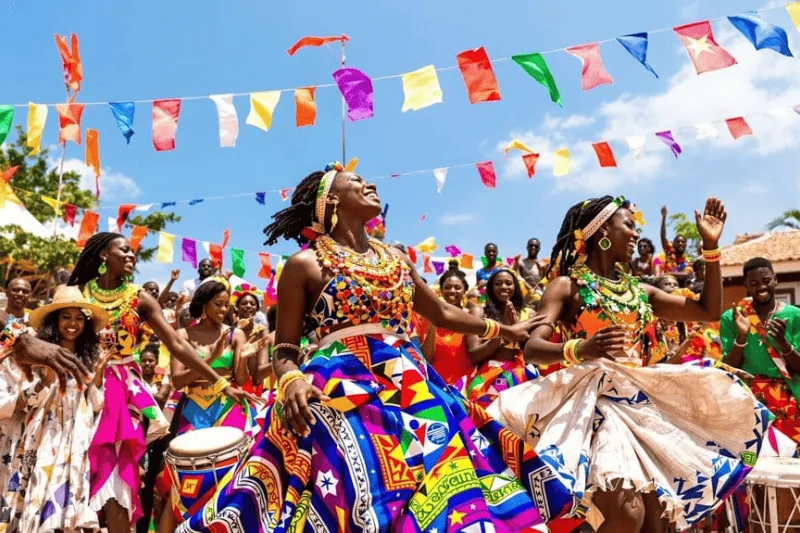
The cultural traditions and lifestyles of the people living in Africa have been passed down from generation to generation through oral history. Africa is not limited to museums; it is a continent of history. All 54 African countries have festivals that preserve these traditions, commemorate important historical events, and share cultural identity among communities.
Festivals in Africa are more than just cultural demonstrations; they are living narratives told from one generation to the next. Festivals in Africa include everything from harvest ceremonies to royal commemorations, spiritual rituals, and the use of music to tell stories. Thus, the variety of festivals across Africa reflects the continent’s diversity and its rich heritage.
The Importance of Festivals in African Culture
Festivals are central to the social organisation of many African societies, celebrating the cycles of agriculture, honouring ancestors, celebrating the kingship, and in this way helping to ensure that the victories gained by historical figures live on in the minds of their descendants. Festivals in Africa are not simply entertainment events that are attended by only a small number of people; they are communal gatherings where all the members of the community come together to commemorate and celebrate the arts, the oral history, and the collective memory of their people.
According to UNESCO, there are more than 200 officially registered intangible cultural heritage practices from Africa, and many of these practices continue to be passed down through festivals. Festivals function as the official record of a region’s history, where oral tradition is still significant in African cultures.
Exploring African Culture in Depth
If you are interested in African Culture Heritage Festivals, you will find that there is a direct connection between the features we present regarding African Traditional Rituals, Heritage Tourism in Africa and the role that Oral History plays in defining and establishing African Identity. Readers looking at Historical Festivals in Africa or Traditional Celebrations by Country will be able to piece together the stories and find them to be extremely valuable in understanding Africa beyond the headlines.
Iconic African Festivals Celebrating History
The Durbar Festival is the most widely known Festival of the Northern Emirates in Nigeria and is, therefore, one of the most celebrated Festivals in Africa. This Festival is steeped in the Ancient Cavalry Tradition and continues to demonstrate the tradition of Royal Processions, the Art of Horsemanship and Islamic Heritage that originated over one thousand years ago.
In Ghana, the Homowo Festival commemorates the resilience of the people during a historical famine. Homowo literally translates as “to hoot at hunger”; the Festival has continued to serve as a reminder of the strength of the community and resilience shown in partnership with one another.
The Timkat Festival is a Celebration of the Epiphany in Ethiopia. It is an event that has been taking place for more than one thousand years and is a combination of Religious Devotion and Historical Reenactments associated with the Ark of the Covenant, therefore making it one of the most Historically Significant and Spiritually Important Events in Africa.
The Zulu Reed Dance in South Africa is a celebration of Purity, Tradition, and Royal Customs. During this Festival, Young Women participate in a Ceremony to reaffirm the Cultural Pride and Cultural Continuity of Zulu History.
A Snapshot of Major African Festivals
| Festival | Country | Historical Significance |
| Durbar Festival | Nigeria | Celebrates emirate history and cavalry traditions |
| Homowo | Ghana | Marks victory over famine |
| Timkat | Ethiopia | Ancient Christian Epiphany celebration |
| Zulu Reed Dance | South Africa | Preserves Zulu royal traditions |
| Fes Festival of World Sacred Music | Morocco | Celebrates spiritual and cultural coexistence |
Festivals and Modern Identity
African festivals have changed with the times, even though they are based on custom. Today, they draw travellers, researchers, and migrant groups from around the world, which helps the local economy very much. Every year, festivals that draw tourists from other countries bring millions of dollars to Africa. These festivals also help people around the world learn about the African past.
These events are important because they help young people reconnect with their roots in a world that is changing quickly. History comes alive and makes sense through music, clothing, language, and rituals.
Keeping History Alive by Celebrating
African gatherings are very important for keeping culture alive as modernisation speeds up. More and more, local leaders, cultural groups, and governments see events as a way to teach people, bring them together, and promote cultural understanding between countries.
African societies make sure that history is not lost by honouring it with pride and celebration instead of silence.
Keep Reading
Common Questions
Q1 What makes gatherings important in African culture?
They keep history alive, make the community stronger, and pass down customs to the next generation.
Q2 Are the holidays in Africa cultural or religious?
Many are both, mixing religious ideas with history and societal customs.
Q3 Are African culture festivals open to tourists?
Yes, a lot of festivals encourage culture tourism and are happy to have visitors from other countries.
Q4 How do celebrations help keep African history alive?
They use music, dance, storytelling, and rituals to keep oral history living.
