
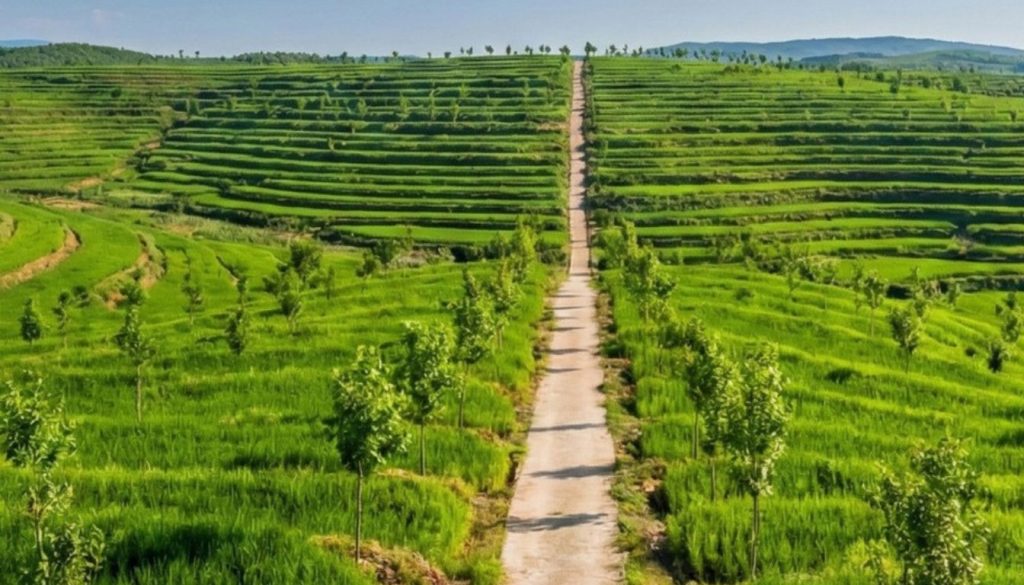
One of the biggest environmental initiatives in the world is the Great Green Wall Africa (GGW). The project covers 11 countries in Africa’s Sahel region. Its goals are to limit the growth of the Sahara Desert, rehabilitate damaged land, and improve the lives of millions of people who live in areas that are prone to drought.
The project started out as a big tree-planting effort, but it has changed over time. Now, experts and legislators are more interested in sustainable land management methods, such as agroforestry, restoring soil, and letting natural vegetation grow back. Some areas have seen good progress, but the overall outcomes are still uneven.
Moving Forward Toward the 2030 Restoration Goal
Reports say that the effort had repaired almost 30 million hectares of damaged land by 2024. This is around 30% of the goal to restore 100 million hectares by 2030.
The countries taking part in the project have planted plants that can survive dry conditions, like moringa and mango. These trees help make the soil more fertile and keep moisture in dry areas. Satellite data have shown that vegetation cover has grown in several places.
Restoration work has also benefited local communities by creating jobs and boosting agricultural yield. Experts, on the other hand, say that overall development has stalled, and estimates of 15–20% completion have stayed mostly the same since 2019. This is mostly because of gaps in monitoring and poor data reporting.
Effect on Plant Conservation
The Great Green Wall has come up with a number of ways to help plants live longer and increase biodiversity.
Some sections of the Sahel have seen more plants thanks to technologies like assisted natural regeneration and new ways of planting. Switzerland paid for an international project that helped plant more than 440,000 trees, which helped bring back habitats for native plants.
The program has planted more than 11 million trees in Senegal alone. Environmental groups say that greener landscapes in some areas have also made food more available and aided people who are malnourished.
But the rates of survival are still a big worry. Studies show that only around 20% of planted trees live, mostly because of very dry weather, animals eating them, and not having the right irrigation or fencing systems.
Big problems that are slowing down the initiative
The Great Green Wall has a lot of big plans, but it also has a lot of problems.
Getting money is one of the hardest things to do. Experts say that the project still needs about $33 billion in funding to meet its aims by 2030. Political instability and fighting in some sections of the Sahel region have also made it take longer to put the plan into action.
Another problem is that countries don’t work together. It is still hard to keep track of progress accurately because the area is so large. In certain cases, planting non-native species has raised ecological concerns by putting local biodiversity at risk.
Comparing Different Restoration Approaches
Different restoration methods used under the Great Green Wall have produced varied outcomes.
| Approach | Plant Survival/Impact | Examples |
| Tree Planting | Low survival rate (around 20%) | Large-scale reforestation projects in the Sahel |
| Natural Regeneration | Higher survival, cost-effective | Around 0.73 million hectares restored |
| Agroforestry & Water Management | Moderate to high success | Shelterbelts, orchards, and improved forest management |
These findings suggest that natural regeneration and agroforestry practices may provide more sustainable long-term results than traditional mass tree planting.
Frequently Asked Questions
1. What is the project for the Great Green Wall?
The Great Green Wall is a big environmental project that aims to stop desertification and restore land that has been damaged in the Sahel region of Africa. It covers 11 nations and aims to restore 100 million hectares by 2030.
2. How far has the Great Green Wall come along so far?
By 2024, roughly 30 million hectares of land had been restored, which was nearly 30% of the project’s ultimate goal.
3. What makes the Great Green Wall so important?
The project helps fight climate change, maintain plant diversity, restore agriculture, and make sure that people who live in areas that are likely to have droughts have enough food.
4. What problems does the project have to deal with?
Funding shortages, political instability, bad weather, low tree survival rates, and problems in cooperation between the countries involved are some of the biggest problems.
5. What are the greatest ways to restore the Sahel region?
Experts say that natural regeneration and agroforestry approaches often work better in the long run than just planting a lot of trees.
