
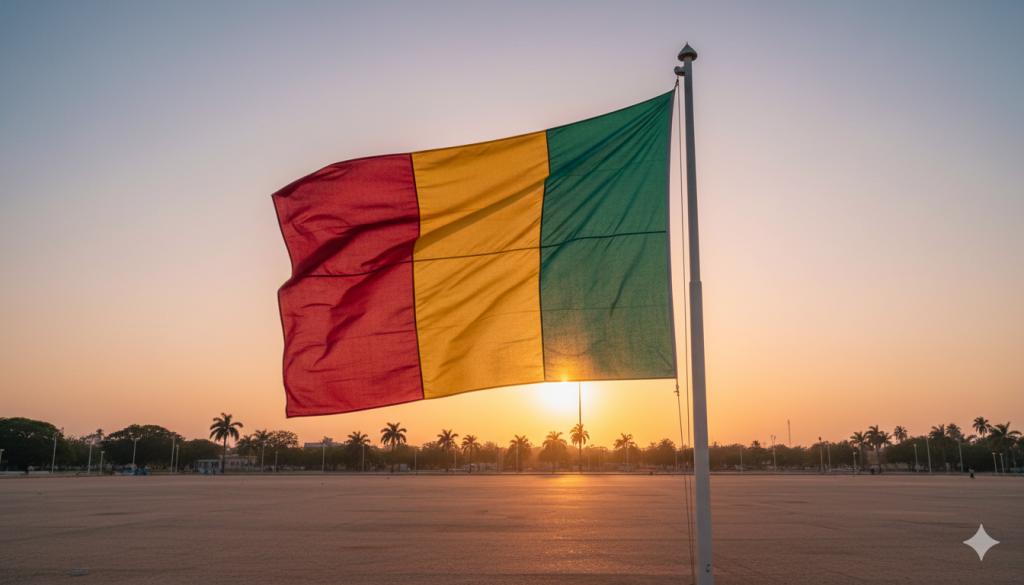
Guinea held a presidential vote after the Guinea coup 2021 removed Alpha Condé and placed the military at the centre of power. This poll sits inside a wider Guinea political transition that has moved slowly, with promises of civilian rule meeting hard, practical politics. In Pakistan, editors tracking West Africa political news say the vote matters for stability in a region tied to minerals, shipping routes, and investment risk, even if it feels far away.
Mamady Doumbouya’s Rise and Political Influence
Mamady Doumbouya rose as a special forces officer and then as the face of the coup that ended Condé’s third-term presidency. He projected discipline and order, the kind of image soldiers like to sell to a tired public. He also built a political machine around security, state media, and loyal administrators. It is the usual pattern. A uniform becomes a brand, then a campaign, then a state.
Constitutional Changes Paving the Way for Doumbouya’s Candidacy
The legal groundwork mattered as much as the rallies. Constitutional changes opened space for the transition leadership to contest elections and reshaped the length and structure of the presidency. Supporters call it a clean reset. Critics call it rule-making written by winners. In practical terms, it reduced uncertainty for the ruling camp and raised the bar for rivals who already faced limited room to organise, fundraise, or speak freely.
Election Day Overview: Turnout, Security, and Early Reactions
Voting day carried the familiar heat, dust, and impatience seen at polling sites across many capitals. Lines formed early in some areas, then thinned, then returned again. Security was visible, calm but firm. Some voters described the day as orderly, others as tense, like everyone was careful with words.
| Item | What was seen on voting day |
| Polling atmosphere | Quiet queues, occasional arguments, heavy police presence |
| Turnout signs | Uneven participation across neighbourhoods |
| Public mood | A mix of resignation, hope, and irritation |
Initial reactions in public spaces leaned cautious. People talked in low voices. Small talk stayed small.
Why the Opposition Remains Weak and Fragmented
Guinea’s opposition has struggled with exile, legal pressures, internal splits, and plain fatigue. Big names have faced restrictions, and party networks have thinned. Even when anger exists, organising it into votes is another job. It takes money, offices, transport, and media access. When those pieces are missing, campaigns turn into whispers. And whispers do not win national elections, not often.
Public Sentiment Toward Doumbouya’s Leadership
Public feeling is not one clean story. Some citizens credit Doumbouya with restoring a sense of order and pushing officials to move faster. Others point to crackdowns and say fear has returned, only wearing a different uniform. In street conversations, frustration shows up in simple complaints, prices, jobs, and the daily hassle of dealing with officials. Feels like real work sometimes, staying patient in that setup.
Economic Factors Strengthening Doumbouya’s Support Base
Economic messaging has been central, especially around big extraction plans like the Simandou mining project election narrative, where mining wealth is presented as a national turning point. The promise is easy to picture, roads repaired, wages paid on time, power supply improving. But citizens also remember that mineral wealth can sit in the ground while ordinary life stays expensive. So the support is practical, tied to what changes in markets and pay packets, not speeches.
International Reactions and Concerns Over Democratic Credibility
International observers and rights groups have raised concerns about political freedoms, media space, and the fairness of competition. Regional bodies also watch closely because coups in West Africa have left a trail of uneasy precedents. Diplomatic language stays careful, calling for calm, transparency, and acceptance of results. Pakistani analysts who follow African politics often frame it in a familiar way, stability is welcomed, legitimacy is questioned, and everyone waits for the next week to reveal the real temperature.
What Doumbouya’s Expected Victory Means for Guinea’s Future
A Doumbouya win would formalise power that already looks settled on the ground. It could bring clearer policy direction and faster decision-making, the sort investors like on paper. It could also deepen grievances if large parts of society feel shut out. The next phase will be judged in ordinary places, courts, police stations, municipal offices, schools. If those spaces stay heavy-handed, tension will grow. If they soften, the country may breathe easier.
A Defining Moment for Guinea’s Political Landscape
This election stands as a major checkpoint after years of uncertainty, and the expectation of victory points to consolidation, not surprise. Guinea elections news will focus on results, but citizens will watch daily governance, security conduct, and economic follow-through. The Guinea presidential election 2025 also sends a signal to the wider region that military takeovers can transition into electoral authority.
Some will call it stability. Others will call it a closed circle. The coming months will show which label fits better, and people will judge with their own, tired eyes.
Keep Reading
FAQs
1) Why is the Guinea presidential election 2025 seen as a turning point after the Guinea coup 2021?
It shifts Guinea’s leadership narrative toward an elected mandate, even as power structures remain military-linked.
2) What factors make the Mamady Doumbouya election appear less competitive than earlier polls?
Opposition limits, weakened party networks, and uneven access to media and organisation reduce genuine contest.
3) How does the Simandou mining project election theme affect public expectations inside Guinea?
It raises hopes of jobs and infrastructure, but citizens also fear profits may not reach ordinary households.
4) Why do Pakistani newsrooms track West Africa political news linked to Guinea elections news?
Mineral supply chains, shipping risk, and regional stability can affect trade costs and investor sentiment globally.
5) What could change quickly after a Doumbouya presidential rule mandate is confirmed?
Policy clarity may improve, but public trust will still depend on civil liberties, courts, and daily administration.
