
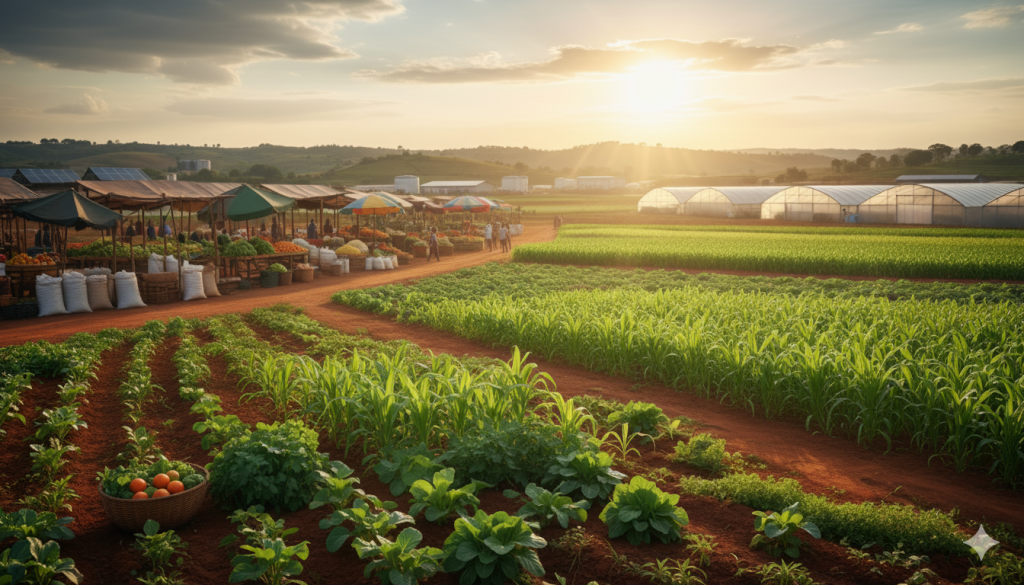
A slow change is happening in fields, farms, and food stores across Africa. Agriculture was once seen as a way to make a living only when there were no other options. Now, young entrepreneurs are drawn to farming because they see it as a scalable business rather than a subsistence job. Africa’s agriculture boom, driven by youth and fueled by technology, market access, and shifting attitudes, is changing the way food is made and the economies of rural areas. More than 60% of Africa’s people are younger than 25, so this change is not only timely, it is needed.
Why Young Africans Are Going Into Agribusiness
The high unemployment rate and lack of work in the formal sector have led many young Africans to look for other ways to make money. Agribusiness has the special benefit of being easy to enter and having a rising need for food, exports, and goods with added value.
Today’s young person-led agribusiness is more focused on branding, processing, transportation, and digital sales than traditional farming. Young entrepreneurs are creating businesses with useful models at every stage of the value chain, ranging from organic fruit and vegetable startups to companies that raise chickens, fish, or crops for sale. The big change is technology.
At the centre of this change is technology. Farmers can now get real-time weather updates, market prices, and advice services on their mobile phones. Digital wallets make it easier to pay for things and get loans, and drones and satellites are used to keep an eye on crops.
These days, social media is also a very useful tool for making sales. Young agripreneurs are skipping middlemen by using WhatsApp, Instagram, and local online shopping sites to sell straight to customers, restaurants, and stores.
Financial Access and Policy Aid
It is becoming more common for governments and development groups to support young agribusiness. Getting money is one of the biggest problems in agriculture, but young farmers are getting help from special credit lines, loans, and incubator programs.
Nigeria, Kenya, Ghana, and Rwanda are a few of the countries that have started youth-focused agricultural programs with the goals of increasing output, lowering food imports, and creating jobs in the countryside.
Difficulties That Are Still to Come
Even with progress, there are still problems. Limited land access, climate volatility, poor storage infrastructure, and inconsistent policy application still make it hard for growth to happen. A lot of young farmers also have a hard time growing their businesses beyond the local market.
But cooperative models and agribusiness groups are helping to fill these gaps by combining resources and making it easier to negotiate.
Keep Reading
The rise of agribusinesses in Africa, driven by young people, is not just a trend; it is a structural change. By mixing agriculture with new ideas, young Africans are making a long-term impact on the economy, ensuring they have enough food and creating jobs.
As more money and technology come into the sector, agribusiness may become one of the best ways for people in Africa to make money and support fair growth.
