
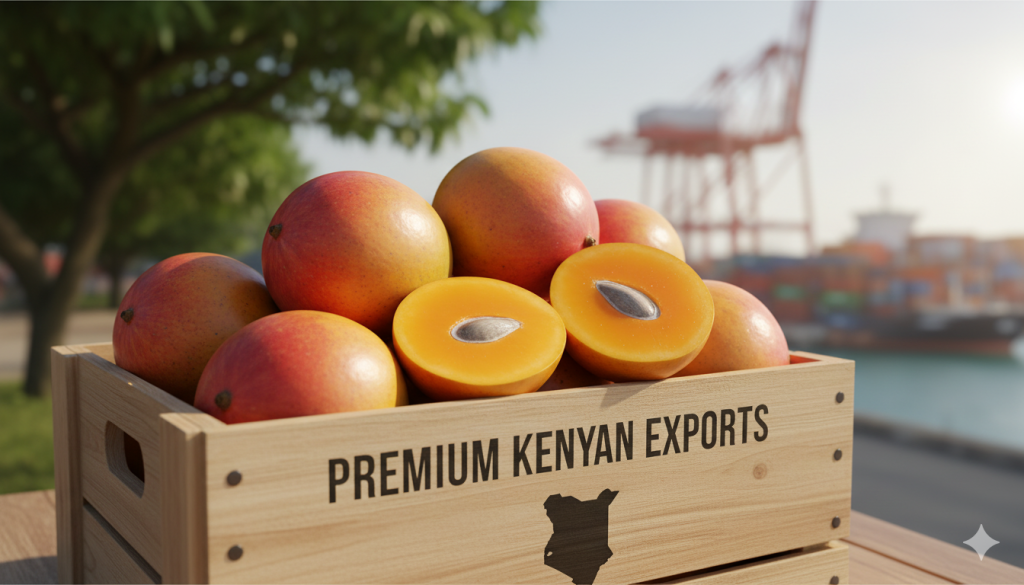
At JKIA, cold-room doors shut with a dull thud and the air turns sharp, almost metallic. Inside, cartons labelled Apple mango consignment move fast, no drama, just work. Kenya has shipped its first Apple mango consignment to the UK, opening a premium export market that exporters have chased for years. The move puts Kenya Apple mango export plans on a stricter track, because the UK market rewards quality, but punishes mistakes.
Why Apple Mangoes Position Kenya for Premium Export Growth
Apple mangoes sell well in Kenya because they look good, travel better than many softer varieties, and taste sweet without a lot of fibre. Exporters like that. UK buyers like the colour and uniform shape too, especially in fresh produce aisles where appearance decides half the sale.
And there is another angle. Apple mangoes are common in several producing counties, so supply can be organised at scale if aggregation is handled properly. That “if” is doing heavy lifting, honestly, because aggregation needs discipline. Farmers must pick at the right maturity, pack clean, and avoid bruising. One careless sack toss can turn a premium box into a rejected box.
Details of the Historic Consignment and Export Timeline
The first shipment worked like a checklist, not a celebration. Harvest, grading, treatment, packing, cooling, clearance, loading. Miss one step and the chain breaks. A simple timeline helps explain why this shipment mattered.
| Stage | Timing | What happened on ground |
| Orchard harvest and sorting | Mid to late December 2025 | Fruit picked, sorted, damaged pieces removed, grades separated |
| Packhouse handling and cooling | Late December 2025 | Cartons packed, labels placed, pre-cooled for stable temperature |
| Airport clearance and uplift | Late December 2025 | Inspections, paperwork, cold-room staging, cargo loading |
| UK arrival and market entry | End of December 2025 | Receipt by importers, quality checks, distribution planning |
Exporters involved in fresh produce often say the real fight is not growing fruit, it is keeping fruit “sale-ready” after picking. That is the headache. A hot truck, a late clearance, a weak carton, all small issues that pile up quickly.
Why the UK Market Is a Strategic Opportunity for Kenya
The UK market is tough, but it pays for consistency. Supermarkets and importers prefer repeatable quality, stable supply windows, and clean documentation. Kenya already sells horticulture items abroad, so the country is not new to export discipline. Still, fresh mangoes raise the bar because pests and shelf-life risks sit in the background every day.
There is also the pricing story. Premium markets reward better grades, better sizes, and better presentation. That often means higher returns across the chain, not only at exporter level. Farmers can see improved farm-gate pricing when exporters compete for clean fruit. People talk about “value chain” like it is a fancy phrase, but it is plain reality. When buyers trust quality, the money flows smoother.
How Kenya Met UK Phytosanitary and Export Standards
UK entry rules can feel strict. They are strict. Export compliance usually hinges on pest control, traceability, and hygiene. For mangoes, fruit fly management is usually the centre of attention, along with clean packhouse practice and inspection readiness.
Traceability matters too. Cartons must link back to farms or groups, with records that match. Paperwork has to align with physical fruit. Any mismatch can slow clearance, and delays hurt fresh cargo. The cold chain is another pressure point. Mangoes tolerate some variation, but not repeated warm-cold cycles. A stable temperature, handled quietly, keeps texture and taste intact.
Key Partnerships Supporting the Apple Mango Export Breakthrough
This shipment did not happen on farmer effort alone. Several groups typically sit behind such an export push: regulators who clear protocols, export bodies who support market access work, packhouses that invest in hygiene and equipment, and logistics teams who manage cold rooms and flight uplift.
Kenya’s cargo capacity also matters. Fresh produce needs dependable uplift slots, not last-minute bargaining. Exporters often complain about timing clashes during peak festive cargo demand, when flowers, vegetables, and other perishables compete for space. So partnerships across cargo handlers, airlines, and inspection teams keep the process moving. Not glamorous work, but necessary.
Economic Impact on Farmers and the Wider Mango Value Chain
For farmers, the biggest change is the price difference between local bulk sales and export-grade sales. Export grades demand stricter picking and sorting, so not every fruit qualifies. That can frustrate growers at first. But when training sticks, quality improves and rejections drop. Then farmers start seeing regular demand, not only peak-season rush buying.
Packhouse jobs also expand when export volumes rise. Sorting lines need hands, supervisors, and quality controllers. Carton suppliers and transporters gain steady orders. And local service providers, like agri-input shops and spraying teams, see more structured demand. It is basic economics, but it feels real when villages notice more daily work during harvest weeks.
Future Prospects for Kenyan Mango Exports in the UK and Europe
If the first consignment performs well in the UK, the next step is repeat shipments with predictable volumes. UK buyers want reliability. They will ask: Can Kenya supply the same grade every week, not only one good batch? Exporters know this question is coming.
Europe can also follow similar patterns, though each destination brings its own checks and buyer expectations. The opportunity is clear: mangoes can sit beside other Kenyan horticulture exports as a recognised product line. The risk is also clear: one poor shipment can damage buyer confidence quickly. Fresh produce memories can be short, but complaints travel fast.
Challenges Kenya Must Address to Sustain Export Momentum
Three issues tend to break momentum. First, pest control and field hygiene must stay consistent, not seasonal. Second, post-harvest handling must improve at farm level. Fruit gets damaged before it reaches packhouses, and exporters cannot “fix” bruises later. Third, cold-chain gaps still show up during transport and staging, especially in heat spells.
And there is the human side. Smallholders need steady training and clear buying rules. If rules change each week, farmers lose trust and go back to informal markets. That happens. The system must be boringly consistent.
Keep Reading
FAQs
1) What makes Apple mangoes suitable for a premium export market like the UK?
Apple mangoes carry firm flesh, attractive colour, and good shelf stability when handled carefully across the cold chain.
2) What does Kenya Apple mango export success depend on after the first shipment?
Repeat shipments need steady fruit fly control, strict grading, strong traceability records, and predictable cargo uplift.
3) How does the UK market change earnings potential for mango farmers in Kenya?
Export buyers pay higher rates for clean grades, so farmers earn more when picking, sorting, and handling improve.
4) What are the most common operational problems exporters face with fresh mango cargo?
Heat exposure, late clearance, weak cartons, and rough handling cause bruising, softening, and quality disputes on arrival.
5) Can Kenya expand Apple mango consignment volumes to Europe after the UK entry?
Yes, but scaling needs packhouse capacity, consistent compliance, and buyer trust built through repeated, complaint-free shipments.
