
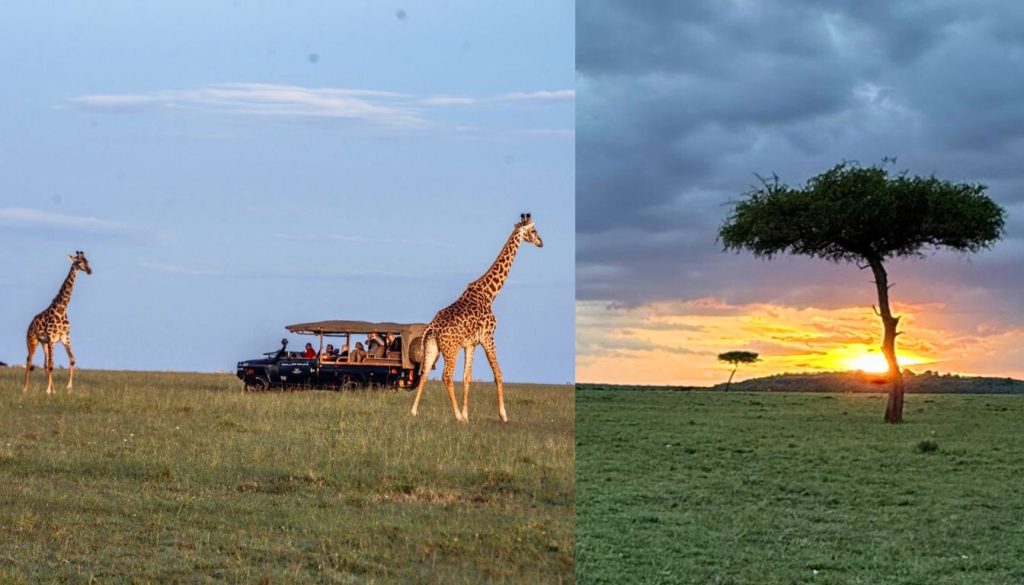
Kenya’s famous Masai Mara is poised to become a model of sustainable tourism for the world. By 2026, eco safaris are changing the traditional safari experience with solar-powered camps and electric game, driving vehicles, thus satisfying the needs of the ever-increasing global demand for responsible travel without any compromise of comfort or wildlife viewing.
The Shift Toward Sustainable Safaris
With the increasing number of tourists, safari operators are starting to consider the impact of their activities on the environment. Instead of operating on fuel, consuming vehicles, the best camps are now combining the use of renewable energy and low-emission transport. The above- mentioned modifications are done with the aim of preserving the natural environment while at the same time providing top- notch experiences for environmentally aware travellers.
Solar-Powered Camps Lead the Way
A number of high-end camps have gone solar. Salas Camp, Basecamp Masai Mara and other luxury resorts rely on solar panels to power their facilities, including tents, lighting, and hot water. Generators are used only in the case of a prolonged absence of sunlight; fossil fuel consumption is drastically reduced. Soroi Mara Bush Camp has been rated as an eco-friendly tented camp that overlooks a river full of wildlife and provides customers with a high level of privacy, together with a green practice that helps the local Maasai community.
Electric Jeeps Transform Game Drives
Game drives have been gradually changing in terms of sound and cleanliness. &Beyond Kichwa Tembo, among other premium safari operators, has brought electric and hybrid jeeps in 2026. The use of such kinds of vehicles makes the surroundings less noisy, which is a great advantage for guests because they can enjoy their closeness to animals in a natural way. Besides that, they cut down on carbon emissions. Switching to such vehicles corresponds with the general initiative of Kenya to focus on conservation through safari packages.
Conservancy Stays and Migration Tourism
Ecological safaris have mostly paid attention to wildlife park-based accommodations, during the Great Migration in particular. Wilderness camps located by animal crossing points in the rivers provide a close-up view for the wildlife lovers, and at the same time, they help to keep the number of tourists that overrun the area to a minimum. With these types of places, therefore, it is very important that the use of solar energy, together with the availability of electric vehicles, be the norm so that we do not lose such wondrous places because of human negligence.
Booking Trends for 2026
Travellers are turning to well-known establishments such as Governors Camp and Saruni Mara, which are reputed for their good mix of luxury and sustainability. There is a strong demand from adventurers who are looking for deep, environmentally friendly embarks that likewise involve genuine social interaction with the locals.
Summary
Eco safaris are changing the face of African tourism in 2026 in the Masai Mara. The use of solar energy and electric vehicles by the safari operators is not only making them environmentally friendly but also allowing them to provide more thrilling animal encounters. The ecological transformation that is taking place is an indication of a time in the future when high-end tourism and nature preservation will go hand in hand.
