
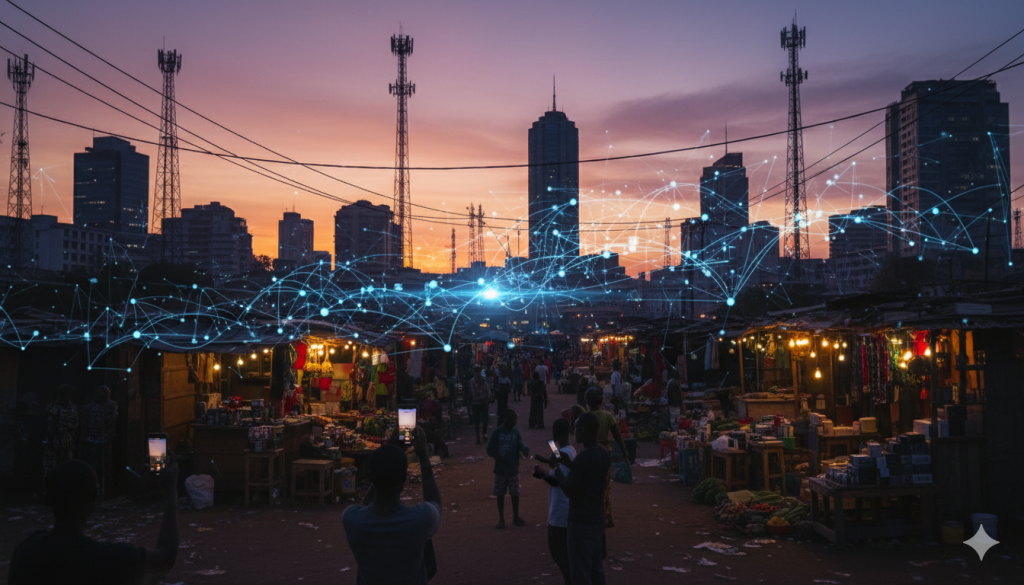
Africa has had a revolution of digitalization in the last twenty years which has been propelled by the fast proliferation of mobile telephones. In the rural villages up to big cities, mobile devices are now high potential assets of communication, economic growth, education and social change. Popular low priced smart phones, the growing mobile networks, and creative local solutions have helped millions of Africans receive services previously unavailable to them. Mobile technology is not merely the connectivity issue in Africa, but an issue that is transforming the lives of people, the way people live, work, learn and engage in society, and is offering new opportunities, and diminishing inequalities that have always existed in Africa.
The Rise of Mobile Connectivity in Africa
Africa ranks among the fastest growing mobile markets in the world. Mobile phones had become the main access to the digital world, as there was limited fixed-line infrastructure. Currently, the distant places enjoy basic mobile connection, which allows voice calls, messaging, and surfing the internet. This digital inclusion and innovation have been made possible by this propagated use of mobile technology in Africa.
Transforming Financial Services Through Mobile Money
Financial inclusion is one of the most influential changes. Mobile money services such as M-Pesa have transformed the way individuals save, remit and get money. The phone has been used by millions of people who do not have traditional bank accounts to engage in the economy. This African innovation has given power to small businesses, farmers and workers who are in the informal sectors and this has raised the local economies as well as enhancing financial security.
Impact on Education and Learning
Mobile technology has brought new opportunities in education. Smartphones are being used by students to learn through online courses, online libraries and learning applications. Educators use mobile platforms to exchange materials with learners outside the classrooms. Due to digital innovation in Africa, education is becoming more accessible particularly to students in underprivileged areas.
Healthcare Access and Mobile Solutions
There are also healthcare systems in Africa that are benefiting. Mobile applications assist in booking of appointments, health sensitization and remote consultation. Mobile-based reminders are used to manage treatments by patients and health workers retrieve information about outbreaks using mobile data. This demonstrates that mobile technology in Africa has a direct impact in enhancing quality of life and health outcomes of the people.
Driving Social and Economic Change
In addition to services, mobile technology reinforces civic life and entrepreneurships. Social media increases the voices, facilitates activism and influences participation in a community. Mobile-first models are used in startups to address local issues and generate employment opportunities and innovation. The more digital innovation is increasing in Africa, the more intertwined and stronger the societies become.
Keep Reading
Challenges and the Road Ahead
Although there has been improvement, there are still a few problem areas such as affordability, digital illiteracy, and network issues. The need to address such issues demands investment, policy support, as well as partnerships between the public and private. Mobile technology in Africa will remain an instrument of sustainable growth and social change with the correct strategies.
