
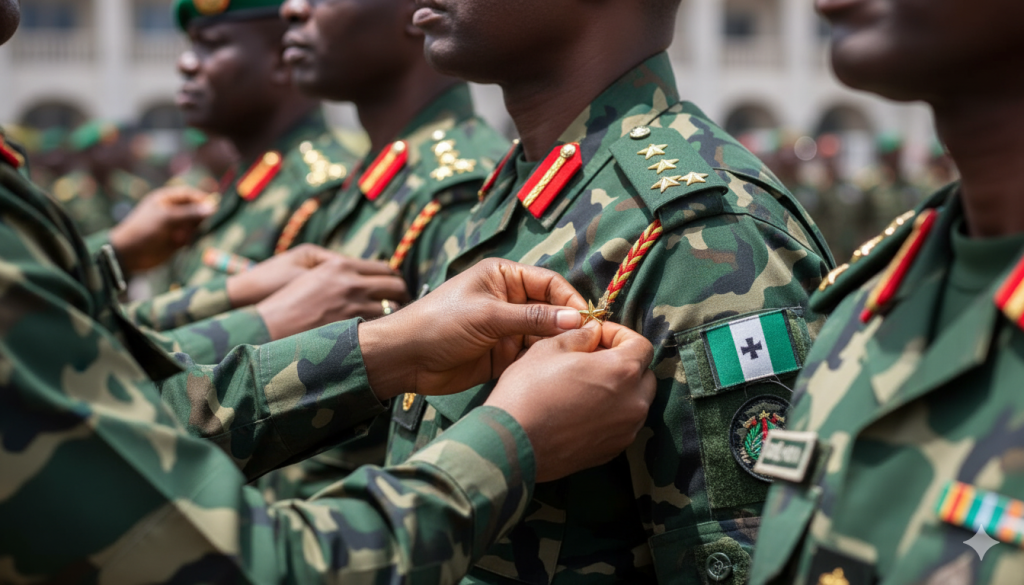
Morning briefings ran a little longer at Army Headquarters. Phones buzzed, voices low, uniforms crisp. The announcement landed with a steady tone: Nigerian Army Promotes 105 Senior Officers to Major General and Brigadier General. Clear numbers, immediate impact, no fluff. Officers paused, then moved on with the day. That’s how these things go sometimes.
Overview of December 2025 Bank Holidays AnnouncedOverview of the Nigerian Army’s Latest Promotion Exercise
The Army Council cleared a new promotion roll, and the list shows breadth. Combat arms, logistics, intelligence, training schools, medical units. A wide sheet on a wooden table, stamped, then shared. The timing points to year-end rotations that often reset command tempo. Abuja felt hot outside, cool air inside conference rooms. A short statement explained the approvals. No drama, only names and ranks. The room likely had that faint smell of paper and toner. That’s how we see it anyway.
Breakdown of the 105 Officers Promoted
An even, well-spaced distribution stands out. The summary below keeps it straightforward.
| Category | Previous Rank | New Rank | Count |
| Senior Cohort A | Brigadier General | Major General | 28 |
| Senior Cohort B | Colonel | Brigadier General | 77 |
The headline is simple. Twenty-eight officers step into two-star responsibilities. Seventy-seven move into one-star command. The mix covers field formations and staff roles. Those numbers mean new flags on office doors, fresh call-signs on radios, and a busier posting desk. Sometimes it’s the small habits that matter.
Notable Officers on the Promotion List
Every list has names that people whisper first. Heads of key branches, operations hands with field miles, planners who know the fine print. A few trained at fortress-like academies abroad, others built quiet careers in remote brigades. One name may come with a tough theatre story, another with a smart procurement fix that finally cut delays. A senior signals officer who kept comms alive during a nasty storm. A logistics lead who moved fuel convoys at night. Small details, but troops remember.
Why This Promotion Exercise Is Significant for Nigeria’s Defence Structure
New stars change staffing ladders. Directorates shift, corps schools get fresh curriculum tweaks, inspection teams turn sharper. Promotions lift morale down the chain because advancement looks real. It nudges retirements too, which opens space for mid-career officers who have been waiting. The service needs both things at once. Fresh eyes and steady hands. The file work grows for a bit, then the machine settles. And the field benefits when paperwork is sorted before patrols step out. Simple truth, still hard to do daily.
Strategic Implications for National Security in 2025
Command clarity speeds decisions. Two-star leaders take on theatre coordination, one-star commanders handle brigade punch and district outreach. Intelligence heads push faster fusions, logistics teams lock supply windows tighter, training depots adjust cycles so battalions don’t sit idle.
The sound of parade boots might echo next week as new commanders take the salute. Not for show, for alignment. Nigeria’s patchwork of terrains asks for different playbooks. Rivers, heat, harmattan dust. A good rotation respects ground reality more than slogans. Feels like real work sometimes.
Reactions From Defence Analysts and Public Stakeholders
Reactions rolled in with measured tone. Analysts pointed to balance across corps and the steady pipeline into joint task groups. Veteran associations cared about transparency and merit queues. Families noticed the practical side first, like school changes and housing keys, ordinary life stuff.
A few business voices looked at stability signals for the wider security climate. Media desks asked for the full list, always. One or two critics flagged past bottlenecks in postings. Fair point. Promotions mean little if seats stay empty too long.
What Happens Next After the Promotion Approval
Posting orders. Handovers in conference rooms that smell of dry-erase ink. Movement of files, new briefcases, fresh letterheads. Units will run short ceremonies where troops clap quickly and get back to work because there’s a patrol at dusk. Training commands will publish updated schedules. Procurement desks will re-prioritise radios, vehicles, medical kits that were stuck in the middle. Signals stations will update contact trees. And yes, admin lines will be longer for a week. Then normal again, only with different signatures.
Keep Reading
Frequently Asked Questions (FAQ)
1. How many officers moved into Major General and Brigadier General ranks in this cycle?
The Nigerian Army Promotes 105 Senior Officers to Major General and Brigadier General, with 28 moving to two-star rank and 77 to one-star.
2. Does this promotion round include officers from operations, logistics, and training schools together?
Yes, the list cuts across combat arms, support services, intelligence, logistics, medical, and training institutions in a balanced spread.
3. Why do promotions arrive near the year-end, and does timing change postings?
Year-end cycles often align with budget, training calendars, and planned rotations, so postings can start smoothly without mid-term churn.
4. Will field operations slow while new commanders assume charge of their units?
Units usually plan phased handovers, so patrols, escorts, and guard routines continue while briefings shift to incoming leaders.
5. How might this list affect career growth for mid-level officers across formations?
Vacancies open up immediately, moving lieutenant colonels and majors into roles they have queued for, which keeps the pipeline healthy.
