
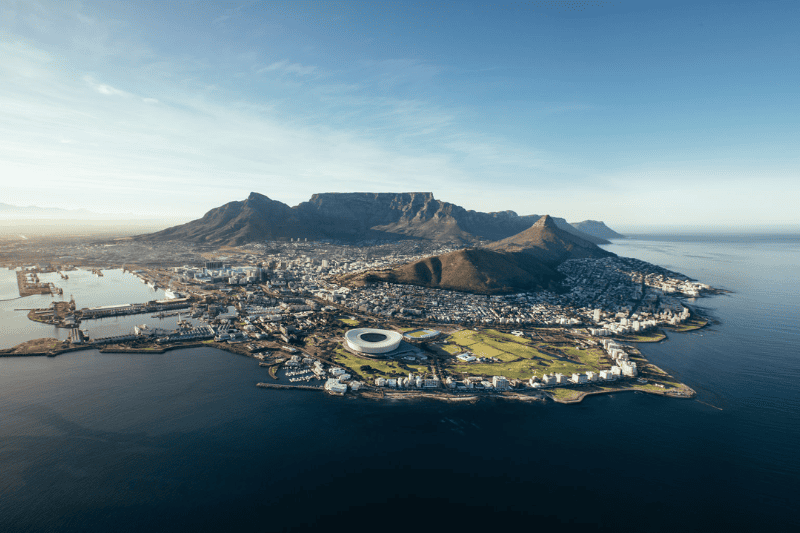
Some places don’t need words; their streets do the talking. South Africa is like that. Buildings whisper of courage, murals shout joy, and the land remembers every voice that passed. For many from Bangladesh, the pull lies in those stories, raw, colourful, and real. Maybe that’s the charm.
Architectural and Cultural Highlights at a Glance
| Landmark | Location | Notable Feature | Best Time to Visit |
| Robben Island | Cape Town | UNESCO site and former prison | November to March |
| Constitution Hill | Johannesburg | Symbol of democracy | All year |
| Bo-Kaap | Cape Town | Bright houses, Cape Malay culture | September to April |
| Voortrekker Monument | Pretoria | Historic granite memorial | May to August |
| Apartheid Museum | Johannesburg | Strong exhibits on racial past | All year |
| Soweto | Johannesburg | Lively streets, Mandela House | October to February |
| Gold Reef City | Johannesburg | Theme park on old mine | October to March |
| Cradle of Humankind | Gauteng | Fossils and ancient caves | September to May |
| Castle of Good Hope | Cape Town | 17th-century fortress | November to April |
| Zeitz MOCAA | Cape Town | African art museum | All year |
Architectural & Cultural Wonders of South Africa Worth Exploring
Robben Island
The boat ride seems calm till the cold wind bites. Then the stories hit harder. A small room, iron bars, Mandela’s cell. People go silent here. The sea around it looks peaceful, almost guilty. Strange feeling really.
Constitution Hill
Part courthouse, part museum. Built where prisoners once stood in chains. The same walls now hold art and debate. A place that turned its pain into law, there’s something powerful in that.
Bo-Kaap
This neighbourhood is a festival by itself. Pink, green, blue, houses in every shade. The smell of samosas and fresh roti fills the air. Locals smile easily. Sometimes they share recipes with strangers. That’s Bo-Kaap for you.
Voortrekker Monument
Huge, carved, and serious-looking. The granite shines under the sun. Inside, light falls through the ceiling onto a single spot, it’s oddly moving. Feels like standing inside a prayer made of stone.
Apartheid Museum
Hard to walk through without a lump in the throat. Visitors enter through separate gates marked by race, just like before. The silence inside isn’t empty, it speaks. Every corner feels like memory refusing to fade.
Soweto
Noise, colour, life. That’s Soweto. Street musicians, graffiti, food stalls sizzling. But in between all that energy, stories of the uprisings float around. Locals still tell them as if they happened last week.
Gold Reef City
Once a gold mine, now a playground. Roller coasters beside old mining tunnels. Kids laugh where miners once worked in the dark. Funny how time changes meaning. Maybe that’s the point.
Cradle of Humankind
A quiet place. Cool caves and bones older than imagination. Standing there, people whisper without knowing why. Maybe because it feels like standing at the start of everything.
Castle of Good Hope
The oldest building still standing proud. Yellow walls, heavy doors, and guards in old uniforms. Visitors walk through uneven paths while the ocean breeze cuts across the courtyard. Simple, timeless.
Zeitz MOCAA
An old grain silo turned into an art maze. African artists fill it with faces, shapes, and stories. Some pieces confuse, others hit right in the gut. The light inside feels alive somehow.
Keep Reading
South Africa’s Cultural Legacy That Refuses to Fade
South Africa feels like a living museum, loud, tender, and unapologetic. Every landmark carries laughter and loss together. For travellers, it’s a journey that stays long after coming back. Maybe that’s what good places do. They leave something behind, quietly.
FAQs
1. Which city is known for heritage and architecture?
Cape Town, with Robben Island, Bo-Kaap, and Zeitz MOCAA close to each other.
2. What is the best season to travel?
November to March, when the weather stays gentle and the skies stay clear.
3. Are these sites family-friendly?
Yes, most have guides, rest areas, and open spaces for visitors of all ages.
4. How do locals share their culture with visitors?
Through food, storytelling, and music. Sometimes just a smile does it.
5. Why is South Africa known for cultural diversity?
Because each city holds layers, Zulu, Malay, Dutch, Indian, and they all show up proudly.
