
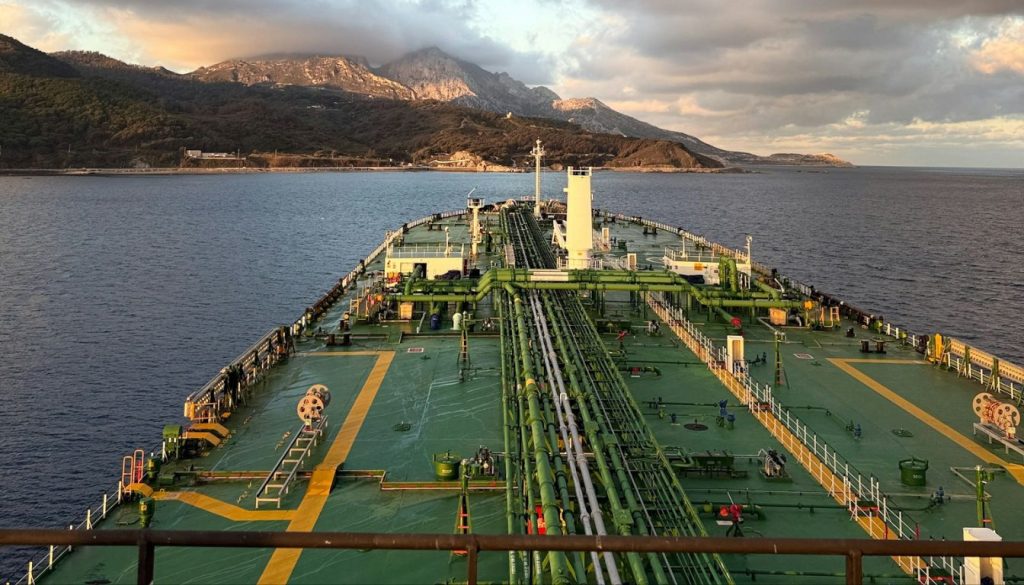
If the Strait of Hormuz, one of the most important oil shipping routes in the world, were to close, it could have a big effect on the global energy market. The small waterway is a key route for crude oil shipments from the Middle East to Asia because it carries almost 20% of the world’s oil.
Countries that rely heavily on Gulf oil would have to quickly find other suppliers if the strait were blocked because of political tensions. In that case, African oil producers like Nigeria and Angola could be very important in keeping the global supply stable for India and Bangladesh.
Why the Strait of Hormuz is Important for World Energy
The Strait of Hormuz links the Persian Gulf and the Arabian Sea. It is between Iran and Oman. It is the main sea route for oil exports from big producers like Saudi Arabia, Iraq, Kuwait, and the United Arab Emirates.
About 20 million barrels of oil pass through the strait every day, providing energy-hungry economies in Asia with what they need. These shipments are very important to countries like India, China, Japan, and South Korea.
If the passage were blocked, tankers wouldn’t be able to get crude oil from the Gulf, which would cause a sudden shortage and send oil prices around the world skyrocketing.
Analysts say that prices could go up to $100 or even $150 per barrel, which would put a lot of pressure on countries that import energy.
Nigeria Emerges as a Strategic Alternative
Nigeria is Africa’s biggest oil producer, and could become one of the most important backup suppliers if Gulf exports slow.
The country currently makes about 1.5 million barrels of crude oil every day. Experts say it could slowly ramp up production if demand around the world rises.
Nigerian crude oil is shipped directly across the Atlantic Ocean, which means it can reach international markets without going through the Strait of Hormuz, which is a geopolitical choke point for Middle Eastern oil.
Nigeria’s exports of liquefied natural gas (LNG) are also on the rise. The country sent out more than 650 billion cubic feet of LNG in 2024, which made global energy markets more flexible.
The Dangote refinery, which is one of the biggest in the world, could also help Nigeria meet its own fuel needs while also increasing exports.
In the past, oil theft and pipeline sabotage have hurt production, but recent improvements in security are helping to keep it stable.
Angola Makes Africa’s Energy Role Stronger
Angola, which is the second-largest oil exporter in sub-Saharan Africa, is another country that could help. The country now makes between 1.1 and 1.2 million barrels of oil a day, and most of it is sent by sea to Asian markets.
Angola left OPEC in 2023 so that it could have more control over how much oil it produced. If demand around the world goes up, this choice might let the country make more goods faster. Angola’s ability to keep exports steady is also getting better because of new investments in offshore fields and upgrades to infrastructure.
African Oil vs UAE Exports: Key Comparison
| Factor | Nigeria | Angola | UAE |
| Average Daily Production | ~1.4–1.5 million bpd | 1.1–1.2 million bpd | ~3.2–3.5 million bpd |
| Export Routes | Atlantic Ocean (Hormuz-free) | Atlantic Ocean (Hormuz-free) | Mostly via Strait of Hormuz |
| Main Export Markets | Europe, Asia, US | Asia, Europe | Asia (India, China, Japan) |
| Production Flexibility | Moderate growth potential | Flexible after leaving OPEC | High capacity but route constrained |
| Additional Energy Exports | Large LNG exports | Expanding LNG capacity | Mainly crude and refined fuels |
| Key Risks | Oil theft, infrastructure gaps | Investment and infrastructure needs | Dependence on the Hormuz shipping lane |
While the UAE produces far more oil, Nigeria and Angola offer strategic shipping advantages because their exports do not rely on the Strait of Hormuz.
Global Energy Markets Right Now
If the Strait of Hormuz were to stay closed for a long time, it would change how energy moves around the world. India and Bangladesh, which rely on imports, could have the hardest time because about 60% of their crude oil imports go through the strait. To get more oil, governments may need to use their strategic oil reserves or buy more from Africa, the US, and Latin America. On the other hand, oil-producing countries outside of the Gulf, like Russia, Guyana, and Namibia, could benefit from higher prices.
FAQs
1. What makes the Strait of Hormuz so important for the world’s oil supply?
The Strait of Hormuz is one of the most important energy transit routes because it carries about 20% of the world’s crude oil shipments.
2. What countries could take over Middle Eastern oil if the Strait closes?
African Countries like Nigeria, Angola, the US, Russia, and Guyana could export more oil.
3. What would happen to oil prices if Hormuz closed?
Experts think prices could go up to $100–$150 per barrel, depending on how long the disruption lasts.
