
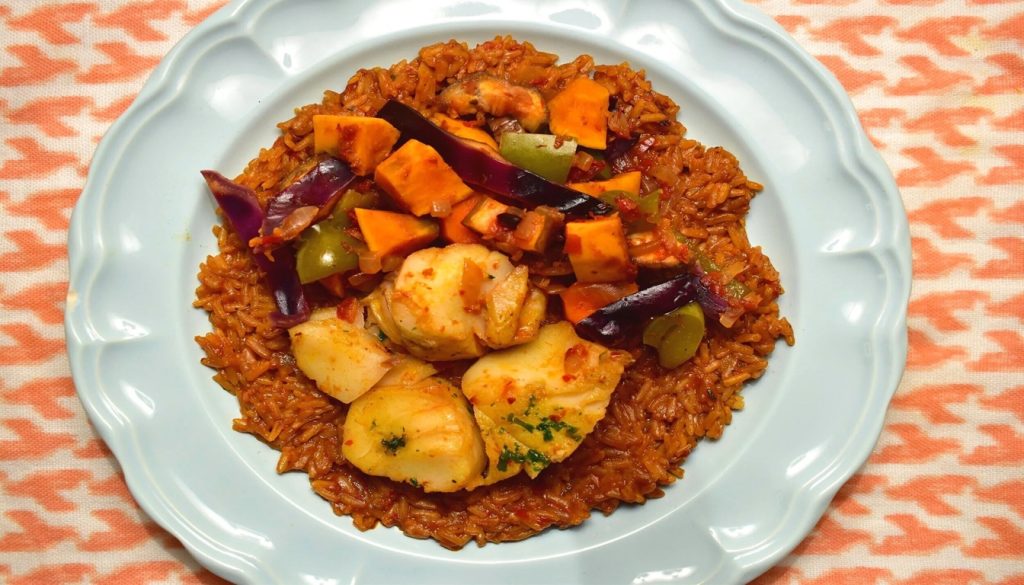
Thieboudienne is Senegal’s national food. It’s a rice-and-fish dinner with a lot of taste that is sometimes compared to jollof rice, but is made with much more care. Even small mistakes in technique can change the way things look, taste, and feel. Knowing what the most typical faults are may help make sure the food is rich, balanced, and real.
Not Cleaning Broken Rice the Right Way
One of the most common mistakes people make when preparing thieboudienne is not cleaning the rice well. Senegalese dishes usually call for broken rice, which lets off a lot of starch.
The extra starch makes the rice clump together and get sticky instead of fluffy if you don’t rinse it a few times until the water runs clean. To get the light, separate grains that make up a nice thieboudienne, you have to wash them properly.
Wrong Broth Level When You Add Rice
If you add rice to the pot without checking the liquid levels, the dish could be ruined. The broth should be about half an inch above the rice.
If you add too much liquid, the rice will be wet and tasteless. If you add too little, the grains will be overcooked or burned. At this point, accuracy is what makes sure that the rice absorbs flavour equally.
Bad Ratio of Water to Rice
Even with decent broth, the balance can be awry if the water ratios are wrong. Traditional methods frequently use a set amount of something, such as 2.5 litres of water for every 2 kilograms of rice.
Guessing how much to add or adding water while cooking makes the sauce less flavorful and less deep.
Hurrying the Roussi Base
The roussi, which is prepared by slowly frying onions and tomato paste, is the main flavour in thieboudienne. If you cook it too rapidly, the caramelisation won’t happen properly, and the sauce will be pale and not very rich.
Letting the mixture deepen slowly adds to the dish’s unique colour and flavour.
Cooking Vegetables Too Long
Cut up vegetables like carrots, cabbage, cassava, and eggplant into even pieces and cook them until they are soft. If you cook them too long, they will get mushy and ruin the texture of the meal.
Choosing the Wrong Type of Fish
Fish that are delicate and don’t have skin tend to break apart when they are cooked. Snapper and grouper are examples of stronger types that keep their shape better. Adding fish at the correct time also helps keep it from breaking down.
Why the Thieboudienne Technique Is Important
Thieboudienne depends on time, balance, and self-control. Avoiding these typical blunders will keep the meal faithful to its roots: it will be strongly flavoured, well-textured, and deserving of its place as Senegal’s culinary pride.
