
Last updated on November 26th, 2025 at 04:15 pm
Vietnam–South Africa Agricultural Trade Pact
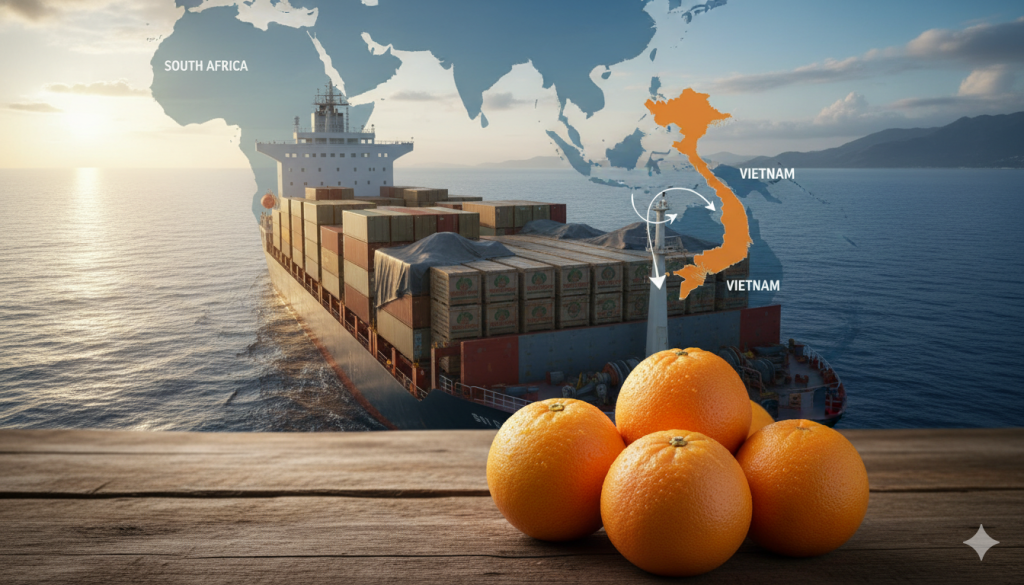
Vietnam south africa agricultural trade pact pact announced by Steenhuisen strengthens South Africa’s citrus export path, improving market access, protocols. Plant health protocols aligned. Documentation cleaner. Inspection timelines mapped, not guessed. Officials describe a working plan that pairs Vietnam’s import demand with South Africa’s export capacity. It looks practical, not glossy. That’s how it reads on paper anyway.
Under the arrangement, technical teams coordinate quarantine terms, residue rules and temperature controls during transit. The two sides plan review meetings each season to fix jams before fruit hits the docks. A dull process to some, but this is exactly what moves cartons. Decisions that cut one day off a vessel schedule can decide a season. Everyone in this business knows that.
Why Vietnam Is a High-Growth Market for South African Citrus
Vietnam’s retailers push hard on quality fruit during warmer months. Supermarket aisles feel bright, cold air humming, mist on the citrus racks early morning. Imported oranges do well there, especially when supply at home gets tight. Timing matters. South African fruit lands when local harvests slow, so prices hold.
Urban shoppers want clean, evenly sized fruit. Mandarins with tight skin. Oranges with a good snap at the peel. South African exporters can match that spec without drama if shipping windows stay predictable. And once trust builds at store level, repeat orders follow. Sometimes it’s the small habits that matter.
Citrus Export Growth – What the Numbers Reveal
Volumes tell the story. Oranges gained entry first and shipments climbed quickly. Exporters talk about four-week booking windows that actually stick, rather than rolling forward each Monday. That relief shows up in final counts and in the mood at packhouses.
Mandarins sit next in the queue. A few technical papers still move across desks. When those approvals clear, the basket widens. Prices won’t jump overnight. Still, even a modest lift in mixed-citrus orders evens out farm cash flow. Less stop-start. Fewer rushed Saturday shifts that burn crews out. That’s how many growers read it.
Key Benefits for South African Farmers and Exporters
The trade pact reduces overreliance on older destinations. A new buyer base in Southeast Asia spreads risk. Farmers get one more option when weather knocks a block out of Europe or freight rates go odd on a transatlantic lane. Export managers can swing volume without rewriting the whole plan.
Cold chain operators see upside too. More reefer turns. Better container availability when forecasts are shared early. And on the ground, rural jobs feel a tad safer. Not flashy gains, just steadier weeks and fewer frantic phone calls at 9 pm. Feels like real work sometimes.
Challenges Ahead – What Could Slow Down the Export Momentum?
Three knots could tighten. First, phytosanitary sign-offs for mandarins and other citrus. Files move, yes, yet any mismatch in field pests or lab thresholds will stall containers. Second, logistics. Port congestion still flares, and a single missed stack date blows a sailing. Third, quality at arrival. Fruit that warms up during a power blip at transshipment loses shelf life. Retailers notice. And they don’t forget.
None of this is unusual in the fruit trade. Still, each risk compounds. The fix is dull discipline. Pre-cooling done right. Log sheets filled, not guessed. It sounds basic. It isn’t under pressure.
South Africa’s Citrus Opportunities in Vietnam
| Category | Market status | Practical next step | Retail fit |
| Oranges | Approved and moving | Lock seasonal programs early to secure slots | Strong breakfast fruit |
| Mandarins | Approvals pending | Complete field pest mapping and residue sign-off | Family snacking packs |
| Grapefruit | Not yet open | Present sourness-sweetness trials for local taste | Niche, hotels first |
| Lemons | Not yet open | Align juice grade specs and wax standards | Foodservice routes |
| Mixed citrus packs | Emerging interest | Co-brand with retailers during festivals | Gift boxes, holiday weeks |
That’s how we see it anyway.
Keep Reading
FAQs
1) How does the pact help South Africa’s citrus exports during tight global freight schedules?
The pact sets predictable inspection windows and aligned paperwork that reduce rollovers, so exporters secure vessel space earlier and keep fruit moving during peak weeks when carryover risk usually spikes.
2) What changes on the farm once the Vietnam lane grows across two or three seasons?
Growers plan picking in cleaner blocks, match pack specs to steady programs, and avoid last-minute regrading that wastes time and bruises fruit in the shed, which saves money and tempers spoilage.
3) Why do retailers in Vietnam lean toward certain South African citrus lines?
Uniform size, strong color, and steady arrival timing match weekly promotions, and when shelf life holds for the full week, stores waste less and reorder on routine cycles without anxious calls on Thursday.
4) Which pain points could still unsettle the new route if not handled early?
Phytosanitary gaps and cold chain slips remain sensitive, and any out-of-range residue test or a missed pre-cool target creates delays that hit margins at the worst possible moment for both sides.
5) What signals will show that mandarins are ready for a proper commercial rollout?
Signed protocols, pilot shipments that meet temperature curves end-to-end, and retailer acceptance on skin finish and flavor scores during sampling weeks around city clusters, then orders that repeat.
