
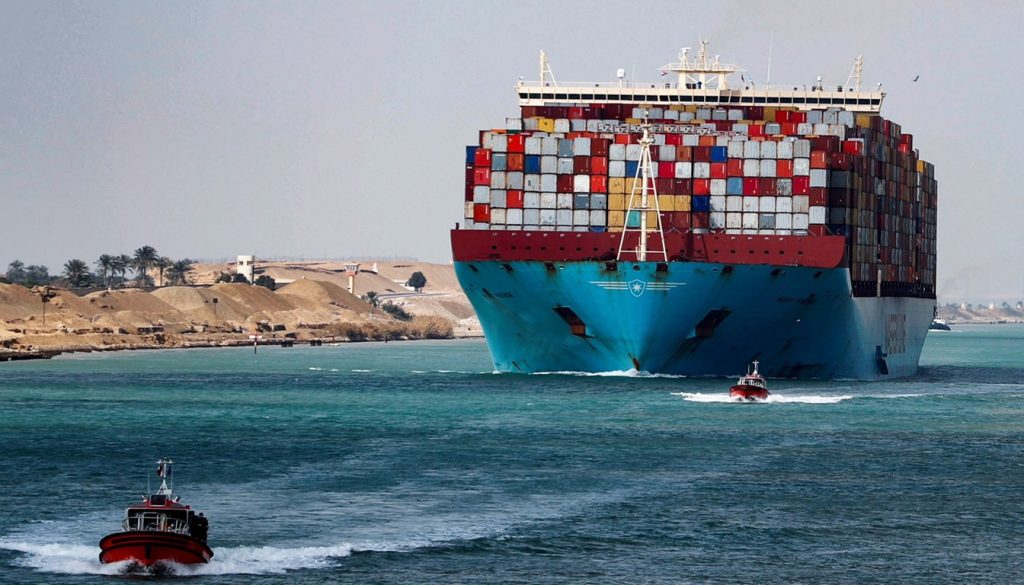
Since mid-October 2023, Houthi rebels in Yemen have attacked more than 130 vessels related to the ongoing Israel-Hamas conflict worldwide. As a result, major shipping companies have rerouted their vessels through Africa’s Cape of Good Hope instead of the Suez Canal. Following a ceasefire in January 2025, there were renewed attacks in August 2025. In addition, the number of vessels transiting every day decreased from approximately 70 prior to the outbreak of hostilities to approximately 31 fifteen months later. Fears of unsafe conditions persist because the war risk premium for all vessels operated by these major carriers increased to 1% of the vessel’s hull value (up from 0.05%), and the level of confidence about future stability continues to remain very negative.
Suez Canal’s Sharp Decline
In 2024, Suez Canal container volumes dropped by 75% and stayed low through 2026, as shipping lines avoided using the Red Sea route as an alternative to the Suez Canal. This vital connection from Europe to Asia saves 7-20 days of transit time; however, its recovery has been slow, with only a few limited services like CMA CGM’s India/Saudi route operating. The European Union extended naval protection until at least February 2026, but traffic still remains below seasonal levels.
Rerouting’s Hidden Benefits and Costs
By increasing ton-miles by 17% for containers and 7.5% for tankers, diversion helps alleviate capacity constraints and continue to support high freight rates, while discouraging rapid return. Transit time from Asia to Europe has increased by 25%-33%, with transit time from Asia to the U.S. East Coast increasing 47%, with key lanes now taking nearly 2 months to complete, resulting in inflated shipping costs for shippers and supply chain volatility, which has disproportionately affected Europe.
Outlook for 2026
Carriers like Maersk hesitate on full Red Sea resumption due to unpredictability, while others eye seasonal ramps. Possible returns could pressure rates by freeing capacity, but ongoing risks suggest prolonged disruptions. Global trade adapts, yet the Suez remains vulnerable to regional tensions.
Summary:
Houthi attacks since 2023 have forced ships to bypass the Red Sea and Suez Canal, extending routes around Africa by weeks. Traffic down 75%, costs soar with war premiums; some carriers test returns amid fragile ceasefire.
