
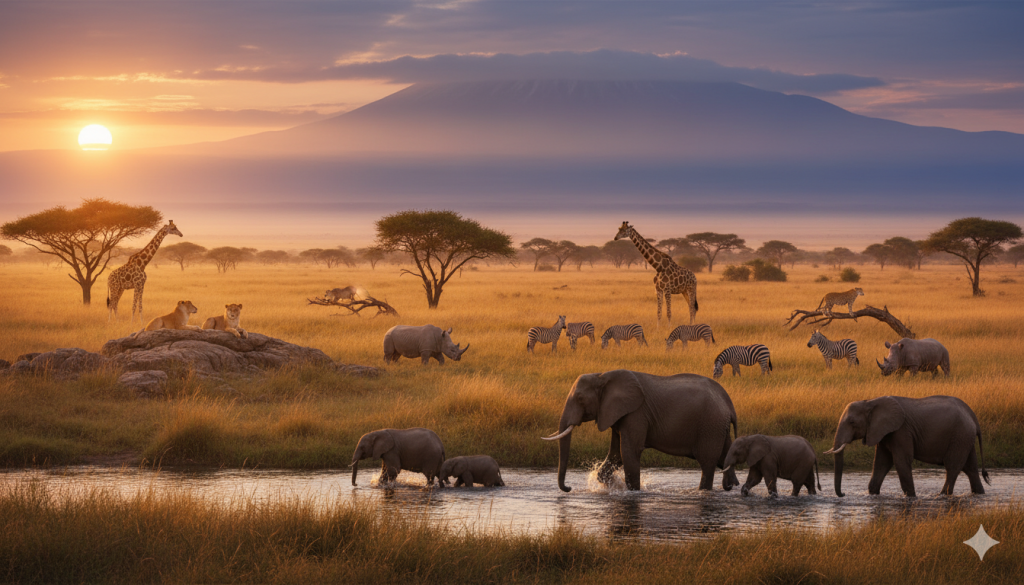
Africa is what the world is renowned for by its unparalleled natural regions, variety of ecosystem, and amazing wildlife. The continent brings memorable nature experiences in the fabulous savannahs of East Africa to the vivid rainforests of Central Africa. Wildlife tourism in Africa is crucial in conservation, economic growth and cultural exchange. The tourists around the world come to view the iconic species like the lions, elephants, rhinos, and gorillas in their natural habitat. In addition to adventure, the tourism type contributes to the protection of territories, empowers the local population, and creates environmental awareness, which is why it takes a central place in the strategy of sustainable development of Africa.
Africa’s Unique Wildlife Diversity
Almost twenty five percent of the global biodiversity is found in Africa. The big five, lion, leopard, elephant, rhinoceros, and buffalo are still one of the biggest attractions to tourists. Nations like Kenya, Tanzania, South Africa, Botswana and Namibia have set up national parks and reserves of a world standard. Wildlife tourism in Africa enables visitors to observe seasonal phenomena such as the Great Migration when millions of wildebeest and zebras traverse the Serengeti-Maasai mara ecosystem which is one of the most dramatic events in nature.
Economic Impact and Community Benefits
Wildlife tourism has a major contribution to the African economies. It provides jobs in the fields of guiding, hospitality, transport and conservation services. In the country, schools, medical, and infrastructure in the countryside are often financed by revenues of park fees and lodges. Notably, the models of sustainable tourism make sure that the local people are the direct beneficiaries of such ventures so that they are not forced to engage in activities that may destroy wildlife like poaching or cutting down of trees.
Conservation Through Tourism
The conservation aspect is one of the best arguments in support of Wildlife tourism in Africa. The anti-poaching units, habitat restoration, and scientific research are supported by the tourist spending. Tourism finances areas that are under protection to preserve endangered species and balance the ecology. Good operators are guided by stringent rules and regulations to minimize the impact on the environment and support the concepts of sustainable tourism plus preserving vulnerable ecosystems.
Challenges Facing Wildlife Tourism
Nevertheless, there are issues associated with wildlife tourism such as climate change, habitat destruction, and overpopulation in national parks despite the advantages of wildlife tourism. Uncontrolled tourism may pressurize the animals and destroy the environment. Governments in Africa and conservation groups are also embracing the policies of limiting the number of visitors, encouraging environmentally friendly lodging, and pitting lesser known destinations with more sharing of tourism load with stronger sustainable tourism efforts.
Keep Reading
The Future of Wildlife Tourism in Africa
Innovation, technology and community-based conservation is the future of Wildlife tourism in Africa. The industry is being transformed by online tracking, environmental certification, and environmental education. With an increasing number of travelers being aware, there is an increasing demand for ethical and environmentally responsible experiences, which makes Africa a world leader in sustainable tourism and nature-based travel.
