
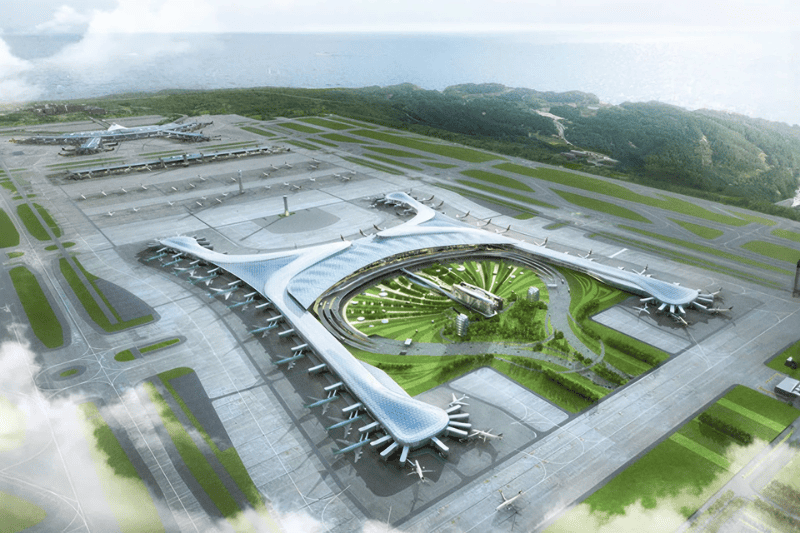
Ethiopia has broken ground on one of the continent’s biggest and best aviation projects, a $12.5 billion mega-airport in the vicinity of a small town called Bishoftu, located southeast of Addis Ababa, the capital city of Ethiopia. The new project is set to make Ethiopian Airlines the owner of Africa’s biggest airport.
Being unveiled in early January 2026, it has generated worldwide interest because it presents a prospect of increased international connectivity, facilitating trade and tourism, as well as making Ethiopia a prime hub between Africa, Asia, Europe, and the Americas.
A Mega-Hub for Africa
The new airport, renamed the Bishoftu International Airport, officially opened with a ground-breaking event held on January 10, 2026, in the Oromia region. The airport design consists of four runways and will accommodate up to 110 million passengers every year, compared to the Addis Ababa Bole International Airport, with a current capacity for 25 million passengers annually.
The airport will also provide parking capacity for a maximum of 270 aircraft, reflecting its proposed role as a major intercontinental hub airport rather than a regional gateway airport.
Improving Connectivity and Economic Growth
According to officials, it is much more than an airport project because it is part of Ethiopia’s future-proof multi-airport master plan based on its fast-increasing air passenger volume. Bole Airport in Ethiopia is almost full, and that is why Bishoftu Airport is going to handle future air passenger volumes.
Prime Minister Abiy Ahmed has described it as the largest in Africa in its capacity and aimed at achieving objectives beyond the movements of passengers and including trade and tourism corridors and the integration of the continent.
The plans include the provision of transportation networks in the form of a multi-lane highway and a railway to Addis Ababa that will provide quick accessibility between the capital city and the airport. This will help improve the efficiency of the transportation of persons as well as cargo.
Financing and Strategic Partnerships
The airport’s budget stands at $12.5 billion, with Ethiopian Airlines contributing about 30 per cent to the budget, while the remaining amount is to be raised by a consortium of global lenders that reach as far as the Middle East, Europe, China, and the United States, including institutions like the African Development Bank.
Transforming Continental Connectivity
Bishoftu International Airport’s strategic value is in its continental vision. Historically, the aviation industry on the continent has depended on other international airports in Europe and the Middle East for connectivity. However, the Ethiopian airport will provide an alternative, in the sense that it will serve as a connection bridge, making Africa a destination and a transit point as well.
The airport will also help upgrade and enhance the country’s cargo capacity and will be an important boost for its exports, like coffee and flowers, an essential aspect of its economy. It will be among the leading players worldwide in the aviation sector based on its capacity and handling performance.
Ethiopia’s $12.5 billion mega-airport project signifies a milestone in the growth and development of aviation on the African continent. Planned to accommodate more than 100 million passengers and function as a multi-continental hub, construction at the mega airport represents a vision of growth.
Moreover, as the construction towards the targeted 2030 deadline continues. The Bishoftu International Airport is a symbol of the contribution of the African arena to the international aviation and economic integration process.
Related Posts
FAQs
Why is Ethiopia constructing a new mega airport?
Ethiopia is building a larger airport to accommodate the rising demand for air travel and to position the country as a major aviation hub.
Where will Africa’s largest airport be located?
The new airport site is situated near Bishoftu, 45 kilometres southeast of Addis Ababa.
What is the size of the new airport?
It will serve 110 million passengers per year once it is fully operational, using four runways, along with the ability to accommodate 270 aircraft.
What is funding the $12.5 billion project?
The funding sources include a combination of investments by Ethiopian Airlines and foreign lenders, with contributions from the African Development Bank and other collaborators.
By when can the airport be expected to be operational?
The airport plans to start operations in stages from 2030.
