
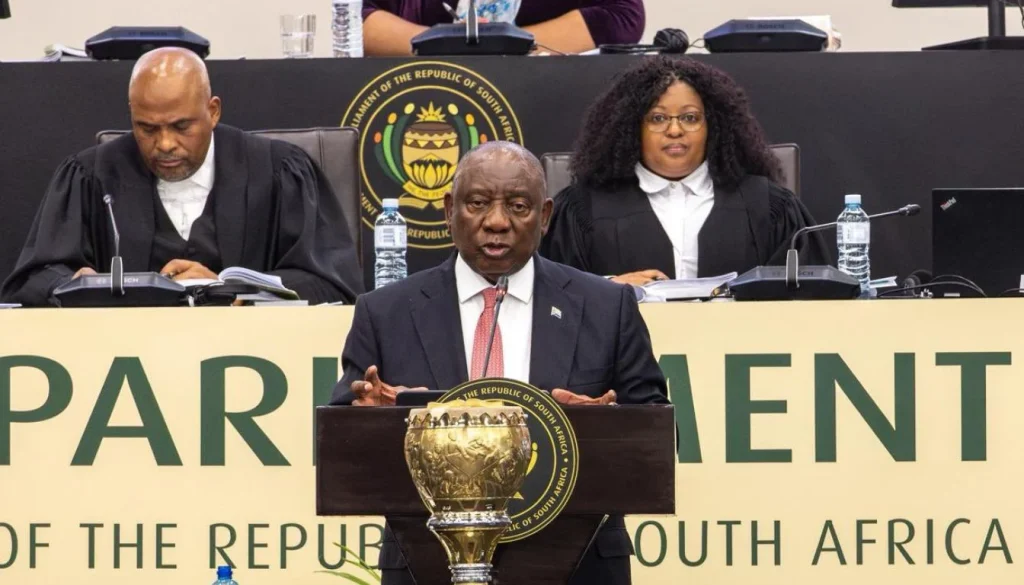
The President of South Africa, Cyril Ramaphosa, has urged African nations to collaborate when dealing with the issue of migration. In other words, he believes that the continent must unite in order to find solutions that will help people avoid leaving their homes.
Ramaphosa Africa migration proposal, This appeal to cooperate in solving the issue of migration comes in the context of the ongoing discussion of the problem in Africa after the recent unrest in South Africa that caused thousands of immigrants to leave the country.
Why Is Ramaphosa Asking for More Cooperation?
On the matter of a united Africa’s response to the migration issue, Ramaphosa stated that the migration solution cannot come about through border controls only. The problem has to be approached by addressing the problems causing people to move, which include poverty, lack of jobs, conflict, and political instability.
Ramaphosa stressed that there is a need for Africans to choose whether or not to migrate. This, according to him, means that sustainable development across the whole of Africa would ensure that the reasons for irregular migration are taken care of.
This proposal is consistent with the African Union’s efforts to promote regional integration and safe and legal movements between member states.
Addressing the Causes of Migration
One of the main points raised by Ramaphosa in his proposal is that the root causes of migration have to be tackled.
The causes include:
- Poverty and unemployment, which can only be tackled through economic development.
- Poor governance and public sector inefficiency.
- Conflict and silencing the guns of the African Union.
- Increase investment, education, and jobs in Africa.
Promoting Safe and Orderly Migration
Ramaphosa further stressed the importance of increased cooperation in the management of cross-border migration.
Instead of letting irregular migration put a strain on border areas and their public services, he suggested that African countries need to establish joint mechanisms that will promote safe and orderly migration processes.
This form of cooperation can involve better management of borders, information exchange among governments, labour mobility programmes, and enhanced migrant rights protection.
Proponents of coordinated migration strategies believe that these policies will serve the interests of both sending and receiving countries while minimising human trafficking and other forms of illegal migration.
Implications for Africa
If it succeeds, a joint policy on migration in Africa could bring several long-term benefits.
Better cooperation will contribute to trade within the region, labour mobility, and economic integration in accordance with AfCFTA.
A harmonized policy could also make it easier for the responsibility to be shared by both receiving countries and countries of origin in order to ease pressure on countries like South Africa.
Moreover, such cooperation will also facilitate dealing with humanitarian disasters, displaced persons due to war, and climate-induced migration.
Potential for Better Diplomatic Relations Exists
There have been some cases of xenophobic attacks and issues regarding the treatment of foreign nationals that have created problems in the diplomatic relations of South Africa with other African nations.
Ramaphosa’s idea of collective responsibility is intended to divert attention from the idea of blaming other countries to looking for common solutions that will favor the entire continent.
Greater collaboration can not only aid in restoring trust among governments but also reinforce regional unity.
Implementation Challenges
Though there is widespread agreement on the need for collaboration, it will not be an easy task to implement common migration policies.
Indeed, the economies, migration trends, capacity for managing borders, and interests of different African nations vary substantially. There may be additional obstacles due to funding problems and political disagreements.
It has been pointed out that effective collaboration will require robust institutions and political commitment, among others.
Moving Forward – Ramaphosa Africa migration proposal
The proposal by Ramaphosa points to the realization of the need for collaborative approaches to solve the migration problem that faces the whole continent and cannot be dealt with in isolation.
As African countries deliberate further about regional integration and economic development, migration policy might increasingly figure in the continent’s long-term planning agenda.
In whatever approach is adopted, the effectiveness of such efforts would hinge on how well the African countries can collaborate in solving migration problems.
Discover More Insights
Why South Africa Faces Record Joblessness?
Explore how South Africa’s unemployment crisis is hitting record highs and what it means for the country’s economic future.
Why Ghana Youth Reject Free Rice?
Discover why Ghana’s youth are rejecting aid and demanding sustainable job opportunities instead.
Which Freelancing Platforms Work Best Africa?
Check the top freelancing platforms offering real income opportunities for Africans in 2026.
Why Africa’s Middle Class Still Struggles?
Explore how economic growth is failing to deliver stability for Africa’s expanding middle class.
How Nigerians Can Earn Dollars Online?
Discover practical ways Nigerians are earning in dollars and boosting their income in today’s digital economy.
