
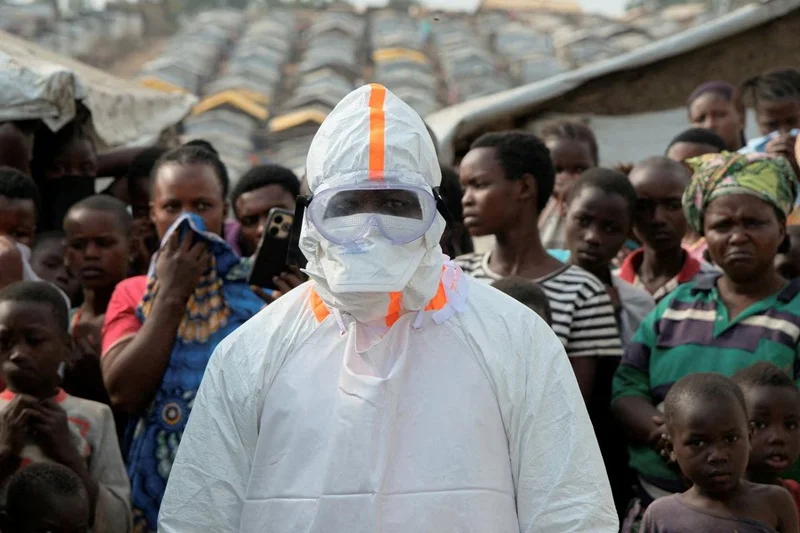
Democratic Republic of Congo is at yet another bleak phase with its Ebola outbreak, with 4,053 confirmed Ebola cases and 1,850 deaths recorded since the start of the Ebola outbreak in May. With the rapid expansion of the Ebola outbreak fueled by the rare Bundibugyo Ebola virus, there is an infection in 53 health zones in five different provinces.
In response to the increasing speed and rapidity of the transmission of the infection, WHO, Africa CDC, and the Government of DRC are stepping up their response. There are increased efforts by health teams to find cases and expand treatment capacity amid warnings from the health officials that the Ebola outbreak is increasing faster than the response.
How Serious Is This Ebola Outbreak in DR Congo?
The outbreak was confirmed on May 15 when the first cases occurred in Ituri province. The outbreak has since expanded to other areas in the east and center of DR Congo.
Ituri is still the epicenter of the outbreak; however, there are also cases reported in North Kivu, South Kivu, Haut-Uele, and Tshopo provinces.
What makes the current outbreak alarming is that it has Bundibugyo virus, which is a different Ebola species compared to Zaire ebolavirus, which caused multiple outbreaks in the past.
The outbreak was declared a public health emergency of international concern by WHO in May when confirmed cases were found in Uganda.
Why Is the Virus Spreading so Rapidly?
One of the main challenges in controlling the outbreak is that there is transmission occurring outside the known chain of infections.
Traditionally, Ebola outbreak containment relies largely on detecting infected individuals, tracing contacts, and monitoring the contacts for symptoms. However, health authorities say that many of the new cases are being recorded outside of the traditional contact-tracing network.
African CDC officials have termed the outbreak the fastest-spreading Ebola outbreak recorded to date, whereas the number of cases has made it the world’s second-largest outbreak of Ebola.
What Are Health Authorities Doing?
The health authorities are trying to locate cases as early as possible before the patients develop severe symptoms.
Medical professionals are going door to door for searching and surveillance of the patients, along with increased testing.
The other thing that health authorities are doing is the expansion of treatment capacity. They have already planned a big treatment center in Bunia, which is the capital of Ituri province, while some organizations are providing them with medical supplies, laboratories, and logistics.
WHO is also trying to conduct clinical trials of vaccines that might help protect people from Bundibugyo virus.
It is very crucial because there is no vaccine available for Bundibugyo virus that has been licensed or can protect from Bundibugyo virus, whereas the vaccine which has been used extensively during the Zaire ebolavirus outbreak is also not licensed for it.
Conflict and Distrust Make Containment Harder
This outbreak takes place in one of the most challenging settings for emergency health care delivery.
Years of violence have created a setting in which access by health professionals to affected communities may be hampered, while medical supply chains may be disrupted and contact tracing made harder.
Another issue of community distrust is present.
To contain such an outbreak, public health authorities need people to come forward with symptoms, take tests, and cooperate with contact tracing and proper burial processes. Misinformation and distrust make that harder.
In addition to the above challenges, there have been operational difficulties for health professionals due to disputes over salaries.
Stay ahead of East Africa’s fastest-moving Ebola and border security developments.
Why Uganda Closed DRC Border?
Check out the latest travel restrictions, trade disruptions, and health advisory updates affecting both countries.
Could DRC-Rwanda Peace Talks Succeed?
Find the key details behind the new border-area peace deal and what it could mean for local communities.
Why Wazalendo Leaders Oppose Sanctions?
Uncover how armed group leaders are responding to conflict, sanctions, and the ongoing crisis in eastern DR Congo.
How Uganda Is Monitoring Ebola?
Browse the intensified border surveillance measures Uganda has introduced as Ebola cases continue to rise nearby.
Is DR Congo Facing Worst Ebola?
Dive into the WHO warning signs, outbreak scale, and the growing concerns surrounding DR Congo’s deepening Ebola crisis.
Can the Outbreak Escalate Further?
The outbreak has spread across borders.
After detecting imported cases linked to the DRC outbreak, Uganda declared an outbreak of its own – the Bundibugyo outbreak, which took place in May. This was declared over on July 28 after the monitoring period completion.
The experience demonstrates the need for border surveillance and surveillance along major transportation routes.
As far as the WHO is concerned, the outbreak is high-risk at a regional level, despite no global pandemic alert having been made.
