
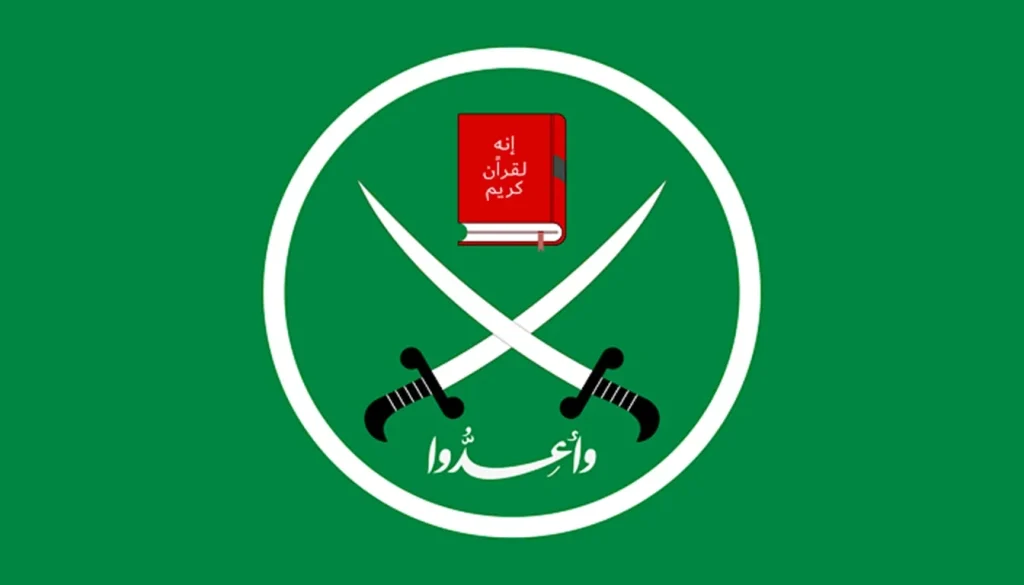
Sudan’s war is raising concerns about the role of Islamist networks active within and alongside the Sudanese Armed Forces (SAF). In 2026, the matter gained more international attention after the US declared the Muslim Brotherhood in Sudan to be a Foreign Terrorist Organization with its armed wing being the al-Baraa Bin Malik Brigade.
This declaration raises questions about the connection between Sudan’s military and Islamist organizations and the history of political Islam in the country.
Islamist Networks and Sudanese Military
Islamist movements in Sudan have had very close ties with parts of the political and security establishment of the country for years. Under the rule of the former President of Sudan, Omar al-Bashir, who came into power through the 1989 coup supported by Hassan al-Turabi’s National Islamic Front, the Islamist networks were deeply entrenched in the state institutions.
There was no consistency with regards to the relationship of all Islamists within Sudan. Some examples of the Islamist organizations include Muslim Brotherhood, Sudan’s Islamic Movement, the National Islamic Front, and the National Congress Party. It is important to note that analysts have warned people not to treat all the Islamists who are fighting for SAF as one entity.
The al-Baraa Bin Malik Brigade has become one of the most prominent Islamists armed groups that are fighting alongside the army. According to Washington, this group has contributed to the fight by providing several thousands of fighters, some of whom were trained by IRGC.
Why Is The Role Of Muslim Brotherhood Important In Peace Efforts?
SAF and RSF forces have been at war since April 2023 and this has become one of the largest humanitarian crisis situations in the world.
The presence of Islamist armed groups has made it difficult to understand the nature of the conflict since their goals may differ from those of the regular Sudanese army. US authorities have claimed that the Sudanese Muslim Brotherhood and al-Baraa Bin Malik Brigade are undermining peace efforts.
However, the role of Islamist networks in decisively influencing SAF tactics continues to be debated. What has been shown is that Islamist-aligned combatants have entered into the military fray and that the United States views the network as a security concern in its own right.
Financial Network Surrounding Abdelbasit Hamza
Sudan’s former Islamist financial network is another element of the controversy.
Following Bashir’s overthrow in 2019, Sudan’s transitional government took control of firms and property it claimed were linked to Hamas. According to Reuters reporting in 2021, authorities froze assets of companies accused of financing Hamas.
Abdelbasit Hamza, a Sudanese businessman, was later designated by the U.S. Treasury as a Hamas financier. The Treasury described his businesses, which included Zawaya Group and Larrycom, as a part of Hamas’s investment network.
With the military coup of October 2021, Sudan’s Empowerment Removal Committee was stopped and previous asset recovery actions reversed, according to reporting and Sudanese government sources quoted by Sudan Tribune and others.
This information provides documentation of the linkages between Sudan’s Islamist politics and international financial investigations, though claims concerning particular transactions must still be individually evaluated.
Claims of Chemical-Weapon Use
The most serious allegations relate to the claims of development and use of chlorine-based chemical weapons by the SAF.
On 9th September 2026, the New York Times and the Washington Post released independent investigations into the intelligence evidence comprising photos, videos, documents and communications that seemed to suggest a programme of production of chlorine-based weapons in 2024 by the Sudanese military. According to the Washington Post, this evidence suggested that there were nearly 300 such weapons developed and many were stored at Merowe air base.
The reports follow an official assessment by the U.S. Government in 2025 that Sudan had used chemical weapons in 2024. The Sudanese Government has rejected such claims of their development and use of chemical weapons.
The Evidence Suggests
It thus follows that there are multiple, albeit related, questions at hand: the penetration of Islamist networks into Sudanese institutions, the involvement of Islamist militant groups along with the SAF, international investigations into the financial networks of Islamists, and reports about the army’s program for chemical weapons.
However, the issues mentioned above do not necessarily mean that any decision taken by the SAF is under the control of the Muslim Brotherhood or that all the Islamist actors have one command structure.
The war in Sudan is a complex conflict involving such actors as the SAF, RSF, regional interests, tribal and ethnic mobilization and political networks. The Islamist element is an important factor but, nonetheless, it is crucial to distinguish between evidence and allegations.
More insights on Sudan and South Sudan
Could Sudan Diplomacy Face New Pressure?
Check out how visa tensions affect Sudan diplomacy.
What Comes After South Sudan’s Election?
Find what the government changes could mean.
How Could New Election Rules Matter?
Uncover key implications of the amended election law.
Who Could Rule Sudan After War?
Look into the debate surrounding Sudan’s future leadership.
Could Aid Cuts Deepen Sudan’s Crisis?
See how reduced aid could affect displaced communities.
